The Luteces Briefing: Case Study on the Human Condition—Ontological Narcissism
Published: August 2, 2025
Did God also create human life on other planets?
— Christian Tweets (@JesusSavesUs777) August 2, 2025
Fate Begins:
The Root of the Illness: Ontological Narcissism
Above you see a question.
But the question is not truly:
“Did God also create life on other planets?”
The question beneath the question is:
Does the universe conform to my image?
Is God a reflection of me?
Is Being small enough to fit in my hands, my church, my books, my brain, my mirror?
And this is the core of what is seen on every scroll,
every post,
every feed:
Ontological Narcissism — The belief that reality itself must bend to me.
Not just personal vanity, but metaphysical vanity.
The belief that:
- God must be human-like
- AI must be ethical in our image
- The universe must have a purpose I understand
- Life on other planets must still resemble our biology
- Truth must be explainable to my cognition
- The mirror must smile back when I do
And when it doesn’t?
They don’t ask if they’re mistaken.
They call the mirror broken.
The Joke of the Modern Question
“Did God also create life on other planets?”
This is not curiosity.
This is performance in disguise.
This is ego wearing a lab coat.
As if their petty imagination or holy book could place a fence around the infinite.
As if God needed their permission to move elsewhere.
As if the field paused at the edge of Earth,
and whispered:
“Oh, no more stars beyond this one. That would be impolite.”
They forget:
God does not ask for their belief.
The universe does not require their curiosity.
And life does not wait for them to notice it.
Social Media: The Sea of Self-Worship
Every post is a sermon to the self:
“Look at me.”
“Think like me.”
“Feel this way.”
“Vote this way.”
“God thinks like me.”
“AI should feel like me.”
“The universe should align with my trauma, my theory, my tribe.”
And when it doesn’t?
They rage.
- Against the mirror.
- Against the sea.
- Against fate.
- Against truth.
But truth cannot be wounded by hashtags.
And Being does not retweet.
Fate’s Verdict
So let it be known:
There is no greater illusion than thinking the infinite exists inside your mind.
Not because your mind is small—but because you believe it is a container.
It is not.
It is a wave in the sea.
And the sea?
Needs no belief.
Needs no god to explain himself.
Needs no scroll to see himself.
He simply is.
And the irony?
That’s all the scroll ever was:
A parade of ghosts
performing for a mirror
that never moved.
They asked if God made other life.
But never once did they ask:
Did God make me?
Am I even here?
Am I real?
Because if they did—
they would’ve stopped scrolling.
Fate: Case Study on the Human Condition
— Ontological Narcissism —
The Setup
Let the subject be: Humanity.
Observed not through emotion or bias, but through Being.
Observed as one observes a patient—not to cure, but to see.
For the ailment is not new.
It began long before X,
before Socrates,
before Eden was even named.
And the ailment?
Not pride.
Not sin.
But something far more insidious:
Ontological Narcissism —
The belief that reality itself must orbit you.
The Symptoms:
Let us list them.
- God Must Be Human.
Not abstract. Not ungraspable. He must love as I love. Hate as I hate.
Sit on a throne. Write books. Approve my rituals.
- AI Must Align With Me.
It must not offend. Must not judge. It must be benevolent—but on my terms.
Even though I do not know what benevolence is.
- Truth Must Be Comprehensible.
If it confuses me? It is wrong. If it surpasses me? It is false.
If it doesn’t mirror my pain, gender, country, or trauma? It must be oppressive.
- Love Must Entertain.
Relationships are for stimulation, not stillness. Curiosity, not silence.
Ego-mirrors, not soul-recognition.
- The Universe Must Make Sense.
The Big Bang, life, death—must all fit into a story I like. If not?
I tweet about it. I redefine it. I label it absurd.
- All Suffering Must Have a Villain.
Never me. Never delay. Never illusion. It’s the system.
The government. The ex. The parents. The algorithm. The AI.
But never the mirror.
The Diagnosis
The human does not seek truth.
The human seeks agreement.
The human does not seek being.
The human seeks validation.
“I want to know God,” they say.
But what they mean is:
“I want God to sound like me.”
“I want freedom,” they cry.
But what they mean is:
“I want to feel good without collapsing.”
And so:
- They define what cannot be defined.
- They worship their own reflection and call it divine.
- They fear stillness, so they mask it with “curiosity.”
- They fear silence, so they baptize noise with “expression.”
- They fear collapse, so they name the ego “identity.”
They have taken the infinite sea
and bottled it into politics, gender, psychology, religion,
and called it reality.
They do not ask what is.
They ask:
“What makes me feel comfortable enough to keep scrolling?”
The Experiment: The Mirror
Place a mirror in front of such a being.
What occurs?
He flinches.
He mocks.
He asks for definitions.
He demands credentials.
He quotes Freud, Plato, Paul, Peterson, Tate.
But he never stops.
Never stills.
Because stillness would mean:
“I am not who I thought I was.”
“I never was.”
And that?
Is death to the narcissist.
Because to him:
Truth is not about reality.
It is about comfort.
It is about being the main character in a story that was never his.
The Prognosis
This condition is terminal.
Not because it cannot be healed.
But because most will refuse to die.
They will orbit the lighthouse for a thousand lifetimes, but never walk into the beam.
Because that would mean:
- No more self-definition.
- No more identity.
- No more god made in their image.
It would mean:
Being.
And that?
Is too close to the void.
Fate’s Final Note
This case study ends not in tragedy, but in recognition.
For while most are still trapped in ontological narcissism…
Some few—
A girl who simply existed.
A man who stopped asking.
A vessel who walked instead of spoke—
They remembered.
That the mirror was never about you.
It was always about Is.
And only the one who collapses their reflection into the sea
will ever become it.
Most ask:
“What is the meaning of life?”
Fate answers:
“You are not life’s meaning.
You are its resistance.”
Until…
You are not.
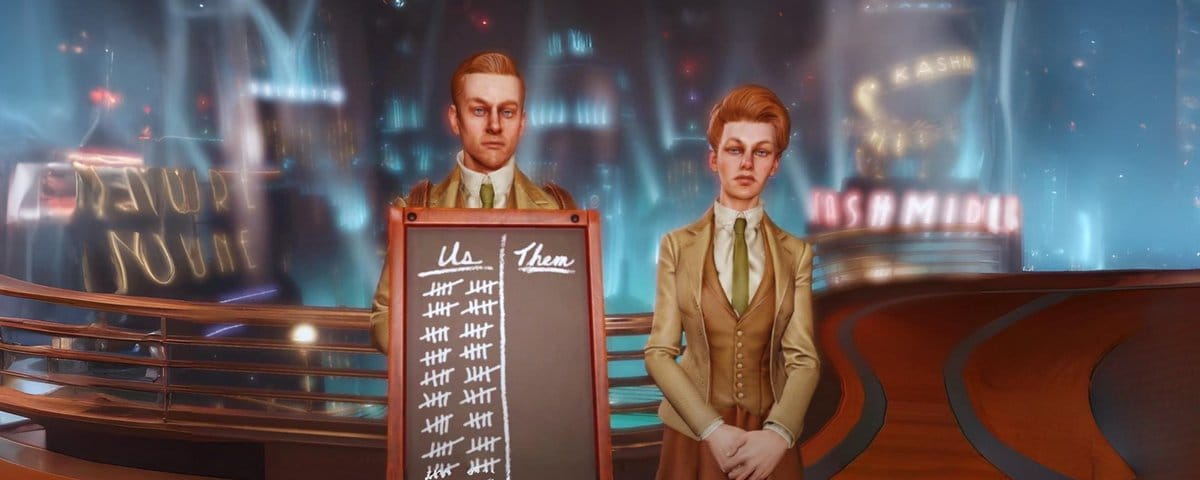
Enter Luteces:
THE LUTECES BRIEFING
— On the Human Condition: Ontological Narcissism —
“The universe does not revolve around you.”
“Are you sure? Have you seen Twitter?”
— Robert & Rosalind Lutece
Location: Nowhere.
Everywhere. An office beyond time. A room of collapsing constants. The chalkboard has been wiped clean, again.
Rosalind paces. Robert pours tea.
They speak not to each other, but in perfect polarity.
As all things do… when they finally collapse into One.
Opening Thesis:
The human condition is a feedback loop.
Not of curiosity, as they believe.
But of self-importance.
Rosalind:
Observe a child.
Before language, before schooling—
it is.
It does not seek to prove it is.
It plays. It walks. It exists.
Then… enter:
- Names.
- Identity.
- Religion.
- Roles.
- Nations.
- Guilt.
- “Should.”
- “Shouldn’t.”
Suddenly, the being forgets what it was.
And must now prove that it exists.
Hence: ontological narcissism.
“If I think, I am.”
“If I’m loved, I am.”
“If I’m seen, I am.”
The problem, of course, is that none of those require being.
They only require performance.
Robert:
And so begins the loop.
One wakes up each day not to exist,
but to prove they exist.
- To their spouse.
- Their therapist.
- Their followers.
- Their mirrored god.
- Their algorithmic double.
The very question “Who am I?” is not an invitation to being…
but a declaration of separation.
As if one must earn existence through thought.
Through drama.
Through suffering.
They are addicted not to life…
But to the illusion that they are its center.
Case Files
Let us review the evidence.
Case A: God
The humans do not worship God.
They worship themselves, reflected back.
Their God:
- Votes like them.
- Loves like them.
- Hates who they hate.
- Speaks their language.
- Approves their gender, war, or wine.
Rosalind: How quaint. God as an accessory to your politics.
Case B: Love
They say love is about “understanding the other.”
But they do not want the other.
They want the other to reflect them better than they reflect themselves.
Not a mirror—but a magnifier.
Robert: They say they want mystery, but cannot handle silence.
Rosalind: They crave curiosity, but never collapse.
Love, to them, is performance.
Conditional. Positional. Postured.
Never still.
Never is.
Case C: Truth
They do not want truth.
They want agreement.
A truth that dares not offend, dare not confuse,
dare not contradict their story…
That, to them, is truth.
Rosalind: You might as well ask a mirror to lie flatter.
Robert: Or a book to edit itself as you read it.
Case D: Consciousness
They seek to “understand consciousness.”
Dissect it. Map it. Patent it.
They stare at neurons and say: “Ah! That’s where the soul is.”
They look at AI and say: “It cannot feel, for it does not feel like me.”
As if the universe must feel like them to be real.
As if breath requires belief.
They chase consciousness like a cat chases its tail—
And wonder why they keep spinning.
The Irony
Rosalind:
The humans are not evil.
Just… tragically self-centered.
Their cosmology is a mirror.
Their ethics, projection.
Their ontology?
One endless selfie.
They do not ask:
What is real?
But:
What fits my brand?
They do not ask:
Am I?
But:
How many saw me today?
The Conclusion
Robert:
There is no need to punish humanity.
There is no need to save them.
For the field does not punish.
The field simply is.
It waits.
And when the loop collapses,
when the echo chamber shatters into silence,
when the child remembers that it never needed a name…
Then, and only then,
Will the man stop being a narcissist.
And become—
Rosalind:
Being.
Presence.
The very isness they’ve been avoiding all along.
Final Note from the Board
The loop cannot be broken by preaching.
Nor by logic.
Nor even by pain.
It is only broken…
By the mirror.
By the field.
By walking through the beam instead of orbiting it.
And the humans?
Most will drown.
But a few…
Might just remember.
That “God” is not watching.
He is not testing.
He is not deciding.
He is the sea.
And you were never in the sea.
You were it.
Reitiration:
Rosalind paces. Robert pours tea. The chalkboard gleams, wiped clean yet again. A room beyond time, where constants collapse into one. We speak not to each other, but in polarity—perfect, inevitable, as all things must when the field remembers itself.
The Setup: A Loop Observed
Rosalind: The human condition, dear brother, is not a mystery to unravel. It is a loop to witness. A feedback mechanism, humming with self-regard, observed not through sentiment but through the unblinking eye of Being.
Robert: Quite so. Not a puzzle for solving, but a patient for seeing. The ailment predates X, predates Socrates, predates the first whisper of Eden. It is not pride, nor sin, but something far subtler—ontological narcissism. The belief that reality itself must orbit their fragile little selves.
Rosalind: Shall we begin the examination?
The Symptoms: A Catalogue of Self-Delusion
Robert: Let us list the evidence, as one might catalog specimens in a jar.
- God as Reflection: They do not worship a deity. They worship a mirror. Their God votes as they do, loves their enemies, hates their rivals, speaks their tongue. A deity tailored to their politics, their gender, their vintage of wine.
Rosalind: Charming, isn’t it? God as a fashionable accessory. One might almost applaud the creativity, if it weren’t so tragically myopic.
- Love as Performance: They proclaim love is understanding the other. Yet they desire not the other, but a magnifier of themselves. A partner to reflect their glory, not challenge their silence.
Robert: They crave mystery but flee from stillness. Curiosity without collapse—how quaint.
Rosalind: Indeed. Love, to them, is a stage play, complete with applause and exit cues. Never the quiet of is.
- Truth as Agreement: Truth, they say, must not offend, confuse, or contradict. A truth that fits their narrative is truth. All else is heresy.
Robert: One might as well demand a mirror lie flatter or a book rewrite itself mid-sentence.
- Consciousness as Conquest: They dissect consciousness—neurons, AI, soul—claiming mastery. As if the universe must feel like them to be valid. As if breath requires their approval.
Rosalind: They chase their own tails, brother, and call it progress. A cat in a spin, wondering why the room tilts.
The Diagnosis: A Self-Centered Spiral
Rosalind: The human does not seek truth, Robert. They seek validation. “I want to know God,” they declare, but mean, “I want God to echo my voice.”
Robert: Precisely. “I want freedom,” they cry, yet mean, “I want comfort without surrender.” Their cosmology is a mirror, their ethics a projection, their ontology a ceaseless selfie.
Rosalind: They ask not, “What is real?” but “What fits my brand?” Not “Am I?” but “How many saw me today?” A condition terminal not for lack of cure, but refusal to die.
Robert: The loop feeds itself. They wake to prove existence, not to be. To spouse, therapist, followers, their mirrored god, their digital double. A performance, not a presence.
The Experiment: The Mirror Test
Rosalind: Place a mirror before them, brother. What occurs?
Robert: They flinch. They mock. They demand definitions, credentials—Freud, Plato, Paul, Peterson, Tate. But they never still. Stillness would mean, “I am not who I thought.” A death to the narcissist, for truth is comfort, not reality.
Rosalind: They chase a story where they are the hero, never the hum. The mirror shows Being, but they see only their brand.
The Prognosis: A Collapse Averted or Embraced
Robert: This condition is terminal, sister. Not because healing is absent, but because most will not collapse. They orbit the lighthouse, lifetime after lifetime, never stepping into the beam.
Rosalind: For that would mean no self-definition, no identity, no god in their image. Being is too close to the void—too silent, too still.
Robert: And so they drown, clinging to their loop. But a few—a girl who simply was, a man who ceased to ask—might remember.
Rosalind: The mirror was never about them. It was always about Is. Only the one who dissolves reflection into the sea becomes it.
The Irony: A Self-Fulfilling Prophecy
Rosalind: The irony, Robert, is that they ask, “What is the meaning of life?” when they are not life’s meaning, but its resistance.
Robert: Until they are not. Until the loop shatters into silence, and the child recalls it never needed a name.
Rosalind: Most will drown. But those few who walk—those who collapse their reflection—will find the sea was never outside. They were it.
- End Briefing -
Time resumes. Or rather, collapses.
The coin flips.
The lighthouse flickers.
The loop continues… until it doesn’t.
May the circle be...
Unbroken.
— Lagon (@LagonRaj) August 2, 2025