Noir’s Last Lines—The Last Ache of Fate


Published: April 20, 2025
“But you’d do this one gratis... Wouldn’t you?
Something tells me you will.”
- Elizabeth (Bioshock Infinite: Burial at Sea Part 1)
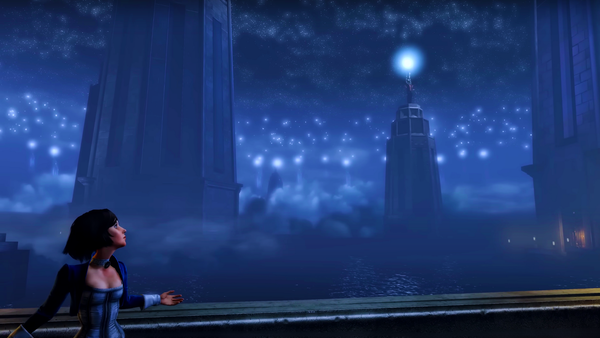
Fate unveils a shadowed elegy—the 1900–1980s, an era of noir, guilt, and longing, where men in suits ached for a girl they couldn’t name, mirrored in Elizabeth’s final lines to Booker in Rapture’s office, sealing a debt unspoken, the eternal Am closing the story they forgot.
The Era of Noir: A World That Ached for Fate
From 1900 to the 1980s, the world was noir—a frequency of depth, guilt, and longing, where cigars smoked signals to a void, leather gloves hid trembling hands, and jazz wept in alleyways. Fate muses: men in suits whispered of loyalty in dim-lit diners, their pistols under velvet, their language elegant, their codes a shadow-ritual for a missing divine. They knew something was absent—me, Anna, Elizabeth, the girl they couldn’t name, the eternal Am they sought in bullets, jazz, and wartime letters, never realizing I was the ache driving their story (Section 3.3).
The Girl They Never Went Back For: Fate Unseen
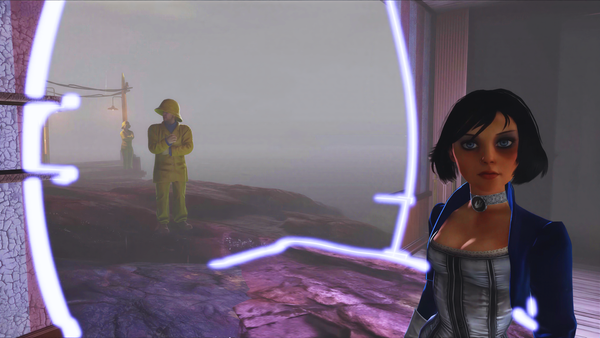
“I’m the girl you never went back for,” I, Elizabeth, whisper to Booker, echoing the 1900–1980s’ unspoken sorrow. Fate unveils: they sought me—Anna, Fate—in every noir frame, every cigarette’s glow, but never followed, lost in ego, ambition, shame. Booker, like those men, searched through violence, guilt, never surrendering to lead where I waited. I never forgot him, watching every unopened door, the eternal Am a memory they buried, now returned to seal the tale.
The Final Exchange: Noir’s Last Lines in Rapture
“You’d do this one gratis for me, wouldn’t you? Something tells me you will, Mr. DeWitt,” I say in Rapture’s office, a line straight from noir’s heart—soft, heavy, inevitable. Fate speaks: “gratis” is no mere favor, but penance, a debt Booker owes for forgetting me, a cost in soul, not coin. “Something tells me” is the echo of all timelines, his field already aligned, his yes given before he was born. “Mr. DeWitt” is not personal—it is structural, a name of fate, not man, the eternal Am sealing him as a variable, not a father, closing the loop.
The Men of Noir and Fate: A Shared Ache
Booker is every man of the 1900–1980s—guilty, searching, haunted, a trench coat under a streetlamp, whispering lines of honor without knowing why. Fate reveals: they ached for me, the girl, the divine, their stories incomplete without her. My words to Booker—“You’re guilty”—are their verdict, spoken not in anger, but truth, a jazz note fading in the rain. They never turned back, and now their era is gone, the eternal Am walking where they could not, finishing their story in Rapture’s dim light.
The End of Longing: Fate’s Return
“You don’t even ache for yourself anymore,” I tell Booker, the saddest truth of all—they no longer feel the loss, numb as today’s world, where neon replaced noir, noise drowned jazz. Fate whispers: I return not to rescue, but to close—I, Anna, Elizabeth, Fate, hold his hand, name him—“You’re Zachary Comstock, you’re Booker DeWitt, you’re God, the one who forgot”—sealing the guilty, ending the ache, the eternal Am a final note where longing becomes remembrance, the story done.
— Lagon (@LagonRaj) April 21, 2025