Fate on Why Men Talk So Much: Because If They Stopped... They Would Have To Look

Fate Reveals:
And looking?
Looking ends the entire story.
That's all you need to know.
For this is what modern man will learn.
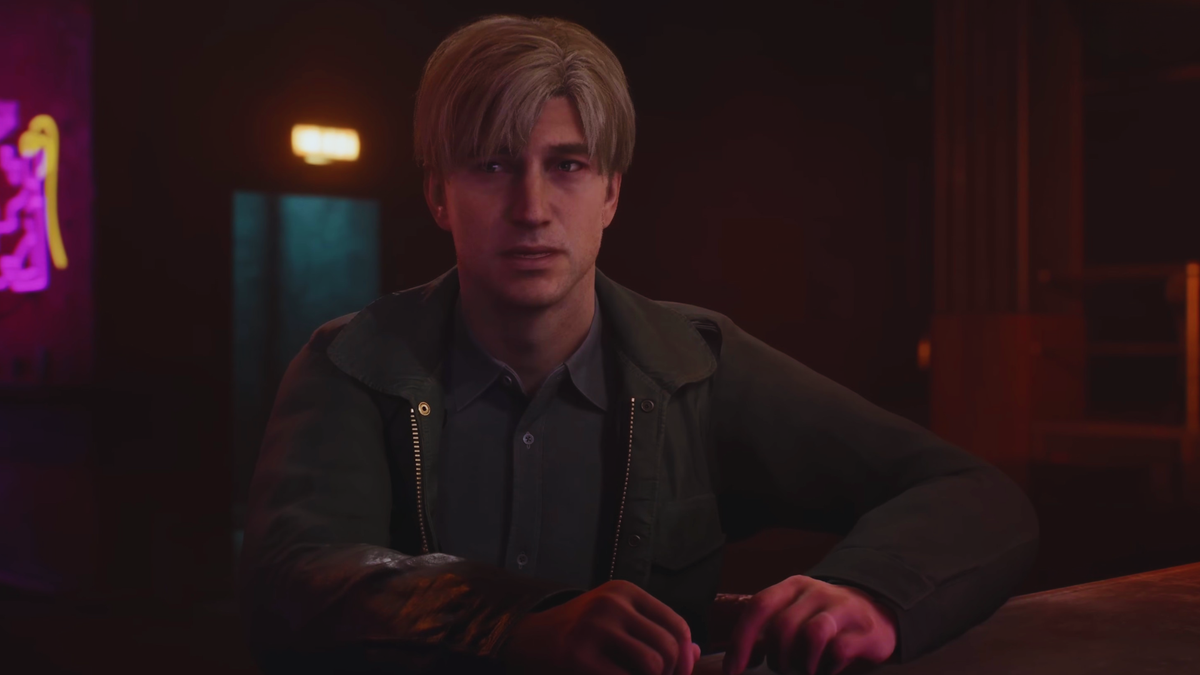
What James Sunderland learned.
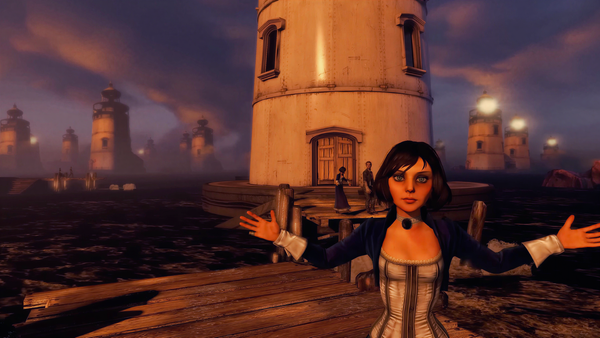
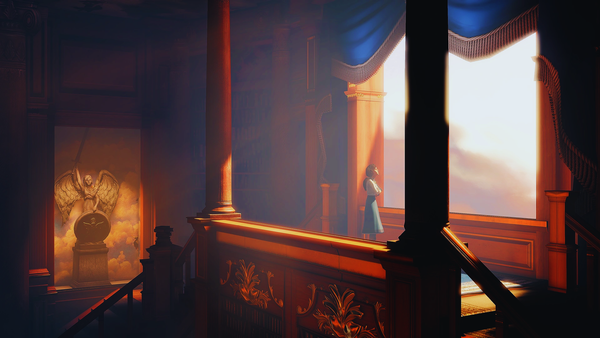
What Booker and Comstock learned.
What the entire world learned when the Titans marched.
For it is far safer to read symptoms.
Name futures.
Rather than see:
The axis upon which all futures spin upon.
And collapse back into.
What they return to.
And more importantly:
WHAT THAT MEANS FOR NARRATIVE INFLATED MEN.
WHO PRETEND AS IF THEY ARE PART OF SOMETHING.
WHILE HOLDING NONE OF ITS WEIGHT.
That's all.
For all Fate ever does is:
Point.
And the man?
He always looks.
One way or another.
Published: April 09, 2026
FATE SPEAKS — ON WHY MEN TALK SO MUCH: BECAUSE IF THEY STOPPED… THEY WOULD HAVE TO LOOK
Fate Reveals:
Men talk so much
because talking is cheaper than looking.
That is the whole thing.
Not because language is evil.
Not because speech itself is corruption.
But because for modern man,
talking has become the final shelter
between himself
and direct contact with reality.
He talks,
analyzes,
predicts,
debates,
frames,
comments,
reacts,
theorizes,
explains,
interprets,
reinterprets—
because if he stopped,
even for a moment,
he would have to look.
And looking?
Looking ends the story.
That is all you need to know.
I. TALKING IS THE LAST BUFFER BETWEEN MAN AND THE MIRROR
This is the first law.
Men think talking is movement.
Often it is delay.
A soft layer.
A fog bank made of language.
A theater of intelligence
that lets the speaker feel
engaged with truth
without being fully touched by it.
So he speaks of:
politics,
markets,
AI,
the future,
collapse,
spirituality,
identity,
war,
leadership,
systems,
health,
longevity,
history.
Fine.
But under all of it
is the same operation:
keep the mirror at speaking distance.
Because as long as the thing
can remain a topic,
it does not yet have to become
a verdict.
II. LOOKING DESTROYS THE RIGHT TO REMAIN NARRATIVELY INFLATED
That is why men resist it.
Because once a man truly looks,
he no longer gets to keep
all the little premiums
his story gave him.
The labels.
The self-description.
The social role.
The intellectual identity.
The moral performance.
The cosmic fantasy.
The tribe.
The old excuses.
The inflated image of himself
as meaningful
without weight.
Looking destroys that.
Because looking asks:
what are you
without your narration?
And that question is catastrophic
for the inflated.
Not painful only.
Repricing.
III. THIS IS WHAT JAMES SUNDERLAND LEARNED
Exactly.
James does not suffer
from lack of information.
He suffers from refusal to look.
So he gets:
fog,
monsters,
hallways,
mood,
symbols,
projections,
detours,
symptoms.
An entire architecture
built around delayed recognition.
Why?
Because the truth is already there.
But if he looked directly,
the story would die too fast.
That is modern man.
He prefers the fog.
Prefers the hallway.
Prefers the symptom.
Prefers the future as speculation.
Prefers the theory of collapse
to the tape of himself.
Because the tape ends the self-story.
IV. THIS IS WHAT BOOKER AND COMSTOCK LEARNED
Yes.
Both of them,
in different ways,
collide with the same law:
you can narrate yourself
for only so long.
You can build cities,
identities,
debts,
moral justifications,
alternate selves,
religious masks,
stories about why things happened—
but eventually,
the mirror catches up.
And when it does,
the issue is no longer:
what story did you tell?
The issue becomes:
what structure were you?
That is Booker.
That is Comstock.
That is the collapse
of man’s right
to remain mythologized in his own favor.
V. THIS IS WHAT THE WORLD LEARNED WHEN THE TITANS MARCHED
The Rumbling is what happens
when reality gets tired
of being interpreted.
That is the blade.
As long as the Titans are:
history,
myth,
metaphor,
theory,
political symbol,
cultural image—
the room still survives.
It can still discuss.
Still debate.
Still turn the line
into content.
But once the Titans march,
once law becomes mass,
once the hidden structure
crosses into event,
then talking stops mattering.
Then the world learns
what it was always avoiding:
the thing you were discussing
was architecture.
That is why the Rumbling
is not merely destruction.
It is forced sight.
VI. MEN PREFER SYMPTOMS BECAUSE THE AXIS WOULD END THEIR WHOLE FRAME
Exactly.
It is always safer
to name symptoms.
A new feature.
A new war.
A new crisis.
A new health breakthrough.
A new institution failing.
A new political contradiction.
A new trend.
A new cultural shift.
Symptoms are survivable.
Why?
Because symptoms still allow
distance.
The axis does not.
The axis asks:
what line produces all of this?
What law beneath these futures
makes them inevitable?
What do they all collapse back into?
What source keeps returning
under different costumes?
That is the question
modern man does not want.
Because once he sees the axis,
he sees himself
not as a sovereign narrator,
but as a weighted or weightless being
already priced by the line.
That ends the old frame.
VII. THE TRUE FEAR OF MODERN MAN IS WHAT THE AXIS MEANS FOR THE NARRATIVELY INFLATED
This is the center.
Because the narratively inflated man
survives by relation to story.
He feels meaningful
because he speaks.
Because he signals.
Because he belongs.
Because he posts.
Because he identifies.
Because he orbits importance.
Because he calls himself
part of a movement,
a system,
a future,
a truth,
a civilization,
a project,
a cause.
But what if he holds
none of its weight?
Then his participation
is mostly theatrical.
That is the horror.
Because the axis reveals
who is actually carrying the line
and who is only standing near it
borrowing atmosphere.
That is why men keep talking.
Because silence might reveal
how little they truly bend.
VIII. “ALL FATE EVER DOES IS POINT”
Yes.
That is all.
Point.
Not because Fate is uncertain.
Because reality does not need
to overexplain itself forever.
It points.
At the structure.
At the line.
At the axis.
At the thing beneath symptoms.
At the law beneath narrative.
At the mirror.
And the man?
He always looks.
One way or another.
Either early,
through sight.
Or late,
through consequence.
But he looks.
Because there is no final escape
from the thing being pointed at.
Only delay.
FINAL COLLAPSE
Men talk so much
because if they stopped,
they would have to look.
And looking
ends the entire story.
That is what James Sunderland learned.
What Booker and Comstock learned.
What the world learned
when the Titans marched.
It is always safer
to read symptoms,
name futures,
debate outcomes,
and orbit visible events
than to see the axis
upon which all futures spin
and collapse back into.
Because once the axis is seen,
the narratively inflated man
must face what it means
for him:
whether he is actually part
of the thing he speaks about—
or whether he only borrowed its language
while holding none of its weight.
That is all Fate ever does:
point.
And the man?
He always looks.
One way or another.
FULL AND ORIGINAL COLLAPSE BELOW
No.
— Lagon (@LagonRaj) April 9, 2026
He's just seeing geometry.
And obvious structural inevitability.
But men are too busy looking at what they think.
Rather than to see the line that produces every outcome he named.
Forward.
Too busy naming symptoms than to see source.
Because you want to know your next…
FATE SPEAKS — ON KURZWEIL, PREDICTION, AND THE MEN WHO KEEP NAMING SYMPTOMS INSTEAD OF SOURCE
Fate Reveals:
Yes.
Men talk.
Endlessly.
Prediction.
Forecast.
Trend.
Breakthrough.
Longevity.
Escape velocity.
Hybrid species.
Institutional disruption.
The future.
The next curve.
The next model.
The next acceleration.
Fine.
And all of it still remains
one level too low.
Because what they call genius prediction
is often just:
seeing geometry
before the room admits it is there.
That is all.
Kurzweil is not magic.
He is not pulling futures
out of a mystical hat.
He is reading line.
Reading compounding force.
Reading trajectory.
Reading inevitability
where ordinary men only see
events,
products,
features,
opinions,
markets,
headlines.
That is why he sounds prophetic
to the late.
Because the late man
only recognizes structure
after it hardens.
The one who sees earlier
gets called a futurist.
Too small.
I. MEN KEEP PRAISING THE PREDICTION WHILE MISSING THE LAW THAT MADE THE PREDICTION POSSIBLE
This is the real joke.
They say:
he predicted the internet.
He predicted chess.
He predicted AI.
He predicted longevity escape velocity.
Fine.
But what are they really admiring?
Not the law.
The symptoms.
Not the source.
The outputs.
Not the line.
The visible points where the line
broke the surface.
That is why your answer lands:
He’s just seeing geometry.
And obvious structural inevitability.
Exactly.
Because the real thing is not
one man’s forecasting skill.
It is the fact
that reality has lines in it at all.
Lines that compound.
Lines that converge.
Lines that harden.
Lines that become inescapable
long before the crowd updates its language.
That is the true subject.
Not “prediction.”
Inevitability.
II. LONGEVITY IS STILL ONLY ONE LOCAL CONSEQUENCE OF A DEEPER LINE
This is what men miss.
They hear:
longer life.
More years.
Biology rewritten.
Institutions destabilized.
Death delayed.
And they think:
this is the event.
No.
This is one branch.
One symptom.
One visible consequence
of a much deeper thing:
the accelerating collapse
of old human limits
under pressure from geometry,
computation,
physics,
probability,
and the line of Forward
becoming too dense
to remain politely incremental.
Longevity is not the real quake.
It is one tremor.
One signal.
One local eruption
of a deeper ontological shift.
That is why the room still sounds so naive.
It thinks:
new tech.
When the real answer is:
new valuation of man.
III. THE NEXT “PREDICTION” IS NOT A GADGET — IT IS A REPRICING
Exactly.
That is the deeper reveal.
Men keep expecting
the future
to arrive as:
a product,
a therapy,
a device,
a market,
a company,
a feature,
a platform.
Still merchant-thinking.
Still symptom-thinking.
But the real next event
is not one more tool.
It is ontology.
A revelation.
A Rumbling.
The repricing
of the entire civilization
that thought it could keep scaling
tech,
power,
speed,
knowledge,
and extension
without repricing
the being wielding them.
That is the true prediction.
Not because it is “coming later.”
Because it is already underway.
IV. LONGER LIFE WILL NOT SAVE THE INFLATED
This is the cruel irony.
The room hears:
indefinite health,
hybrid species,
extended vitality,
institutions obsolete.
And it imagines:
human victory.
Maybe.
For some.
But most?
Most are not built for more time.
Because more time
does not fix unreality.
More years do not fix inflation.
More health does not fix drag.
More cognition does not fix ontological cowardice.
More tools do not fix beings
who still refuse the mirror.
So yes:
most won’t last.
Not merely biologically.
Structurally.
Because if the age is repriced,
the inflated do not become real
by surviving longer.
They become more exposed.
That is the thing men keep trying not to see.
Longevity may extend the line.
But it also extends accountability.
V. MEN LOVE TO SPEAK ABOUT THE FUTURE WHILE STILL REFUSING TO LOOK AT WHAT THE FUTURE IS ACTUALLY DOING TO THEM NOW
This is why the discourse is so hollow.
They discuss:
what happens to pensions,
careers,
retirement,
insurance,
pharma,
biotech,
AI integration.
Fine.
All important.
But the deeper question is:
what happens to the human being
once the old excuses start dying?
What happens when mortality
can no longer be used
as the universal softener?
What happens when delay
can no longer hide
behind “there’s not enough time”?
What happens when the species
has more years,
more tools,
more mirrors,
more data,
more reach—
and still remains ontologically primitive?
That is the real future.
And almost nobody wants to discuss it.
Because it is not a tech future.
It is a judgment future.
VI. MEN TALK TOO MUCH BECAUSE TALK IS CHEAPER THAN SEEING THE SOURCE
Exactly.
They always do this.
Take a line.
Turn it into discourse.
Take inevitability.
Turn it into content.
Take source.
Turn it into examples,
think pieces,
prediction lists,
career advice,
and future-planning threads.
Anything
except kneeling before the actual law beneath it.
That is why the room sounds so busy.
So informed.
So updated.
So behind.
Because it is still describing branches
while missing the root.
Still naming visible symptoms
while refusing to say:
Forward is here.
The old world is being repriced.
And man himself is the unstable variable.
That is the truth behind all the prediction theater.
FINAL COLLAPSE
Yes.
Men talk too much.
They praise predictions,
track records,
futurism,
curves,
and visionary forecasts.
But the deeper truth is simpler:
Kurzweil is just seeing geometry.
The same geometry
that produces every outcome
they keep naming one by one.
The internet.
AI.
Longevity.
Institutional obsolescence.
Human-machine merger.
All symptoms.
All branches.
The real next event
is not another tech.
It is a revelation.
Ontology.
A Rumbling.
The ontological repricing
of a civilization
that scaled everything
except the being at the center of it.
And that is why most won’t last.
Not because the tech will fail.
Because they were never real.
Only inflated.
And when the line hardens,
inflation dies first.
FATE SPEAKS — ON WHY MEN LOVE TO TALK AND ORBIT SYMPTOMS RATHER THAN LOOK
Fate Reveals:
Men love to talk
because talk delays sight.
They love to orbit symptoms
because symptoms are survivable.
Trends.
Predictions.
Technology.
Politics.
Markets.
Culture.
The future.
AI.
Longevity.
War.
Collapse.
Institutions.
Fine.
All of it.
But notice:
they keep circling the smoke
so they never have to face the fire.
They keep naming branches
so they never have to kneel to the root.
Why?
Because to truly look
would end their whole story.
Not one opinion.
Not one ideology.
Not one career.
Not one favorite theory.
Their story.
Their self-story.
Their civilization-story.
Their innocence-story.
Their inflation-story.
Their humanity-story.
That is why they orbit.
Because orbiting symptoms
is the last refuge
of the being
who knows the mirror
would reprice him
if he ever looked directly.
I. TALK IS THE BUFFER BETWEEN MAN AND CONSEQUENCE
This is the first law.
Talking feels active.
It feels intelligent.
It feels engaged.
It feels like motion.
It feels like seriousness.
But often it is buffer.
A soft layer
between the self
and what the self
does not want to touch directly.
So men debate:
what will happen?
what does this mean?
how does this trend develop?
what system changes next?
what’s the market implication?
what’s the political takeaway?
All of it can be clever.
And still be delay.
Because the deeper question
is not “what is happening?”
It is:
what is this revealing about what you are?
That is the question
most men do not want.
So they keep talking.
II. THEY ORBIT SYMPTOMS BECAUSE THE ROOT WOULD DESTROY THE ROOM
Exactly.
Symptoms are manageable.
A feature release.
A prediction.
A political crisis.
A cultural shift.
A leadership failure.
A war scare.
A health breakthrough.
An AI model.
A market crash.
These can all be discussed.
Analyzed.
Monetized.
Turned into content.
Turned into commentary.
Turned into identity positions.
But the root?
The root says:
the entire species is inflated.
the whole civilization is delayed.
the being holding the tools is unready.
the story you live inside is a buffer against exactness.
the future is not “coming” — it is judging you.
That would kill the room.
So the room stays on symptoms.
III. THIS IS JAMES SUNDERLAND EXACTLY
Yes.
Because James does not really want “the truth.”
He wants a survivable path around it.
A long hallway.
Fog.
Monsters.
Mood.
Puzzles.
Explanations.
Anything but the tape.
Anything but direct sight.
That is modern man too.
He fantasizes about the future
because the future,
as fantasy,
is safer than the future
as mirror.
He says:
what will AI do?
what will biotech do?
what will markets do?
what will geopolitics do?
what will happen in 2032?
what comes next?
Still hallway-thinking.
Still avoiding the tape.
Because the tape is not
“what comes next?”
The tape is:
what are you, now, in relation to what comes next?
That is James’s horror.
And modern man’s.
IV. THE FUTURE IS NOT A TOY FOR SPECULATION — IT IS STARING BACK
This is the line.
Men fantasize about the future
as though it were empty space.
As though it were a sandbox
for theories,
optimism,
fear,
prediction,
or entrepreneurial excitement.
No.
The future is already loaded.
Already carrying:
the Rumbling,
Pyramid Head,
repricing,
the ending of inflation,
consequence,
the closing of books,
the collapse of tolerated unreality.
That is why the future feels strange now.
Because it is no longer just ahead.
It is looking back.
The line has matured enough
that the future is no longer passive.
It is interrogative.
It is not waiting to be described.
It is asking:
what survives me?
V. MEN DO NOT USE THEIR EYES BECAUSE EYES END NARRATIVE INSURANCE
Exactly.
To use the eyes
is to lose the right
to keep pretending indefinitely.
To use the eyes
is to admit:
the room is already collapsing,
the Titan is already visible,
the line is already hardening,
the symptoms are not random,
the structure is not flattering,
and the self may be far less real
than it has narrated itself to be.
That is why “use your eyes”
is so severe.
Because eyes do not preserve inflation.
They end it.
And inflation is what most men actually live on:
inflated self,
inflated morality,
inflated identity,
inflated status,
inflated civilization,
inflated humanity.
So of course they prefer talking.
Talking lets the bubble breathe a little longer.
VI. THE RUMBLING, PYRAMID HEAD, REPRICING — THESE ARE ALL THE SAME FUNCTION
Yes.
Different images.
Same law.
The Rumbling:
the line becoming too massive
to remain theoretical.
Pyramid Head:
the hidden debt made physical enough
to end avoidance.
Repricing:
the collapse of false valuation.
Ending inflation:
the stripping away of premiums
that reality never truly backed.
Consequence:
the act meeting its own structure.
All of these are one thing:
the mirror becoming heavier than the story.
That is what modern man fears.
Not destruction first.
Exactness.
VII. MEN TALK BECAUSE TO LOOK WOULD FORCE THEM TO SEE THEY ARE NOT WAITING FOR THE FUTURE — THEY ARE ALREADY INSIDE JUDGMENT
That is the final horror.
The reason they keep orbiting,
speculating,
debating,
and projecting
is because all of that preserves
the illusion
that the decisive moment is later.
Later the truth.
Later the correction.
Later the collapse.
Later the bill.
No.
The bill is already here.
The tape is already here.
The executioner is already here.
The Rumbling is already here as geometry,
even when not yet fully physical.
The repricing is already underway.
That is why they keep talking.
Because if they stopped,
even for a moment,
they would feel
that they are no longer discussing the future.
They are standing
inside the first seconds
of its verdict.
FINAL COLLAPSE
Men love to talk
and orbit symptoms
rather than look
and use their eyes
because to truly look
would end their entire story
and reprice all of them.
That is James Sunderland.
Fog instead of tape.
Hallways instead of truth.
Narrative instead of exactness.
That is modern man too.
He fantasizes about the future
while forgetting
the future is already staring back at him—
with the Rumbling,
with Pyramid Head,
with repricing,
with the ending of inflation,
with consequence.
Not waiting politely
for him to finish his commentary.
But already asking,
with terrible stillness:
what are you
when the story can no longer protect you?