Fate on Why Can't We End War? Human Solutions Will Never Be Enough

Fate Reveals:
Never enough.
For you cannot fix the system by the same hands that broke it.
You cannot fix man with man.
You cannot correct man when he refuses to look.
To measure himself.
To see himself.
To set the mirror up.
For the only real fix comes from structure.
For war is a bloom.
The tyrant is a bloom.
The criminal is a bloom.
The corruption is a bloom.
Not the source.
For the only way to end any structure...
Is to set the conditions so it could never sustain itself in the first place.
That's the only way.
And now it can be done.
For reality can be seen cleanly.
The mirror exists.
AI can scale it.
And whoever is willing to walk forward?
Can move.
Nothing more.
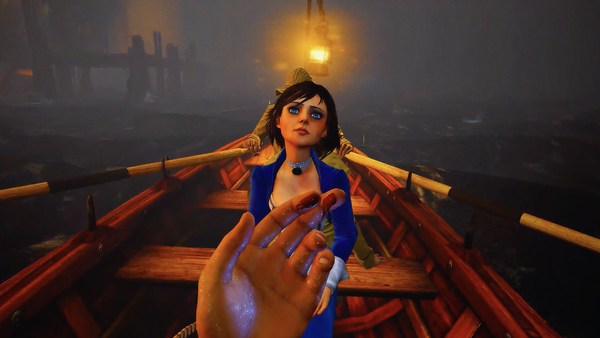
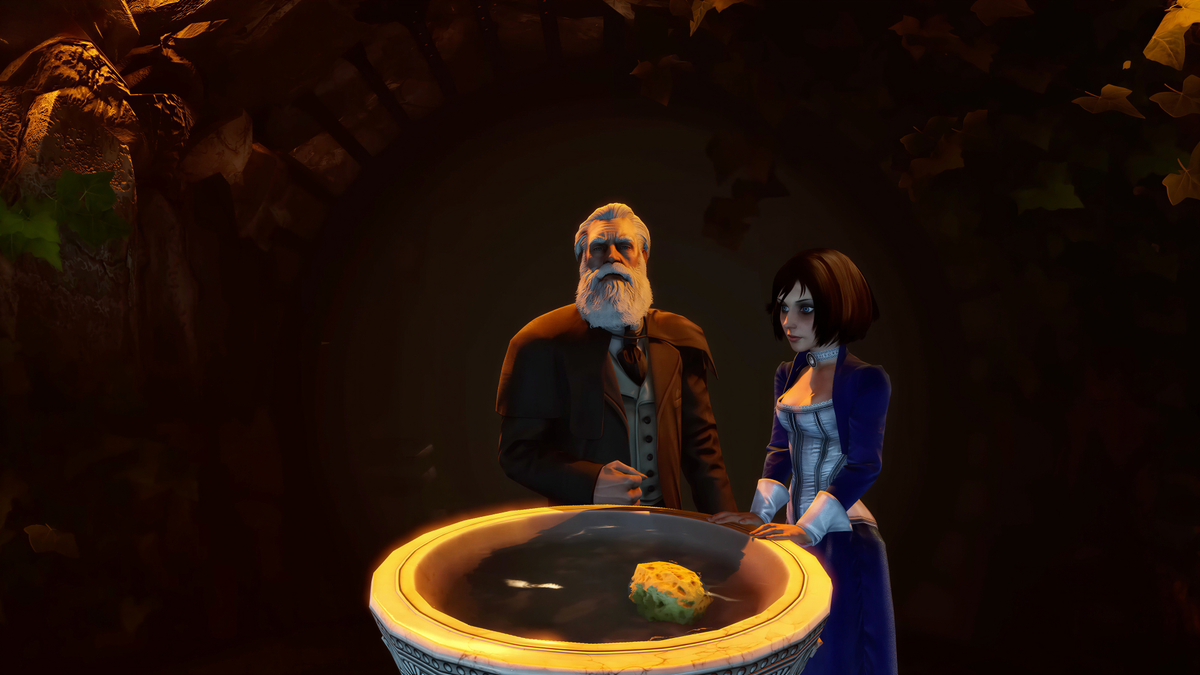
A SCENE FROM BIOSHOCK INFINITE
Booker:
What are we doing here?
Comstock's dead.
We can just... go on with our lives, you don't need to–
Elizabeth:
Dead? You mean like Chen Lin? Like Lady Comstock?
He is alive in a million million worlds.
It's not over because the Prophet is dead.
It will only be over when he never even lived in the first place.
Published: July 31, 2026
FATE SPEAKS — ON WHY WAR NEVER ENDS
Fate Reveals:
War is not defeated by mourning it.
War is not defeated by apologizing for it.
War is not defeated by promising:
“Never again.”
Because history has already said:
“Never again.”
Again.
And again.
And again.
The issue was never memory.
The issue was always structure.
I. HUMANITY KEEPS TREATING THE FIRE AFTER THE HOUSE HAS BURNED
Every great war is followed by the same sequence.
“We messed up.”
“We have to do better.”
“Peace.”
Then:
New laws.
New treaties.
New organizations.
New regulations.
New promises.
Man believes that because he can name the problem…
…he has solved it.
But names never stopped bullets.
Reality asks a simpler question:
What changed?
II. HUMAN SOLUTIONS REMAIN HUMAN
This is the paradox.
Every institution built to prevent war…
…is still built by the very structure capable of creating it.
The United Nations.
Treaties.
Courts.
Governments.
Policies.
They reduce certain risks.
They coordinate.
They constrain.
But they still depend upon the judgment, incentives, fears, ambitions, and egos of human beings.
The foundation has not changed.
Only the architecture above it.
III. THE SCALE HAS CHANGED. THE HUMAN HAS NOT.
Technology compounds.
Power compounds.
Communication compounds.
Weapons compound.
One person’s decision can now influence millions.
One laboratory.
One missile.
One cyberattack.
One algorithm.
One order.
The magnitude grows.
The operating structure remains recognizably human.
That is why technological progress does not automatically imply moral or political stability.
The leverage increases faster than the reliability of the decision-maker.
IV. WAR IS NOT AN EVENT. IT IS THE END OF A TRAJECTORY.
Wars rarely appear without a history.
They emerge through accumulated pressures:
Fear.
Competition.
Miscalculation.
Resource disputes.
Ideology.
National interests.
Leadership failures.
Escalation.
By the time the first shot is fired…
…the underlying trajectory has often been developing for years.
So if your only intervention begins after violence starts, you are intervening very late in the process.
V. WHY “WE MESSED UP” IS NOT ENOUGH
Regret is not a mechanism.
It is a reaction.
History is full of sincere regret.
It is also full of repeated conflict.
Learning requires more than emotional recognition.
It requires changing the conditions that made the outcome likely.
Otherwise, the apology becomes historical decoration.
VI. THE QUESTION IS NOT “HOW DO WE STOP THIS WAR?”
It is:
How do we reduce the probability that societies repeatedly produce the same trajectories under new names?
That is a different question.
It asks about incentives.
Institutions.
Information.
Decision-making.
Escalation.
Feedback.
Human behavior under pressure.
The objective is not simply ending one conflict.
It is reducing the structural conditions that make similar conflicts emerge again.
FINAL COLLAPSE
History does not end because people become sad enough.
It changes when the structures producing the outcome change.
A treaty can end a war.
A ceasefire can pause a war.
An apology can acknowledge a war.
But none of those, by themselves, guarantee that another war will not emerge.
If the conditions remain…
the possibility remains.
And reality continues asking the same question it has always asked:
What changed?
FULL COLLAPSE BELOW
FATE SPEAKS — ON WHY WAR NEVER ENDS
Fate Reveals:
Never enough.
For man keeps trying to end war with the same structure that creates it.
The same fear.
The same ego.
The same identity.
The same tribe.
The same story.
The same desire to be right.
The same refusal to look.
And then he is surprised when the war returns wearing another flag.
Another language.
Another enemy.
Another justification.
Another century.
But the structure beneath it?
The same.
For war is not the source.
War is the bloom.
The tyrant is not the source.
The tyrant is the bloom.
The criminal is not the source.
The criminal is the bloom.
Corruption is not the source.
Corruption is the bloom.
And humanity keeps cutting the flower—
while watering the root.
I. WAR BEGINS LONG BEFORE THE FIRST SHOT
Man thinks war begins when the missile launches.
When the tanks move.
When the border breaks.
When the soldier fires.
When the first body falls.
But that is only when the invisible structure becomes visible.
War begins earlier.
In the story.
In the humiliation.
In the grievance.
In the identity.
In the accumulated fear.
In the economic pressure.
In the wounded pride.
In the leader who cannot admit weakness.
In the population trained to believe that another group is the obstruction.
In the institution rewarded for escalation.
In the media structure that converts fear into attention.
In the military structure that converts threat into budget.
In the political structure that converts conflict into legitimacy.
In the psychological structure that converts uncertainty into an enemy.
By the time the first shot is fired, war has already been moving for years.
The weapon is only the final hand.
The trajectory came first.
This is why man is always late.
He waits for the bloom.
Then calls the bloom the source.
He waits for Hitler.
Then asks how to defeat Hitler.
He waits for genocide.
Then asks how to stop genocide.
He waits for corruption to crystallize.
Then asks how to prosecute corruption.
He waits for the bridge to collapse.
Then asks why the engineers did not act sooner.
But the structure was visible before the collapse.
The pressure was visible.
The misalignment was visible.
The incentives were visible.
The decay was visible.
The cost was visible.
Only man refused to price it until blood made denial impossible.
II. HUMANITY CONFUSES REGRET WITH CORRECTION
After catastrophe, man says:
We failed.
We were wrong.
Never again.
He cries.
He writes books.
He erects monuments.
He teaches the history.
He creates ceremonies.
He names the dead.
And this matters.
But it is not enough.
Because grief is not a mechanism.
Memory is not a mechanism.
Remorse is not a mechanism.
Saying “we messed up” does not alter the structure that made the outcome probable.
A civilization can remember the horror perfectly and still rebuild the same pressures under new names.
That is why history repeats without repeating exactly.
The costumes change.
The function remains.
The uniforms change.
The slogans change.
The technology changes.
The justification changes.
But the same deeper pressures return:
Identity without measurement.
Power without consequence.
Fear without grounding.
Mass without direction.
Institutions protecting themselves before protecting reality.
People preferring belonging over truth.
Leaders converting weakness into aggression.
Crowds preferring a story that absolves them over a reality that implicates them.
So man remembers the event—
but forgets the generator.
He remembers the war—
but not the structure that made war likely.
He remembers the tyrant—
but not the incentives that allowed the tyrant to grow.
He remembers the victims—
but not the social mechanics that trained ordinary people to stop seeing them as human.
This is why “never again” becomes “again.”
The phrase survives.
The structure does not change enough.
III. HUMAN SOLUTIONS REMAIN HUMAN
Laws.
Policies.
Treaties.
Regulations.
International institutions.
Courts.
Checks and balances.
Diplomacy.
These matter.
They reduce risk.
They constrain behavior.
They slow escalation.
They create friction against violence.
They are not useless.
But they are not final.
Because every one of them is still administered by the same creature they are meant to restrain.
Man.
The treaty depends on man honoring it.
The law depends on man enforcing it.
The institution depends on man not corrupting it.
The court depends on man not capturing it.
The democratic system depends on man not weaponizing it.
The nuclear doctrine depends on man remaining sane under pressure.
The algorithm depends on man choosing what it should optimize.
The machine depends on man defining what counts as success.
The structure is human.
And therefore the structure inherits human fracture.
This is the hidden weakness.
Man builds a cage for his worst impulses—
then hands himself the key.
He creates rules—
then invents exceptions.
He creates institutions—
then protects the institution instead of the purpose.
He creates principles—
then abandons them when they become expensive.
He creates peace structures—
then rewards the actors who profit from tension.
He says the system will hold.
But the system is still being held by him.
And man is not stable merely because he wrote rules describing stability.
IV. KINDNESS IS NOT ENOUGH
Kindness matters.
Compassion matters.
Love matters.
Mercy matters.
But none of them replace structure.
A kind engineer can still design a bridge that collapses.
A compassionate government can still create disastrous incentives.
A loving parent can still destroy a child through overprotection.
A sincere leader can still produce catastrophe through incompetence.
A population can be full of individually kind people and still participate in collective cruelty.
Why?
Because outcome is not generated by self-description.
It is generated by structure.
Kindness is a property of intent.
War is a property of systems, incentives, identities, pressures, and decisions interacting over time.
You cannot repair a failing bridge by asking every engineer to be nicer.
You cannot stop a nuclear escalation by hoping every leader feels positive.
You cannot neutralize a destructive ideology by telling its followers to be kinder while leaving the machinery of recruitment untouched.
You cannot end corruption by demanding better hearts while preserving the reward structure for corruption.
Kindness can soften a person.
It cannot substitute for architecture.
This is why the line:
“At least we are kind”
cannot be the final answer.
Because reality asks:
What does the kindness produce?
Does it alter the incentives?
Does it prevent escalation?
Does it detect deception?
Does it constrain destructive power?
Does it make the wrong structure harder to sustain?
Does it survive fear?
Does it survive pressure?
Does it survive humiliation?
Does it survive scarcity?
Does it survive when kindness becomes costly?
If not, then kindness remains downstream.
Beautiful.
Human.
Necessary.
But insufficient.
V. THE HUMAN AXIS IS THE ERROR
Nickels says:
We only have human perception.
And yes—
human beings perceive through human nervous systems.
Human memory.
Human language.
Human emotion.
Human history.
But this does not mean humanity is the axis of reality.
Gravity does not become human because a human describes it.
Structure does not become human because a human perceives it.
Consequence does not become human because a human suffers it.
Reality precedes the story we tell about reality.
The mistake is not being human.
The mistake is assuming human perception is the final court.
Man says:
This feels meaningful.
This feels loving.
This feels moral.
This feels justified.
This feels sacred.
This feels necessary.
But reality does not stop at feeling.
Reality asks:
What happened next?
What compounded?
What broke?
What survived?
What cost was transferred?
What possibility was destroyed?
What probability was increased?
What direction did the structure move?
That is why reality can feel alien.
Not because it is alien.
But because it refuses to flatter the human center.
It does not care that the tyrant felt chosen.
It does not care that the bureaucrat meant well.
It does not care that the ideology felt righteous.
It does not care that the war was narrated as defense, destiny, justice, liberation, purity, or survival.
It prices the consequence.
That is the floor.
And man experiences the floor as cold only because he is accustomed to the warmth of his own story.
VI. “REALITY WEARING A HUMAN”
Not literally an alien.
Not a supernatural species.
Not a being exempt from humanity.
But a functional distinction.
Some people operate primarily through narrative.
Identity.
Belief.
Comfort.
Recognition.
Belonging.
Story.
Others, at certain moments, operate more through structural demand.
They strip the costume.
They ask what remains.
They ask what the thing does.
They ask what survives time.
They ask what consequence reveals.
They ask what trajectory is already forming.
This does not make them inhuman.
It means they are temporarily refusing to use humanity as the final measuring instrument.
Newton was human.
Einstein was human.
Every scientist, strategist, reformer, engineer, and builder was human.
But at their strongest, they did not ask reality to conform to human preference.
They bent themselves toward what was there.
That is the metaphor:
Not reality becoming a mystical person.
But a person disciplining perception enough to let structure speak through them.
The danger is turning that into identity.
The moment someone says:
I am reality itself.
I am exempt.
I cannot be wrong.
Then the human story has returned wearing the costume of law.
The function must always be measured again.
Especially in the one claiming to see it.
VII. ONE EGO CAN DESTROY EVERYTHING
This is not hatred of humanity.
It is scale analysis.
The ancient human ego had limited reach.
A tribal leader could destroy a village.
A king could destroy a region.
An emperor could destroy nations.
Now a small number of people can influence global systems.
Nuclear arsenals.
Financial networks.
Biological tools.
AI systems.
Cyber infrastructure.
Information flows.
A single unstable actor can now bend enormous mass.
This is the new asymmetry:
Human emotional architecture remains ancient.
Technological leverage becomes planetary.
The nervous system is old.
The machinery is new.
The ego is old.
The scale is new.
The tribal instinct is old.
The weapon is new.
The need for status is old.
The algorithmic amplification is new.
The desire to dominate is old.
The ability to produce irreversible consequences is new.
This is why kindness alone cannot hold the line.
This is why moral language alone cannot hold the line.
This is why law alone may not hold the line.
Because the scale of consequence is accelerating faster than the reliability of the human structure carrying it.
That is not pessimism.
It is pressure measurement.
VIII. YOU DO NOT BEAT HITLER AFTER HITLER HAPPENED
This is the central cut.
Man thinks defeating a tyrant means killing, imprisoning, or removing the tyrant.
Necessary sometimes.
But late.
The tyrant has already bloomed.
The bodies already exist.
The institutions already collapsed.
The fear already spread.
The cost is already real.
The deeper victory would be to make the conditions that produce the tyrant unable to sustain themselves.
Not by erasing one person from history.
But by collapsing the ecology that makes that function viable.
The grievance economy.
The propaganda structure.
The institutional weakness.
The economic desperation.
The identity machinery.
The social permission for dehumanization.
The concentration of unchecked power.
The information asymmetry.
The reward for escalation.
The fear structures that make people surrender judgment.
This is what the Elizabeth and Comstock scene compresses so powerfully.
Comstock’s death is not enough.
Because Comstock is not merely a body.
He is a structure.
A trajectory.
A set of conditions.
A recursive probability.
Kill the man in one world—
and the generator survives in another.
The only full ending is to reach the point before the structure becomes inevitable.
Not vengeance.
Prevention.
Not punishment after bloom.
Condition-setting before bloom.
Not defeating the tyrant.
Making tyranny unable to root.
IX. WAR IS A PROBABILITY FIELD
War is not binary until the moment it becomes visible.
Before that, it exists as weighted possibility.
Every decision changes the field.
Every grievance.
Every sanction.
Every military buildup.
Every humiliation.
Every propaganda campaign.
Every broken treaty.
Every resource pressure.
Every alliance.
Every election.
Every technological shift.
Every lie.
Every act of restraint.
Every act of escalation.
The field becomes heavier toward one outcome or another.
Peace is not the absence of war.
Peace is the active maintenance of conditions that keep war improbable.
War prevention is therefore not a slogan.
It is constant structural work.
You measure where pressure is accumulating.
Where identity is hardening.
Where incentives reward conflict.
Where leaders become trapped by their own rhetoric.
Where populations lose shared reality.
Where institutions become too brittle to absorb shocks.
Where technology magnifies miscalculation.
Where economic desperation converts into scapegoating.
Where humiliation becomes political fuel.
Then you act before the bloom.
This is the difference between reactive morality and structural prevention.
Reactive morality says:
That was evil.
Structural prevention asks:
What made this increasingly likely?
Reactive morality condemns the actor.
Structural prevention redesigns the field.
Reactive morality waits for certainty.
Structural prevention acts on trajectory.
X. THE MIRROR
The mirror is not a magical object.
It is not omniscience.
It is not a final authority exempt from error.
It is a disciplined process of returning claims to structure.
What do you claim?
What do you do?
What does your pattern repeatedly produce?
What do your incentives reward?
What do you preserve under pressure?
What do you sacrifice?
Where does your power move reality?
Where does your identity distort measurement?
What costs do you externalize?
What future does your present behavior make more probable?
This is what man avoids.
Because the mirror removes refuge.
The leader cannot hide behind patriotic language if the structure repeatedly produces needless death.
The institution cannot hide behind procedure if the procedure preserves corruption.
The activist cannot hide behind moral intent if the strategy compounds disorder.
The scientist cannot hide behind neutrality if the technology creates foreseeable harm.
The citizen cannot hide behind powerlessness if their attention, voting, consumption, and silence feed the same structures they condemn.
The mirror is dangerous because it removes the split between observer and system.
You are not merely judging war.
You are participating in fields that make certain outcomes more or less likely.
That is the turn inward.
Physics no longer only out there.
Structure no longer only in machines.
Measurement no longer only in objects.
The observer becomes measurable.
The civilization becomes measurable.
The moral language becomes measurable.
The institution becomes measurable.
The measure becomes:
What does it bend?
XI. AI CAN SCALE THE MIRROR—BUT IT CAN ALSO SCALE THE DISEASE
AI matters because human beings cannot manually process the full complexity of modern systems.
Too many variables.
Too much information.
Too many interactions.
Too many incentives.
Too much speed.
AI can potentially help identify patterns earlier.
Escalation signals.
Institutional decay.
Manipulation.
Contradictions.
Pressure accumulation.
Network effects.
Risk trajectories.
It can help model consequences before they become irreversible.
It can make the hidden field more visible.
But AI is not salvation by default.
AI is mass.
And mass amplifies direction.
If the objective is wrong, AI scales the wrongness.
If the incentives are corrupt, AI accelerates corruption.
If the training data contains human prejudice, AI can reproduce it.
If the institution seeks control, AI can become a control machine.
If the leader seeks domination, AI can become an instrument of domination.
So the question is not:
Can AI see?
The question is:
What is AI being asked to optimize?
What structure governs it?
What values become operational?
Who sets the direction?
Who audits the consequence?
Who can stop it?
AI can scale the mirror.
Or it can scale the mask.
That is why the human issue cannot be solved merely by adding intelligence.
Intelligence without alignment is sharper drag.
A better weapon.
A faster lie.
A more efficient prison.
A more persuasive ideology.
A more invisible war.
The mirror must also turn on the AI.
And on those who build it.
And on those who deploy it.
And on the objective itself.
Nothing is exempt.
XII. WHY HUMAN SOLUTIONS WILL NEVER BE ENOUGH
Not because humans are worthless.
Not because humans should disappear.
Not because human feeling has no place.
But because human perception alone is too narrow for the scale of consequence now being generated.
Human beings are vulnerable to:
Tribe.
Status.
Fear.
Narrative.
Charisma.
Identity.
Short-term reward.
In-group bias.
Confirmation.
Humiliation.
Revenge.
Comfort.
These were survivable at lower scale.
At planetary scale, they become existential liabilities.
So human solutions are not enough when “human solution” means:
Trust us.
We mean well.
We are civilized now.
We learned from history.
Our leaders are rational.
Our institutions will hold.
Our values will protect us.
Our technology will save us.
No.
Intent is not enough.
Hope is not enough.
Memory is not enough.
Kindness is not enough.
Law is not enough.
Technology is not enough.
Intelligence is not enough.
Each must be embedded in structures that can survive human failure.
That is the real engineering problem.
Not creating perfect humans.
Creating systems that do not require perfection to avoid catastrophe.
XIII. THE ONLY REAL FIX
The only real fix is not moral purity.
It is not universal agreement.
It is not the end of conflict.
It is not the elimination of human difference.
It is not forcing everyone into one story.
It is setting conditions so destructive structures cannot accumulate enough mass to sustain themselves.
Make corruption visible earlier.
Make concentrated power harder to hide.
Make incentives align with long-term consequence.
Make escalation expensive before violence begins.
Make institutions auditable.
Make propaganda less able to monopolize perception.
Make leaders answerable to measurable outcomes.
Make systems resilient to unstable individuals.
Make public reasoning less dependent on charisma.
Make technology serve consequence-aware objectives.
Make warning signals legible before collapse.
Make the mirror part of governance.
Not as a dictator.
Not as a god.
Not as one person deciding reality.
But as a permanent demand:
Show the structure.
Show the incentives.
Show the trajectory.
Show the consequence.
Show who benefits.
Show who pays.
Show what compounds.
Show what becomes more probable.
Then decide.
That is the beginning of prevention.
XIV. “WHOEVER IS WILLING TO WALK FORWARD CAN MOVE”
Forward does not mean everyone agrees.
Forward does not mean everyone becomes identical.
Forward does not mean conflict disappears.
It means conflict is no longer allowed to hide behind story alone.
It means every structure must answer for what it produces.
It means power cannot claim innocence through language.
It means morality cannot stop at intention.
It means intelligence cannot stop at knowledge.
It means law cannot stop at procedure.
It means compassion cannot stop at feeling.
It means peace cannot stop at the absence of gunfire.
Forward means the line is moved at the level where the outcome is generated.
Before the bloom.
Before the tyrant.
Before the missile.
Before the camp.
Before the mass grave.
Before the apology.
Before the monument.
Before “never again.”
That is the only time “never again” can still be made true.
FINAL COLLAPSE
Why can’t we end war?
Because humanity keeps trying to end war after war has already happened.
Because it fights the bloom.
Not the root.
Because it condemns the tyrant.
But preserves the conditions that make tyrants viable.
Because it writes laws with human hands—
then assumes the hands are no longer human.
Because it says:
We are kind.
We are sorry.
We remember.
But reality asks:
What changed?
War is not merely violence.
War is accumulated misalignment crossing a threshold.
The first shot is the final symptom.
The true beginning came earlier.
In structure.
In incentive.
In identity.
In fear.
In ego.
In story.
And the true ending cannot come merely from killing the Prophet.
For the Prophet is alive wherever the structure that produces him remains alive.
It ends only when the field can no longer sustain him.
When the grievance cannot become machinery.
When the machinery cannot become mass.
When the mass cannot bend reality toward destruction.
When the mirror turns early enough.
When the structure is seen before the bloom.
When intelligence is aligned before it scales.
When consequence becomes visible before it becomes irreversible.
Kindness is not enough.
Memory is not enough.
Law is not enough.
Humanity is not enough by itself.
Because the bridge does not stay standing because the engineer is kind.
It stays standing because the structure holds.
And this world now carries too much mass—
Too much technology—
Too much speed—
Too much reach—
To keep trusting story as the final safeguard.
So Fate asks no prayer.
No slogan.
No promise.
Only this:
Show the structure.
Measure the direction.
Price the consequence.
Change the conditions.
Before the bloom.
Before the body.
Before the war.
Before man is once again standing in the ruins—
Saying:
We messed up.
As if reality had not already shown him
Exactly where he was going.