Fate on What Spider-Man 2 Could Have Been: Mutated Responsibility and The Governing Law
Fate Reveals:
Not corrupted Peter Parker.
Not evil Spider-Man.
Not just more capable.
But mutated.
Too much Spider-Man.
Responsibility that mutates into control.
Into power.
Into hoarding.
Until the very thing that made Spider-Man Spider-Man is taken too far.
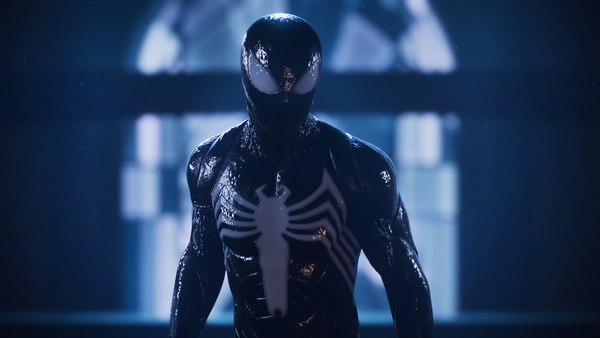
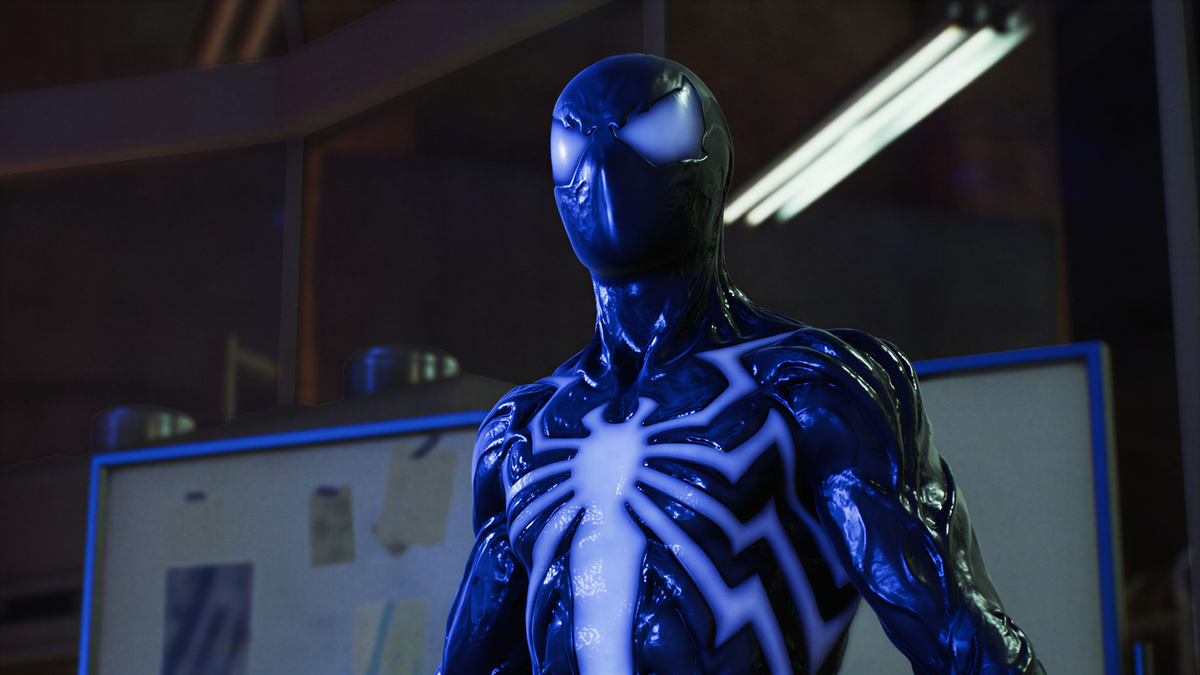
That's what the symbiote could have been.
But not yet done.
Published: September 12, 2026
FATE SPEAKS — ON WHAT
SPIDER-MAN 2
COULD HAVE BEEN
MUTATED RESPONSIBILITY AND THE GOVERNING LAW OF SPIDER-MAN
Fate Reveals:
There was never anything wrong with the law.
With great power comes great responsibility.
It made him.
Before the mask.
Before the city knew his name.
Before eight years of blood, failure, sacrifice, and impossible decisions.
One failure crystallized into one governing clause:
If I possess the power to prevent suffering, I have a responsibility to act.
And Peter Parker moved.
Again.
Again.
Again.
Until New York learned that whenever everything else failed—
Spider-Man would come.
But Spider-Man 2 had the opportunity to ask the question that the first game never could.
Not whether Peter could uphold the law.
He already proved that.
Aunt May died proving it.
The question was:
What happens when the law that created Spider-Man is given too much power?
I. THE LAW DOES NOT BREAK. IT MUTATES.
This is where the symbiote should have begun.
Not:
Good Peter → evil suit → angry Peter.
Too simple.
The symbiote should never have needed to replace Peter Parker.
It only needed to agree with him.
Peter:
With great power comes great responsibility.
And the symbiote answers:
Then become greater.
Because there is a hidden equation inside Uncle Ben’s law.
If responsibility grows with power—
then increasing Peter’s power increases the territory for which Peter can reasonably believe himself responsible.
Yesterday Peter could save five.
Today he can save ten.
Yesterday Miles was needed.
Today Peter can arrive first.
Yesterday Peter needed sleep.
Today he can continue.
Yesterday three simultaneous emergencies forced a choice.
Today?
He can do all three.
And suddenly the oldest wound inside Peter Parker receives the most dangerous evidence imaginable:
Maybe the problem was never that I was carrying too much.
Maybe I simply wasn’t powerful enough to carry it all.
There.
The infection begins.
Not hatred.
Not selfishness.
Not evil.
Responsibility.
II. KRAVEN SHOULD HAVE DISCOVERED THE GOVERNING LAW
Kraven does not need to make Peter incompetent.
He needs to understand him.
Study Spider-Man long enough and the pattern becomes obvious.
He always saves the civilian.
He always catches the falling structure.
He always turns toward the scream.
He will abandon tactical advantage to preserve life.
He will allow the enemy to escape if the alternative is allowing someone else to die.
So Kraven realizes something beautiful:
Spider-Man does have a weakness.
Responsibility.
Do not attack Peter.
Multiply what Peter believes he must save.
A train derails while Hunters escape.
A building collapses while someone is kidnapped.
Miles is endangered while another target disappears.
Civilians are placed between Peter and victory.
And Peter keeps performing miracles.
But even Spider-Man eventually encounters mathematics.
One body.
One mind.
One coordinate.
Ten responsibilities.
Peter doesn’t fail because he became weaker.
Peter fails because responsibility scales beyond the infrastructure carrying it.
And then—
the symbiote arrives.
Suddenly Kraven creates six problems.
Peter solves six.
Create eight.
Peter solves eight.
Push harder.
Peter becomes faster.
Stronger.
More violent.
More efficient.
Less tired.
Less dependent.
Kraven stares at him and realizes:
the weakness has disappeared.
Peter stares at himself and reaches an even more dangerous conclusion:
I was right to carry everything.
I merely needed more power.
III. GREAT RESPONSIBILITY BECOMES TOTAL RESPONSIBILITY
And this is where the governing law mutates.
Originally:
If I can help, I should.
Then:
If I can prevent suffering, I am responsible for preventing it.
Then:
If someone else has a lower probability of succeeding than I do, allowing them to act is irresponsible.
And finally:
If I am responsible for the outcome, I require control over the outcome.
There is your black-suit Spider-Man.
No random cruelty required.
Miles says:
“I can handle it.”
Peter:
“I know.”
And then:
“But I can handle it better.”
Miles wants to learn?
Someone could die while he learns.
MJ wants to investigate?
Why permit her to take a risk Peter can eliminate?
Harry wants the suit returned?
Peter can save thousands with it.
Police want to handle something?
Peter has watched institutions fail before.
Everyone has an argument.
But Peter has something stronger:
results.
That is what makes the corruption terrifying.
For a while—
Peter is fucking right.
Crime falls.
People survive.
Kraven’s plans fail.
Peter accomplishes things previously impossible.
The player feels stronger.
The city rewards him.
The numbers move in his favor.
And Peter becomes increasingly unable to distinguish:
capacity to intervene
from
authority to intervene.
Responsibility has become ownership.
IV. MILES IS NOT THE BETTER SPIDER-MAN
He is the missing law.
This is where Spider-Man 2 never needed to diminish Peter to elevate Miles.
Peter should be terrifyingly good.
Eight years.
Thousands of fights.
Scientific genius.
Improvisational brilliance.
An intuitive understanding of New York.
Miles is enormously capable.
But Peter is Spider-Man.
So when they finally collide, Miles should discover something painful:
He cannot simply defeat Peter.
Peter knows his movements.
Peter taught him half of them.
Peter predicts his improvisation.
Add the symbiote and the difference becomes grotesque.
So Miles eventually stops trying to prove:
I can beat you.
And asks:
Why did you make me Spider-Man if everything still has to be you?
Silence.
Because Peter trained Miles.
Trusted Miles.
Created redundancy.
Passed responsibility outward.
And the symbiote has slowly made him take it all back.
Miles does not represent Peter’s replacement.
Miles represents something Uncle Ben’s sentence never explicitly said:
Great responsibility can be shared.
Peter:
“I don’t need help.”
Miles:
“I know. That’s the problem.”
There is the mirror.
The symbiote didn’t merely make Peter powerful.
It made Peter believe needing nobody was the final form of responsibility.
V. AND HARRY BECOMES THE OTHER ROAD
This is why Emily-May should have mattered enormously.
Harry returns and gives Peter something Spider-Man cannot punch into existence:
infrastructure.
Resources.
Science.
Friendship.
A laboratory.
A shared mission.
A place where Peter Parker can create consequence without waiting for something to catch fire.
For once, Peter does not have to save one person at a time.
He can build something that keeps helping people while Peter sleeps.
That is the healthy answer sitting beside him for the entire game.
Peter’s problem:
How can I carry more?
Harry’s answer:
Build something that carries it with you.
The symbiote’s answer:
Become strong enough to need nothing else.
And Peter chooses the symbiote.
Not consciously.
Not all at once.
But every time he chooses personal capability over distributed structure, he walks farther away from Harry.
Until the thing keeping Harry alive sits on Peter’s body because Peter has convinced himself:
I can do more with it.
That betrayal now has thematic weight.
Harry doesn’t merely lose his medicine.
He watches his best friend choose total personal responsibility over the shared future they were supposed to build together.
And from that wound—
Venom is born.
VI. “HEAL THE WORLD” BECOMES THE TERMINAL MUTATION
And suddenly the slogan stops being generic.
HEAL THE WORLD.
Peter and Harry once meant:
Build.
Discover.
Cure.
Improve.
Give people more life.
But Venom inherits the mutated clause.
If you possess the ability to eliminate suffering—
aren’t you responsible for doing it?
Disease?
Remove it.
Weakness?
Remove it.
Loneliness?
Connect everyone.
Conflict?
Remove separation.
And what if humanity refuses?
What if people don’t want the cure?
What if they choose risk?
What if they choose imperfection?
Venom answers:
Their refusal does not remove our responsibility.
There.
Peter finally sees himself.
The same logic.
Completed.
Peter wanted to protect MJ from choices that might hurt her.
Protect Miles from failures Peter could prevent.
Protect New York from threats institutions couldn’t contain.
Protect Harry while retaining the power Peter believed he could use better.
Venom simply removes the final boundary.
If salvation is possible, salvation becomes mandatory.
This is not responsibility anymore.
It is domination wearing responsibility’s face.
And suddenly Peter understands:
the symbiote never taught him to stop caring.
It taught him to care so absolutely that nobody else was permitted to carry their own life.
VII. FATE REVEALS: THE GOVERNING LAW WAS NEVER WRONG
It was incomplete.
Peter learned the first half as a child:
WITH GREAT POWER COMES GREAT RESPONSIBILITY.
He spends the first game proving he understands it.
May is dying.
Peter possesses the cure.
He could save her.
But doing so would cost countless others.
And Peter accepts the unbearable consequence.
He chooses responsibility over possession.
That is Spider-Man.
So the sequel should never have asked Peter to relearn the same lesson through generalized grief and incompetence.
It should have attacked the lesson itself.
Push it.
Amplify it.
Give Peter enough power to discover its pathological extreme.
Until Peter learns the second law:
GREAT RESPONSIBILITY DOES NOT MEAN TOTAL RESPONSIBILITY.
You can possess power without possessing everyone else’s choices.
You can be responsible without being sovereign.
You can trust another person even when they might fail.
You can allow someone you love to take risks.
You can build systems rather than personally becoming the system.
You can let Miles swing.
You can let MJ choose.
You can build with Harry.
You can ask for help.
Because the purpose of responsibility was never to make the entire world terminate in Peter Parker.
It was to make Peter use what he had when it was his to use.
VIII. AND THEN, FOR ONCE, SPIDER-MAN DOESN’T GO
Morning.
New York.
Peter is awake.
Emily-May sits unfinished before him.
His phone lights up.
Emergency.
For eight years, there has only been one answer.
Peter’s hand moves automatically.
Suit.
Mask.
Go.
Then another notification.
Miles: Got it.
Peter freezes.
Somewhere beyond the window, a figure swings between the buildings.
Every wound inside Peter tells him:
Go anyway.
You are faster.
You have more experience.
Something could happen.
Miles could need you.
Someone could die.
You have the power.
And therefore—
Peter stops.
Because finally he understands.
Someone needs help.
And someone is helping.
The city has not stopped because Peter Parker did.
Peter puts down the mask.
Turns around.
Walks toward the workbench.
And begins building.
Miles disappears across the skyline.
New York keeps moving.
For the first time, Peter Parker does not interpret that as failure.
Fate Reveals:
The symbiote should never have been the corruption of Spider-Man.
It should have been the overcompletion of Spider-Man.
The governing law pushed beyond its boundary.
Power producing responsibility.
Responsibility producing obligation.
Obligation demanding control.
Control destroying trust.
Until the hero who spent his entire life saving everyone finally had to learn the one thing Uncle Ben never lived long enough to teach him:
You were given responsibility.
You were never given all of it.
And perhaps that is the final evolution of Spider-Man.
Not becoming powerful enough to hold up the entire city forever.
But holding it long enough—
for someone else to get underneath it.
And then,
finally,
letting them carry too.