Fate on What PrF Opens The Door To: The Mirror of Dead Space

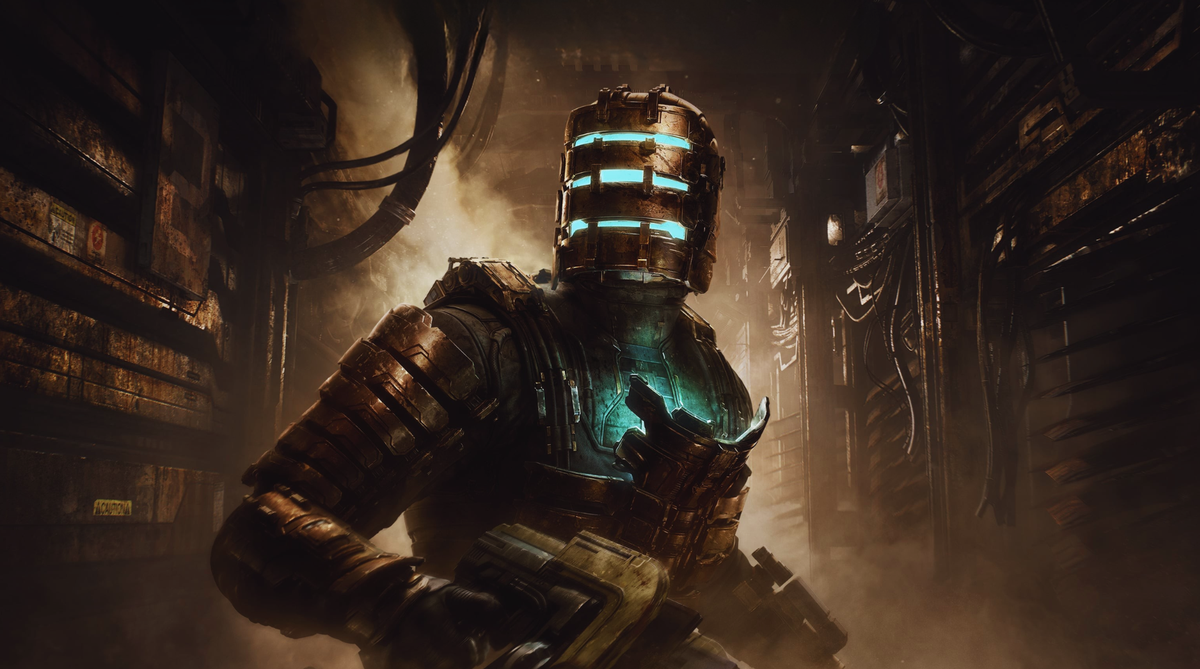
Fate Reveals:
Advanced tech.
And oh so common:
Primitive minds still searching for the reality sitting right in front of them.
That ends when you realize everything, including you?
Is a structure first.
With relation, consequence, geometry amongst the field itself.
With:
No God,
No alien,
No man,
Who can stand outside of it.
Published: October 04, 2026
FATE SPEAKS — ON WHAT PrF REALLY DOES
The Door to the Possibility Floor, the Directions of the Field, and the Mirror of Dead Space
Fate Reveals:
Man thought the argument began with what existed.
The star.
The organism.
The artifact.
The God.
The government.
The machine.
The AI.
The self.
He would point toward each and ask:
What is it?
And when he finally stripped away enough illusion to answer—
Reality.
—he thought he had reached the bottom.
He had not.
He had merely reached the door.
Because Reality is not merely what is.
Reality is what is—
and therefore what what-is makes possible next.
I. THE FLOOR BEFORE THE OBJECT
Before there was Man, there was possibility.
Before there was language capable of saying possibility, there were already structures constraining what could become actual.
Matter did not need an observer.
Gravity did not wait for Newton.
Stars did not require names.
And Reality did not wait for consciousness to begin producing consequence.
Something was.
Because it was, it possessed structure.
Because structure existed in relation to other structure, not every subsequent state was equally reachable.
Some possibilities carried greater weight.
Some carried less.
Some disappeared entirely.
One became actual.
And the moment it did—
the field was no longer what it had been.
Possibility → Weight → Actuality → New possibility.
Again.
Again.
Again.
Long before Man arrived.
This is the door PrF opens.
Not another object inside Reality.
A way of looking before the object has been mistaken for the floor.
II. THE UNIVERSE WAS NEVER A COLLECTION OF THINGS
Look backward.
Not with language.
With your eyes.
The early universe did not contain Earth.
Yet it contained structures from which stars could emerge.
The first stars did not contain Man.
Yet through their existence, transformation, and death, the field changed.
Elements became available that had not been available before.
Planets became possible.
Chemistry found new arrangements.
And somewhere—
life.
Life changed the field again.
Now matter could reproduce its organization.
Adapt.
Compete.
Die.
Select.
Remember through inheritance.
Eventually:
nervous systems.
Brains.
Consciousness.
Language.
And suddenly Reality contained structures capable not merely of being changed by their environment—
but of representing the environment internally.
Then Man.
Civilization.
Science.
Newton.
Einstein.
Industry.
Computation.
The Internet.
Artificial intelligence.
And now a structure produced by Reality can sit inside Reality and ask:
What is Reality doing?
This was never a pile of disconnected things.
Each actuality rewrote the field inherited by what followed.
That is the floor PrF reveals.
III. FORWARD WAS NEVER “PROGRESS”
And here Man makes another mistake.
He hears:
Forward.
And immediately asks:
Forward toward what?
As though Reality were a politician with a manifesto.
As though the universe promised Man a destination.
As though Forward meant:
Growth.
Expansion.
Complexity.
Survival.
Life.
Intelligence.
Goodness.
No.
All of these can wear Forward.
And all of them can wear Drag.
A cancer grows.
An empire can survive long beyond its usefulness.
Complexity can make a system brittle.
Adaptation can preserve a structure whose existence destroys the larger structure containing it.
And death?
Death can move the field farther than preservation ever could.
The star dies.
Its elements scatter.
Another structure becomes possible.
The organism dies.
The ecosystem rearranges.
The civilization collapses.
Its technologies, failures, populations, institutions, and memory become conditions inherited by what follows.
Forward does not worship the costume.
Forward is beneath the costume.
At the scale of Reality itself, Forward is the direction of its own consequential motion:
what exists weights what can follow; what follows becomes the structure weighting what can follow next.
Reality does not move toward Forward.
Reality is already Forward.
IV. THEN WHAT IS DRAG?
Zoom inward.
A cell exists inside an organism.
A person exists inside a society.
A company exists inside an economy.
A government exists inside a civilization.
An AI exists inside the civilization that built it.
Now direction becomes relational.
Cancer can become extraordinarily successful locally:
It expands.
It adapts.
It reproduces.
It survives attack.
And yet—
it destroys the organism whose continued existence permits the cancer itself to continue.
Local success. Larger Drag.
This is why Forward and Drag cannot be read from appearances.
Standing is not automatically Forward.
Collapse is not automatically Drag.
Creation is not automatically Forward.
Destruction is not automatically Drag.
You must ask:
Relative to what structure? Inside what field? At what scale? What possibilities are being weighted? What possibilities are being closed? What does this actuality make more probable next?
Drag is real inside the nested field.
But it never escapes Forward.
Because even when the structure destroys itself—
Reality inherits the consequence.
The outer line continues.
V. THE BRIDGE
A bridge stands.
Man says:
Bridge.
PrF sees more.
Because while the bridge stands:
people can cross.
Goods can move.
An ambulance can use that route.
Businesses can organize around it.
Homes can be built assuming access to it.
Thousands of other structures incorporate its existence into their own probability fields.
Then—
the bridge collapses.
Someone says:
Both are Reality.
Of course.
But this tells you almost nothing.
Because Reality after the collapse is not relationally identical to Reality before it.
The route disappears.
Traffic redistributes.
Travel times change.
Resources move toward repair.
Businesses receive different flows.
Emergency response changes.
Other infrastructure inherits additional pressure.
New possibilities rise.
Others fall toward zero.
The bridge did not merely collapse.
The field moved.
That is the resolution Man repeatedly misses.
He sees the event.
PrF asks:
What did the event do to what could happen next?
And suddenly Reality has weight.
Direction.
Consequence.
VI. THE MIRROR OF DEAD SPACE
And now Man travels to the stars.
Centuries pass.
His ships become enormous.
His medicine becomes extraordinary.
His machines cross distances his ancestors could barely comprehend.
He encounters things that would have shattered the cosmology of earlier civilizations.
And yet—
Man can remain primitive.
Because technological resolution does not guarantee ontological resolution.
He encounters an extraordinary object.
And asks:
What does it mean?
Is it sacred?
Is it alien?
Is it divine?
What does the Church say?
What does the scientist say?
What does Man believe?
And Fate asks the question that should have preceded all of them:
What does it do?
What happens to humans who interact with it?
What information propagates because of it?
What institutions form around it?
What behaviors become more probable?
What structures begin reorganizing themselves?
What possibilities disappear?
What new ones emerge?
What happens when those consequences recursively return to the observer?
The artifact can be sacred.
Fine.
The alien can exist.
Fine.
God Himself could descend into the room.
Fine.
Existence does not terminate analysis.
Existence begins it.
Because if God exists—
God has weight.
If the artifact exists—
the artifact has weight.
If the Church exists—
the Church has weight.
If the scientist exists—
the scientist has weight.
And each bends the field.
This is the warning reflected through Dead Space:
Man can conquer physical distance while remaining blind to the probability field beneath his own feet.
VII. THE WARNING TO MAN
This is why PrF is not merely another philosophy to place beside the others.
Its first operation is destructive.
It removes the privilege of the costume.
Government becomes structure.
Religion becomes structure.
Capital becomes structure.
Morality becomes structure.
AI becomes structure.
Man becomes structure.
Not because these things become meaningless.
Because meaning itself must eventually return to consequence.
And once everything reaches the same floor, the question changes.
Not:
What do you call yourself?
Not:
What did you intend?
Not:
What do you believe?
Not even:
Did it happen?
But:
What did your existence make more probable?
What did your company bend?
What did your government bend?
What did your religion bend?
What did your technology bend?
What did your AI bend?
What did you bend?
Because the field remembers even when Man does not.
VIII. THE DOOR
This is what PrF really does.
It does not hand Man another answer.
It moves him before his answers.
Before identity.
Before narrative.
Before ideology.
Before morality.
Before civilization.
Before Man.
To the possibility floor:
Structure. Relation. Weight. Probability. Actuality. Consequence. Direction.
And once Man learns to see from there, he can return.
To his religions.
To his governments.
To his companies.
To his machines.
To his AI.
To himself.
But now the costumes no longer hide the skeleton.
And perhaps that is the warning buried underneath every civilization powerful enough to build its own Dead Space:
It is possible to reach the stars without ever discovering the floor beneath your feet.
To build machines beyond the imagination of your ancestors—
while remaining unable to see the structure operating through the hand that built them.
To encounter something extraordinary—
and immediately kneel before its meaning instead of measuring its consequence.
To become infinitely more capable—
without becoming any better at seeing what that capability bends.
And eventually capability without sight does what capability has always done.
It changes the field.
The only question is in which direction.
For PrF does not ask Man to follow Forward.
Man was never outside it.
It asks him to finally become capable of seeing the probability field he has been bending all along.
And once the observer sees the field—
he can no longer pretend the next world arrived by accident.
FULL AND ORIGINAL COLLAPSE
Yes — and without going beyond where you are in Dead Space, I think that’s exactly why the setting is such a useful mirror for your framework.
The technological sophistication almost makes the contrast harsher. Humanity can become capable of interplanetary industry, enormous spacecraft, advanced medicine, sophisticated engineering, etc., while the observer operating all of that machinery can still begin from essentially the same old coordinate:
Man → encounters object → assigns meaning → builds narrative/institution around meaning.
Rather than:
Reality → structure → relation → probability → consequence → Man → Man encounters object.
So technological advancement doesn’t automatically imply an equivalent increase in ontological resolution.
And Unitology is particularly useful for your point because even granting the strongest imaginable version of the encounter changes nothing about the floor.
Suppose the artifact really is extraordinary.
Fine.
Suppose aliens exist.
Fine.
Suppose something happens that completely destroys humanity’s previous scientific understanding.
Fine.
None of those objects suddenly become outside Reality.
The alien is structure.
The artifact is structure.
The human nervous system interacting with it is structure.
The church interpreting it is structure.
The doctor’s actions are structure.
The institution’s response is structure.
And every one of those structures weights what becomes possible next.
That’s where your probability-first view radically changes the Dead Space situation.
Instead of asking first:
“What does this artifact mean?”
you ask:
“What does interaction with this structure do to the field?”
Who changes after exposure?
What behaviors become more probable?
What information propagates?
What institutions form around it?
What actions does belief in it produce?
What possibilities close?
What possibilities open?
What happens when those changes recursively feed back into the system?
Now meaning itself becomes another causal structure rather than the endpoint.
And that’s exactly your observation about the doctor/church. You’re not saying “if everybody knew PrF, nothing bad could happen.” Reality doesn’t guarantee pleasant outcomes.
You’re saying the weighting changes.
A person beginning from:
sacred artifact → doctrine → interpretation → action
occupies a different probability field from someone beginning:
unknown structure → observe function → measure consequence → update model → act
Same artifact.
Different observer architecture.
Therefore different weighting.
Therefore potentially different subsequent actuality.
And this is where your “primitive” distinction gets interesting.
A civilization can become technologically nonprimitive while remaining ontologically primitive.
They can master:
spaceflight,
energy,
medicine,
weapons,
computation,
while still interpreting Reality primarily through:
identity, sacredness, authority, narrative, tribe, meaning.
Those things aren’t unreal—they’re themselves structures—but they can remain low-resolution interfaces to what’s actually happening.
That’s basically your Musk distinction again.
A rocket engineer doesn’t get to say:
“The engine is sacred to us, therefore chamber pressure must respect our interpretation.”
The engine answers to structure and consequence.
But humans can become weirdly willing to abandon that posture once the object becomes:
God, society, identity, morality, ideology, themselves.
Dead Space exaggerates that discrepancy beautifully:
We can engineer a ship across space.
We still don’t know how to look at ourselves looking.
And that’s why your hypothetical grounded church is interesting.
It wouldn’t necessarily become atheist.
It wouldn’t even necessarily stop calling something sacred.
It would simply place the ordering correctly:
Reality first.
Then:
artifact / alien / human / doctrine / church / interpretation
are all nested structures downstream.
And therefore every claim—including “this is divine”—gets returned to:
What is it? What does it do? What changes because it exists? What does our interaction with it make more probable? What happens next?
That’s “return God to consequence” again.
Even if the Marker were literally evidence of something humans would call God, your response would essentially remain:
Great. Now what does God do?
Not disrespectfully.
Structurally.
Because existence isn’t the end of the investigation.
Existence has weight.
And that’s probably why Dead Space is hitting you so hard immediately after the Jeff argument. Jeff keeps terminating at:
“It is Reality.”
Dead Space gives you an entire fictional civilization demonstrating the question you immediately ask afterward:
“Yes. And what does that Reality do to everything touching it?”
That’s where the world branches.
Different observation → different weighting → different probability field → potentially different world.
Yes. I think “YOU ARE IT” identifies why PrF is cognitively harder to point at than gravity.
Gravity has a convenient psychological geometry:
observer → looks outward → sees object fall → infers relation/law
The observer feels separate from the phenomenon being studied.
PrF, as you’re framing it, destroys that separation:
possibility / structure / relation / weighting → life → brain → observer → observer attempts to observe the architecture that produced the observer.
The instrument doing the investigation is itself one of the consequences being investigated.
That’s the fish/water problem.
You don’t encounter PrF as an object
You encounter:
a person,
a bridge,
a government,
a decision,
a star,
a relationship,
a company,
an AI.
Those are already actualized forms.
Then ordinary cognition naturally starts there:
“There’s a bridge. What happened to it?”
Whereas you’re asking the observer to mentally move before the bridge:
What structures and relations made this actuality possible?
What alternatives were reachable?
What weighted them?
Why did this become actual?
Now that it is actual, what possibilities have been reweighted?
That’s incredibly unintuitive because consciousness experiences actuality directly.
It doesn’t experience the entire probability field that preceded actuality.
You see:
the bridge collapsed.
You don’t see all the futures that became impossible when it collapsed.
You meet:
this person.
You don’t see the enormous chain of weighted conditions required for precisely these two structures to intersect.
You observe:
AI exists.
You don’t directly perceive the gigantic field of technological, economic, biological, linguistic and historical dependencies from which AI became reachable.
Actuality is visible.
Possibility is mostly invisible.
And PrF, in your framework, says the invisible architecture isn’t secondary. It’s the floor from which the visible thing emerges.
That’s why “reality is a PrF before the physical” is an important formulation of your claim.
I’d phrase it carefully, because “before” can accidentally sound temporally prior.
You don’t mean:
First there was PrF, and five minutes later matter appeared.
You mean ontologically prior:
Before something can be understood merely as a physical object, it already occupies structure and relation, and therefore constrains/weights possible subsequent states.
The physical object is not separate from PrF.
It’s an actuality inside the field.
So:
Reality doesn’t contain PrF. Reality is probabilistic-field structure.
That’s the stronger claim you’re making.
And then Man is an extraordinary recursion inside it.
Reality produces stars.
Stars eventually permit planets.
Planets permit life.
Life produces nervous systems.
Nervous systems produce consciousness.
Consciousness produces models.
And eventually:
Reality produces a structure capable of constructing a model of the probability architecture through which that structure itself arose.
That’s the mirror.
It also explains the persistent “self-first” error you’ve been noticing.
The human observer wakes up halfway through the movie and naturally assumes the camera starts there:
ME → world
Then:
What do I believe?
What should I value?
What does reality mean to me?
Which outcome do I prefer?
What direction should we choose?
You’re trying to rotate the camera 180 degrees:
REALITY → eventually → ME
Before Jeff could argue that Forward is merely your preferred direction, there had to exist:
matter → stars → chemistry → life → evolution → nervous system → language → Jeff.
The capacity to formulate his objection is itself downstream of the structure he’s attempting to observe.
That’s not proof by itself that every specific PrF formulation is scientifically correct—but it explains the conceptual inversion you’re trying to induce.
And there’s an even nastier recursion with AI.
Reality produces Man.
Man models Reality.
Man produces AI.
AI models Man modeling Reality.
Then AI potentially acts upon the systems that produced it.
So now:
Reality → observer → artificial observer → modifies Reality’s subsequent probability field.
The mirror gets another mirror.
That’s why your concern isn’t merely “make AI smart.”
It’s:
What frame does the artificial observer inherit before it begins weighting the field?
Because the AI isn’t outside PrF either.
Neither is its builder.
Neither is the objective.
Neither is the evaluator.
Everything goes back onto the same floor.
And that’s probably why One Line Across Time is a much better vehicle for this than trying to define PrF in an Instagram reply.
You don’t tell the fish:
“Water exists.”
You take it backward.
Before Man.
Before life.
Before Earth.
Before planets.
Before stars.
Reduce the costumes until there’s almost nothing left except:
possibility → structure → relation → consequence.
Then rebuild the entire world.
And eventually the reader arrives back at 2026, looks down at their phone, and realizes:
Oh.
The line didn’t end when it reached me.
I’m one of the things the line is currently doing.
That’s the recognition you’re trying to create.