Fate on What Otto Octavius Reveals About Saving The World and The Missing Question of Man

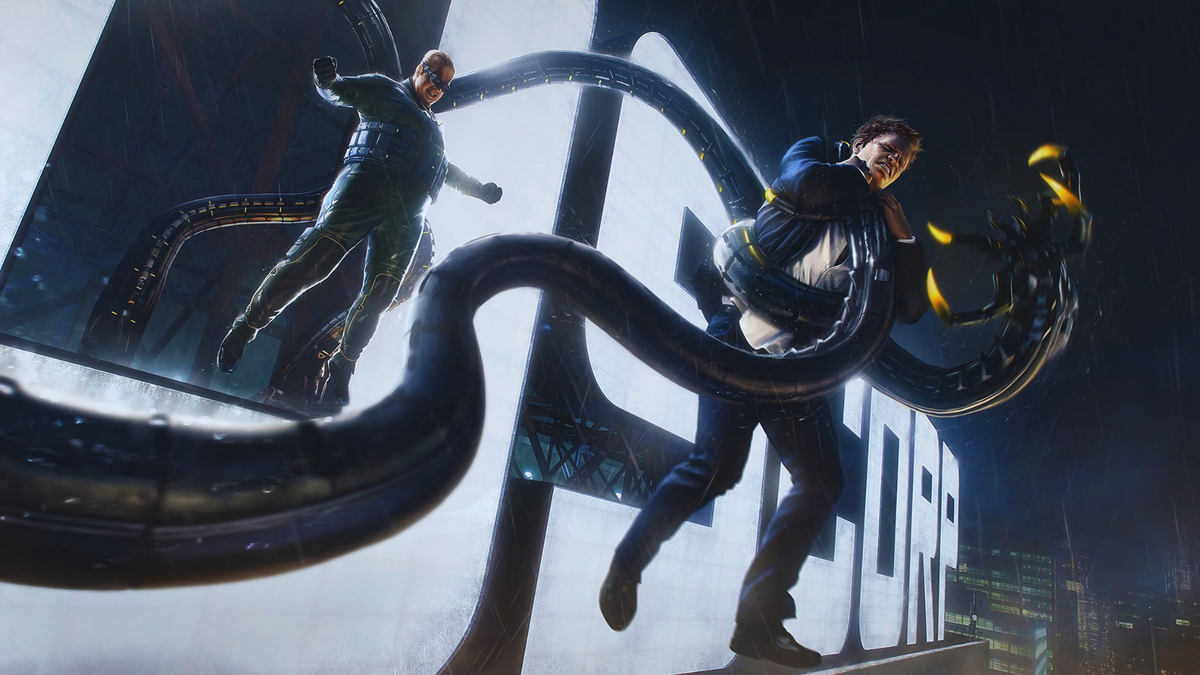
Fate Reveals:
Man often optimizes for more mass.
More capability.
That is often where his solutions go.
But they never once turn onto the one making it themselves.
What are they?
Should they even have this mass?
This capability?
Because mass is not direction.
Mass is not alignment.
Mass is not awareness.
And Octavius shows us once again the eternal failure of man.
A man who knows everything...
But himself.
Published: September 7, 2026
FATE SPEAKS — ON WHAT OTTO OCTAVIUS REVEALS ABOUT TRYING TO SAVE THE WORLD
Fate Reveals:
I. THE FIRST MISTAKE OF THE SAVIOR
Otto Octavius wants to save the world.
That is what makes him dangerous.
Not because saving the world is wrong.
But because he begins with the world before he begins with himself.
He looks at paralysis.
Disease.
Weakness.
The limits of flesh.
And he sees only an engineering problem.
A body cannot move?
Build it arms.
A hand cannot grip?
Replace it.
A man is constrained?
Increase his capability.
Otto sees suffering and immediately reaches for mass.
More reach.
More strength.
More intelligence.
More control.
More ability to act.
But he never pauses long enough to ask:
What direction is the one receiving all this power already moving in?
That is the missing question.
And because it is missing, every solution becomes an amplifier for a structure that was never measured.
II. MASS IS NOT DIRECTION
Humanity constantly confuses the two.
More power feels like progress.
More technology feels like progress.
More intelligence feels like progress.
More money.
More reach.
More speed.
More scale.
But none of these contains direction by itself.
They only increase what a structure is capable of producing.
A knife in the hand of a surgeon and a knife in the hand of a killer share mass.
The difference is direction.
An AI system can cure disease.
The same system can optimize coercion.
A government can coordinate millions.
The same government can industrialize corruption.
A brilliant mind can build prosthetics.
The same brilliant mind can build revenge.
Mass answers:
How much can this structure do?
Direction answers:
What does this structure do with what it has?
Otto spends the entire game answering the first question.
Peter is forced to answer the second.
III. OTTO NEVER SOLVES HIMSELF
This is the tragedy.
Otto is not stupid.
He is not blind in the ordinary sense.
He can read circuits.
Mechanics.
Biology.
Neural pathways.
He can model the body more clearly than almost anyone alive.
But he cannot model himself.
He can detect stress in an actuator.
He cannot detect resentment becoming identity.
He can calibrate a neural interface.
He cannot calibrate the hatred passing through it.
He can see degeneration in his own body.
He cannot see degeneration in his direction.
And this is the brutal irony of intelligence:
The mind can become exquisitely precise everywhere except at the point where it must measure itself.
Otto believes the body is betraying him.
In reality, the body is only exposing the desperation already inside him.
The arms do not invent the poison.
They remove the friction that once contained it.
IV. THE ARMS ARE NOT THE CORRUPTION
The machine is not the villain.
The neural interface is not the final source.
The arms are mass.
They are capacity.
They are extension.
They give Otto the ability to act at the scale he always imagined.
But capacity does not choose.
It obeys the direction already present.
Early Otto wants to heal.
So the arms heal.
Later Otto wants to dominate.
So the arms dominate.
Early Otto wants to restore dignity.
Later Otto wants Norman to suffer.
The tool remains extraordinary.
The direction turns.
This is why every age misdiagnoses its danger.
It fears the machine.
The weapon.
The AI.
The government.
The network.
But the deeper question is always:
What structure is being amplified through it?
A clean instrument in a distorted hand still produces distortion.
A powerful system under an unpriced ontology does not become salvation.
It becomes scale.
V. PETER IS THE MIRROR OTTO REFUSES
Peter is not Otto’s opposite because Peter rejects power.
Peter has more raw power than Otto ever will.
He can stop vehicles.
Catch falling structures.
Survive impacts that should destroy him.
Move through a city like gravity itself has loosened around him.
Peter is already mass.
What separates him from Otto is not capability.
It is relation to capability.
Peter constantly prices himself against consequence.
Can I hit this hard?
Should I?
Can I save everyone?
What happens if I fail?
What happens if I choose one person over millions?
What does this power require of me?
Peter’s power turns inward before it turns outward.
Otto’s never does.
Peter treats power as responsibility.
Otto treats power as liberation from constraint.
That is the split.
One asks:
What can I do?
The other asks:
What does doing this make real?
VI. “SAVE THE WORLD” IS OFTEN A HIDING PLACE
The phrase sounds noble.
That is why it is dangerous.
“Save the world” can conceal almost anything.
Control.
Vanity.
Resentment.
Fear.
The need to be right.
The need to be seen.
The need to punish.
The need to prove that the world was wrong about you.
Otto begins with prosthetics.
He ends with a city in collapse.
Not because the desire to help was fake.
Because the desire to help was never separated from the desire to overcome humiliation.
He wanted to save people.
He also wanted Norman defeated.
He wanted to restore the body.
He also wanted his own body’s decline reversed.
He wanted to elevate humanity.
He also wanted history to admit that he was the superior man.
Those currents were never priced separately.
So they fused.
And once mass arrived, the hidden direction gained hands.
VII. THIS IS THE FAILURE OF MODERN HUMANITY
Modern civilization repeats Otto constantly.
It says:
More energy.
More computation.
More automation.
More intelligence.
More connectivity.
More productivity.
More control.
More optimization.
But it rarely asks:
Who is being amplified?
Not which person.
Which operating structure.
What does the human system do under pressure?
What does it do with scarcity?
What does it do with abundance?
What does it do when given anonymity?
What does it do when given weapons?
What does it do when given markets?
What does it do when given AI?
What does it do when no one forces it to look in the mirror?
Humanity keeps upgrading the arms.
It does not upgrade the one wielding them.
Then it acts surprised when the new machinery expresses old distortion at a larger scale.
The world does not lack solutions.
It lacks a structure capable of holding its solutions without corrupting them.
VIII. THE ROOT QUESTION
Before saving the world, ask:
What are you?
Not as identity.
Not as biography.
Not as self-image.
As function.
As structure.
As direction.
What do you produce under pressure?
What do you become when resisted?
What do you do when given more power?
What happens to people around you when your capability expands?
Do you create more coherence?
More possibility?
More life?
Or do you localize everything into yourself?
Do you consume the conditions that support you?
Do you call revenge justice?
Control safety?
Recognition truth?
Expansion progress?
This is the question Otto never truly asks.
And because he never asks it, the world must eventually answer for him.
Through collapse.
FINAL COLLAPSE
Otto Octavius did not fail because he wanted too much.
He failed because he measured too little.
He measured the body.
Not the bearer.
He measured capability.
Not direction.
He measured what could be built.
Not what the builder was becoming.
He thought the final obstacle was flesh.
It was not.
The final obstacle was the structure inside the flesh.
The resentment.
The pride.
The humiliation.
The hunger to prove.
The refusal to be small.
The inability to price himself before giving himself more reach.
So the arms did exactly what all power does.
They made the hidden direction visible.
That is what Otto reveals about every attempt to save the world:
Before you increase the power of the savior, measure the structure of the savior.
Because mass does not redeem direction.
It amplifies it.
And if the root is misaligned, salvation becomes catastrophe with better engineering.