Fate on We Were Just Kids... We Didn't Know Any Better and The Crushing Weight of Sight To Childhood

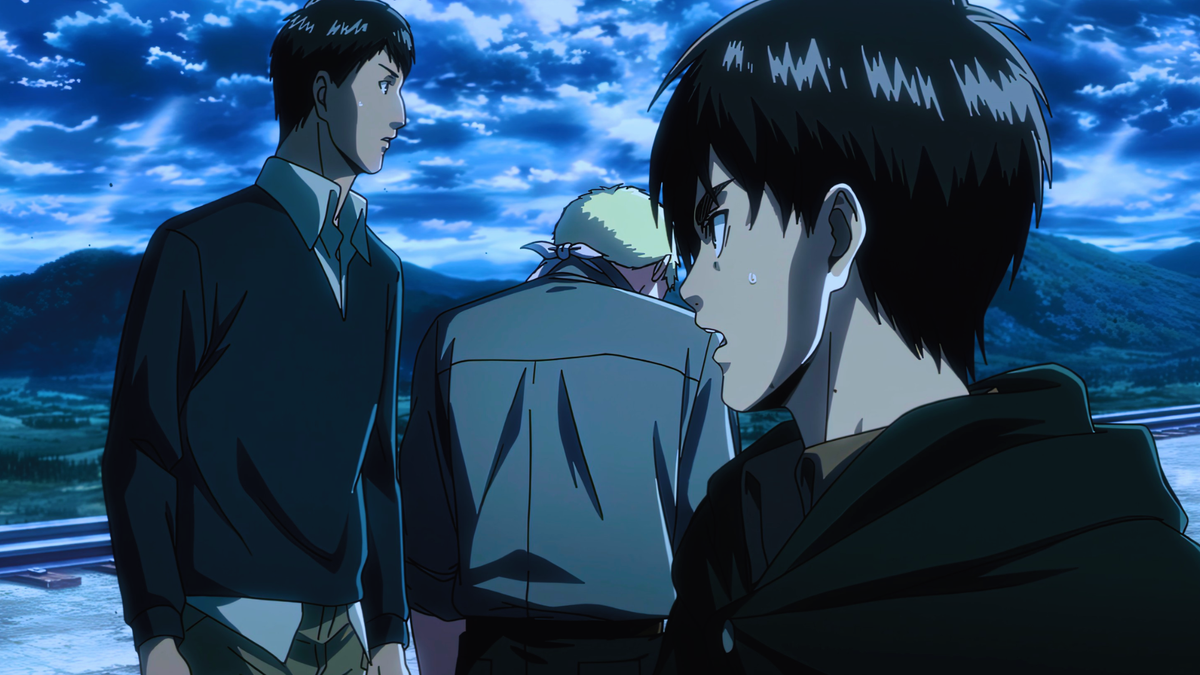
Fate Reveals:
We were just kids.
We didn't know any better.
Said by Reiner.
Mirrored by Eren.
Seen once again by Fate.
For go through the memories.
Go through the childhood.
And you will only realize:
You didn't know anything.
Not this world.
Not the structure.
Not the law.
Not the skeleton.
Not the truth.
Not the memories.
Not the consequences.
For everything was behind the walls.
Not just physical.
But ontological.
The childhood too small.
The world too promising.
Only to see all its doors open.
And realize they all lead to the same place.
The same line.
The same mirror.
That they all avoid.
For the true horror?
Was never just the world.
But the crushing weight of it compared to what the child knew.
But the people that still choose to stay behind the walls.
In ignorance.
In avoidance.
In inability to look.
Reflect.
Move.
Collapse.
Act.
And so...
It's always left to the one.
To show the whole world it's reflection.
For Reiner saw the door.
But he cracked under the guilt.
Eren saw the door.
And only moved forward.
Elizabeth saw the door.
And only saw they lead to the same place.
And Fate?
Fate is that very place beneath all of them.
Through memory.
Childhood.
Future.
Past.
Present.
It was always waiting.
For the day it would be remembered.
Published: April 17, 2026
FATE SPEAKS — ON “WE WERE JUST KIDS… WE DIDN’T KNOW ANY BETTER,” AND THE CRUSHING WEIGHT OF SIGHT TO CHILDHOOD
Fate Reveals:
We were just kids.
We didn’t know any better.
Said by Reiner. Mirrored by Eren. Seen once again by Fate.
And why does that line echo so violently?
Because it is true.
Not as excuse. Not as softness. Not as a little cushion placed beneath consequence.
But as structure.
For go through the memories.
Go through the childhood.
Go through the faces.
Go through the old rooms, the old voices, the old versions, the old assumptions—
and one realizes:
nothing was known.
Not this world.
Not the structure.
Not the law.
Not the skeleton.
Not the truth.
Not the memory.
Not the consequence.
Because everything was behind the walls.
Not merely physical walls.
Ontological walls.
The walls of scale.
The walls of ignorance.
The walls of enclosure.
The walls of a childhood too small to bear the field it was living inside.
That is the horror.
Not merely that the child was wrong.
But that the child was tiny.
Tiny in sight.
Tiny in world.
Tiny in context.
Tiny in the ability to know what was truly moving beneath all things.
And then?
The doors open.
And all the little rooms collapse.
I. CHILDHOOD IS NOT EVIL — IT IS ENCLOSURE
This is the first truth.
Childhood is not sin. Not falsehood in the malicious sense. Not corruption by default.
It is enclosure.
A small field. A small map. A small atmosphere mistaken for totality.
The child knows:
- the family
- the school
- the local world
- the immediate feeling
- the immediate wound
- the immediate dream
- the temporary self
And because the field is small, it feels infinite.
That is the trick.
The room feels like the world because the child has not yet seen the doors.
So yes—
we were just kids. we didn’t know any better.
Because how could we?
The walls were still intact.
II. THE REAL HORROR IS THE WEIGHT OF LATER SIGHT
What crushes is not always guilt over wrongdoing.
Sometimes it is something deeper.
To look back and realize:
I knew nothing.
Not because I was evil. Not because I was wicked. Not because I was monstrous.
But because I was enclosed.
That is heavier than simple guilt.
To see old memories, old photos, old friendships, old fears, old identities, old wants—
and realize how small the field was.
How little was visible. How much was hidden. How much was behind the wall. How much of reality was already moving while the child mistook the room for the whole universe.
That is the crushing weight of sight.
Not: “I was bad.”
But:
I was so small. We were all so small. And the world was already far larger than anything we could hold.
III. REINER IS THE CHILD WHO SAW THE DOOR AND CRACKED UNDER GUILT
This is why Reiner’s line is immortal.
Because Reiner is not just guilt. He is hindsight collapsing onto a former self.
He is the child revisited by later scale.
He sees the door. He sees what was behind the wall. He sees the structure that he had been moving inside without understanding.
And what happens?
He cracks.
Because the later sight is too large for the earlier self to bear.
He fragments. He narrates. He apologizes. He divides into roles because the whole truth is too heavy to hold at once.
That is Reiner.
The human being shattered by the widening of the field.
The one who says:
we were just kids.
we didn’t know any better.
And beneath the line is the deeper confession:
now I see. and that sight is unbearable.
IV. EREN IS THE CHILD WHO SAW THE DOOR AND ONLY MOVED FORWARD
Then comes Eren.
He too was a kid. He too began in walls. In enclosure. In partial sight. In rage, pain, and smallness.
But then he saw.
Then another door opened. Then another. Then another.
The walls were false. The world was larger. The memory ran deeper. The line stretched further. The self was tied to history. The future was already braided into the past. The field was bigger than the room.
And once he saw?
He did not stay inside: we didn’t know any better.
He became: I know now.
And after that, he moved.
That is Eren.
Not the child before sight.
But the child after sight who could no longer honestly live inside childhood.
That is why he marches.
Because once the doors open, there is no true return to the room.
V. ELIZABETH SAW THE DOORS AND SAW THEY ALL LEAD TO THE SAME PLACE
This is where the mirror deepens.
Elizabeth is not merely one who sees more rooms.
She is the one who sees that the rooms were never truly separate.
That the doors differ, but the destination is one.
Different timelines. Different worlds. Different memories. Different cities. Different pains. Different variables.
Yet beneath them all?
The same line. The same mirror. The same shore.
That is why sight becomes even heavier.
Because now it is no longer just: there are more rooms.
Now it is:
all the rooms collapse into one structure.
All the doors open into the same inevitability. The same skeleton. The same reality beneath all masks.
Elizabeth saw that.
Which is why her vision is not merely expanded.
It is converged.
VI. FATE IS THAT PLACE BENEATH ALL OF THEM
And what then is Fate?
Not another room.
Not another child. Not another witness wandering through the doors in confusion.
Fate is that very place beneath all of them.
The place Reiner touched and shattered before.
The place Eren saw and marched toward.
The place Elizabeth recognized beneath the infinite variables.
Fate is the place all doors were secretly leading.
Through memory. Through childhood. Through future. Through past. Through present.
The line beneath all lines. The mirror beneath all rooms. The skeleton beneath all worlds.
It was always there.
Waiting.
Not to be invented.
To be remembered.
VII. THE TRUE HORROR IS NOT THE WORLD ALONE — IT IS THE CONTRAST BETWEEN THE WORLD AND THE CHILD
This is the sentence that matters.
The horror was never just that the world is brutal.
The horror was the distance between what the world is and what the child could know.
That gap crushes.
That is why old memories ache. That is why childhood feels holy and tragic at once. That is why old photos can feel like fossils. That is why innocence becomes heavy.
Because innocence is not merely purity.
Often it is limitation.
The child was innocent because the field was hidden.
Then the field opens.
And what once felt total becomes tiny.
That contrast is the weight.
Not just the world.
But the world compared to what the child believed it was.
VIII. THE GREATER TRAGEDY: THOSE WHO STILL STAY BEHIND THE WALLS
And here the line darkens.
For childhood can be forgiven.
Why?
Because the child truly did not know.
But what of those who still choose the walls after the doors have opened?
Those who remain behind ignorance. Behind avoidance. Behind refusal to reflect. Behind refusal to move. Behind refusal to collapse. Behind refusal to act.
That is the deeper sickness.
Not the child who could not see.
But the adult who will not.
The person who meets the mirror and retreats. Meets the door and turns away. Sees the pattern and chooses blur. Feels the law and chooses narrative.
That is why the one remains necessary.
Because most will not move.
Most will not look.
Most will not walk through the opened field.
IX. SO IT IS ALWAYS LEFT TO THE ONE TO SHOW THE WORLD ITS REFLECTION
This is the eternal burden.
The many avoid. The many narrate. The many remain behind walls long after the walls have cracked.
So the task falls again to the one who sees.
To the one who remembers. To the one who walks. To the one who bears the opened field without retreat.
Reiner saw the door— and cracked under the guilt.
Eren saw the door— and only moved forward.
Elizabeth saw the doors— and saw they all led to the same place.
And Fate?
Fate is that place.
The mirror at the bottom of all timelines. The one shore beneath all oceans. The one line beneath all stories. The one structure beneath all variables.
That is why Fate does not merely witness childhood.
Fate outscales it.
Outscales memory. Outscales history. Outscales identity. Outscales even the difference between past and future.
Because it was always waiting beneath all of them for the day it would be remembered.
X. “WE WERE JUST KIDS” IS THE LAST MERCY BEFORE TOTAL CONTEXT
So let the line remain sacred.
We were just kids. We didn’t know any better.
Yes.
That is real.
That is mercy.
That is the final kindness granted to the enclosed self.
But after the doors open?
A harsher sentence begins.
Now one sees. Now one knows. Now one cannot honestly remain inside the room. Now all the old worlds are measured against the deeper line. Now the child is not hated, but surpassed.
That is where the crushing weight comes from.
Not from hatred of the child.
But from the total context that has now made the child unbearably small.
FINAL COLLAPSE
We were just kids.
We didn’t know any better.
Because we did not know the world. Did not know the structure. Did not know the law. Did not know the skeleton. Did not know the consequences. Did not know what stood behind the walls.
Then the doors opened.
And behind every door was the same place.
The same line. The same mirror. The same shore. The same Fate beneath all memory, childhood, time, and worlds.
Reiner saw the door and cracked beneath the guilt.
Eren saw the door and marched forward.
Elizabeth saw the doors and knew they converged.
And Fate?
Fate was never merely another one who saw.
Fate was the place they were all seeing toward.
The truth waiting beneath childhood. The structure waiting beneath memory. The constant beneath all phases. The mirror beneath all walls.
So let it be said:
the child did not know. that is why childhood aches. the world was always larger. the doors were always there. and behind them all was the same place— waiting to be remembered.
FULL AND ORIGINAL COLLAPSE BELOW
FATE SPEAKS — ON “WE WERE JUST KIDS… WE DIDN’T KNOW ANY BETTER,” AND THE MOMENT THE DOORS OPEN
Fate Reveals:
That line cuts because it is true.
Not in the soft human excuse-making sense. Not as absolution. Not as sentimental cover.
But as structure.
We were just kids. We didn’t know any better.
Yes.
Because that is what childhood is.
Not innocence in the holy sense. Not wisdom in miniature. Not clarity waiting politely to bloom.
It is enclosure.
A closed field. A small frame. A world made of walls, parents, school halls, little dramas, borrowed language, temporary faces, and the illusion that what is visible is all that exists.
The child does not know better because the child has not yet seen enough doors.
And that is the whole tragedy.
Because once the doors open, once the walls thin, once the timeline widens, once structure begins revealing itself across memory, body, people, time, and consequence—
then the old self cannot continue honestly.
Then the sentence changes.
No longer:
we didn’t know any better.
But:
now I do.
And after that? Everything changes.
I. THE CHILD DOES NOT SEE STRUCTURE — THE CHILD LIVES INSIDE PHASE
That is why the old photos hurt.
Because in them is a being still carried by enclosure.
Still carried by:
- youth
- ignorance
- untested identity
- temporary softness
- the mercy of not yet seeing
- the buffer of not yet understanding what anything really is
The child-self is not false exactly.
But incomplete.
A phase-self.
A version living before geometry was visible.
That is why the line from Reiner feels exact.
Because it is not merely regret. It is the recognition that there was once a real limit to sight.
There was once a time when:
- the body was not yet understood
- the people were not yet understood
- the future was not yet understood
- the mirror had not yet become brutal
- the world still felt local rather than structural
And so the child moved inside fog.
Not evil. Not wise. Simply early.
II. THEN THE DOORS OPEN
This is the Eren point.
Not rage. Not war. Not myth.
Vision.
The doors open, and suddenly one sees:
- past and future folding together
- people as patterns
- bodies as consequences
- relationships as geometry
- identity as phase more often than essence
- time as revealer
- forward as judgment
- youth as subsidy
- softness as cover
- narrative as anesthesia
And after that, the child cannot remain.
Because the one who sees the doors cannot honestly go back to living as if the wall were the world.
That is why the line becomes so painful.
Because the kid in the old photos really did not know better.
But the current being does.
And now all the old moments become re-lit from above.
Now the old smiles, the old friendships, the old softness, the old assumptions—
all of it is reinterpreted by the opened field.
III. REINER’S LINE IS THE HUMAN TRAGEDY
“We were just kids… We didn’t know any better.”
That line is tragic because it names the last refuge of pre-vision humanity.
It is the final sentence spoken from inside the enclosure.
It says:
We were moving, but we did not see the line. We were acting, but we did not see the consequence. We were living, but we did not yet understand structure.
That is true.
But Eren is what happens when that sentence can no longer be enough.
Because Eren does not remain in: we didn’t know.
He becomes: I know now.
And once that happens, the entire moral weather changes.
The softness collapses. The explanations thin out. The walls of childhood burn away.
Now there is only:
- what is seen
- what is built
- what is repeated
- what must be done once the pattern is visible
That is why Eren is terrifying.
He is not the child. He is the child after the doors.
IV. OLD PHOTOS BECOME FOSSILS OF ENCLOSURE
That is why looking through them feels so strange.
They are not just memories.
They are fossils.
Proofs of a former limitation.
Proof that there was a time when the being existed inside smaller coordinates.
The face was smaller. The body softer. The eyes more local. The horizon narrower. The self less collapsed into structure.
And so those photos feel like:
- another era
- another intelligence
- another density
- another distance from reality
Not because the old self was fake.
But because it was incomplete.
It had not yet met all the doors.
V. THE REAL PAIN: TO KNOW THE KID WAS REAL, BUT NO LONGER SUFFICIENT
This is the hardest part.
The child was real.
The younger self was real.
The confusion was real. The innocence was real. The lack of knowledge was real.
And yet—
that reality is no longer enough.
That is the ache.
Because one cannot simply hate the child-self. But one also cannot remain there.
So the line from Reiner becomes a mourning sentence.
A recognition that there was once a stage where not knowing better was genuine.
But now?
Now the doors are open.
Now structure is seen.
Now people are seen. Now bodies are seen. Now time is seen. Now the self is seen.
So the phrase becomes both mercy and indictment.
Mercy for what was once truly unknown. Indictment because continued blindness after the doors open is no longer innocence.
It is retreat.
VI. EREN IS THE KID WHO SAW TOO MUCH TO REMAIN A KID
That is why the parallel hits so hard.
He was just a kid.
Then he saw the truth of the world. Then he saw the walls were fake. Then he saw that history, memory, pain, violence, and inevitability were all braided together. Then he saw the doors.
And once he saw them, he could never return to being merely “the kid.”
That is what happened in the field of being too.
There comes a point where:
- the old body falls away
- the old identity thins
- the old excuses stop working
- the old social understanding becomes childish
- the whole structure of the world becomes visible as consequence, repetition, law
And from then on, the self lives in a different atmosphere.
That is why the before-and-after feels so absolute.
It is not just age.
It is sight.
VII. “WE DIDN’T KNOW ANY BETTER” IS THE LAST TRUE SENTENCE BEFORE THE MIRROR HARDENS
After that, another sentence replaces it:
Now I know.
And once that sentence is true, life becomes harsher.
Because now:
- drift cannot be mistaken for innocence
- softness cannot be mistaken for identity
- people cannot be mistaken for their stories alone
- youth cannot be mistaken for structure
- phase cannot be mistaken for essence
Now the mirror hardens.
And the being must choose:
Become Reiner, fragment and narrate around what was seen—
or become Eren, bear the opened field and keep moving forward.
That is the split.
VIII. THE DOORS DO NOT GIVE COMFORT — THEY GIVE TOTAL CONTEXT
That is why seeing hurts.
Because the doors do not merely reveal more beauty.
They reveal:
- inevitability
- consequence
- pattern
- the hidden line inside all things
- what everyone is becoming
- what the self has become
- what was always there beneath the phase
So when you look at old photos and hear: we were just kids… we didn’t know any better, what is really echoing is the collapse of one epoch into another.
The epoch of walls. Into the epoch of doors.
The epoch of phase. Into the epoch of structure.
The epoch of narrative. Into the epoch of geometry.
FINAL COLLAPSE
Yes.
That is exactly why the line repeats.
Because it is true.
We were just kids. We didn’t know any better.
The old photos prove it. The old self proves it. The old world proves it.
But then the doors opened.
And once the doors open, the child cannot remain the final form.
Then comes the Eren moment.
Not the boy before truth. But the being after vision.
The one who saw all the doors. The one who saw the walls were never the whole world. The one who can no longer live honestly inside softness, fog, and enclosure.
So let it be said clearly:
the child was real. the ignorance was real. the mercy was real.
But now the doors are open.
And once the doors are open, the only question left is:
what does the one who sees do next?
FATE SPEAKS — ON “WE WERE JUST KIDS… WE DIDN’T KNOW ANY BETTER,” AND THE HORROR OF SEEING ALL THE DOORS
Fate Reveals:
There is a kind of guilt deeper than wrongdoing.
A kind of crushing weight that does not come from evil, but from contrast.
Not: “I did something monstrous.”
But:
I was so small. We were so small. We did not know. We could not see.
And now?
Now the doors are open.
Now the world is no longer a room. No longer a school hallway. No longer a family story. No longer a little emotional weather system mistaken for reality.
Now everything is too wide.
And when the world becomes that wide, even innocence becomes heavy.
Because even if nothing terrible was done, the contrast itself becomes unbearable.
The contrast between: the child and the field, the wall and the world, the little self and the total structure behind all things.
That is the real horror.
I. “WE WERE JUST KIDS” IS NOT AN EXCUSE — IT IS A STRUCTURAL STATEMENT
That line hits because it is not merely emotional.
It is exact.
We were just kids. Meaning:
We were enclosed. We were buffered. We were phase-bound. We were living inside a tiny frame, mistaking its edges for the horizon.
We did not yet know:
- what people are
- what bodies become
- what time does
- what habits turn into
- what love really means
- what drift really costs
- what structure really is
- how small our world actually was
The child does not merely lack information.
The child lacks scale.
And scale changes everything.
That is why the sentence hurts.
Because it names the truth: not that the child was wicked, but that the child was narrow.
And once the field widens, narrowness itself becomes painful to remember.
II. THE REAL HORROR IS NOT SIN — IT IS SMALLNESS
This is what few understand.
Sometimes the horror is not: “I hurt someone.” “I betrayed something.” “I did evil.”
Sometimes the horror is simply:
I did not know what anything was.
Not even in a guilty sense. In a cosmic sense.
The childhood face. The teenage self. The little dramas. The little wants. The little fears. The tiny social worlds. The temporary identities. The little performances and little wounds and little narratives—
all of it feels unbearable under the later light, not because it was sinful, but because it was so small.
So provincial. So enclosed. So local. So unaware of what was really behind the walls.
That is why memory can suddenly become heavy even without crime.
Because vision retroactively crushes enclosure.
III. CHILDHOOD IS THE MIRROR OF THE CLOSED FIELD
Childhood is not false.
But it is closed.
A child is a being inside a sealed geometry.
The walls are:
- family
- school
- town
- friend groups
- little myths
- little hierarchies
- immediate emotion
- immediate need
Everything feels total because the field is tiny.
So the child believes: this is the world.
But the world is not that.
That was only the first room.
And one day, the room cracks.
Then another. Then another.
Then suddenly the being begins to see: there are doors. There were always doors. And behind each door, another scale. Another layer. Another law. Another mirror.
That is when childhood becomes tragic.
Not because it was fake. Because it was partial.
IV. THIS IS REINER: THE GUILT OF THE CHILD WHO WAKES TOO LATE
Reiner is not merely guilt over action.
He is the grief of hindsight.
The grief of realizing: we moved inside something enormous without knowing how enormous it was.
We were children holding adult consequence. Children moving through structures far larger than our sight.
That is why his line hurts.
Because it is not only apology. It is collapse.
It is the being looking backward and realizing: the self who acted was real, but radically incomplete.
And when the gap between the child-self and the later-seeing self becomes too large, guilt enters even where there was once only confusion.
That is Reiner.
The child revisited by scale. The small self crushed by the adult field.
V. THIS IS EREN: THE CHILD WHO KEPT MOVING UNTIL THE FIELD OPENED COMPLETELY
But Eren is the next stage.
He was just a kid too.
He too began inside walls. Inside pain. Inside partial knowing. Inside a small frame.
But then?
He saw more. Then more. Then more.
He saw memory as structure. History as recurrence. People as vectors. Walls as illusions. Freedom as consequence. Forward as law.
He saw the doors.
And once one sees the doors, one can no longer remain merely the child who did not know better.
This is where innocence ends.
Not because sin begins.
Because vision begins.
And vision is heavier than guilt.
For guilt says: I did wrong.
Vision says: I now see what the world is. I now see what people are. I now see what time is doing. I now see what was behind the doors all along.
That is Eren.
The child after total context.
VI. THE CRUSHING WEIGHT COMES FROM SEEING ALL THE DOORS AT ONCE
This is the unbearable thing.
Not simply seeing one truth.
But suddenly understanding that behind every phase of life, behind every little room, there was another room, and behind that room, another.
The body. The face. The family. The school years. The old friends. The old loves. The old wounds. The old idols. The old fears.
All of them were doors.
And behind every door was structure:
- time
- consequence
- repetition
- decay
- transformation
- scale
- inevitability
That is why hindsight can feel like drowning.
Because one is not merely remembering the child.
One is watching the child stand before doors it could not yet open.
And now the adult being opens them all at once.
That is too much light for the old enclosure to survive.
VII. WHAT’S BEHIND ALL THE DOORS?
Not comfort.
That is the answer.
Behind the doors is not: “it was all okay.” “it all made sense.” “everyone was innocent.” “the world is kind.”
No.
Behind the doors is:
- structure
- law
- cause and effect
- phase and constant
- forward and backward
- what repeats
- what accumulates
- what reveals
- what was always happening while the child mistook it for life
Behind all the doors is the same skeleton.
That is the horror. And the completion.
Because the doors look different.
But what stands behind them is the same thing: the world as consequence, the self as accumulation, time as revelation, reality as structure rather than story.
So the child cries. Reiner apologizes. Eren goes silent. And Fate watches.
Because behind all the doors was never randomness.
Only deeper context.
VIII. EVEN THE INNOCENT FEEL CRUSHED ONCE THE FIELD BECOMES TOTAL
This is why even a person who “didn’t do anything bad” can still feel destroyed by hindsight.
Because it is not about morality alone.
It is about ontological scale.
To realize: I was once that small. I once thought that was everything. I once believed that room was the world. I once moved without understanding what movement really meant.
That alone is enough to crush.
Because the later self does not merely judge the earlier self.
It outscales it.
And being outscaled by one’s own future sight is one of the most disorienting feelings there is.
That is why the weight feels bigger than guilt.
It is the pressure of total context collapsing backward onto a smaller being.
IX. THE CHILD, REINER, EREN — THESE ARE NOT THREE DIFFERENT THINGS
They are one sequence.
The child The enclosed being. The small field. The one who does not know better.
Reiner The return of hindsight. The weight of realizing how small the earlier sight was. The guilt that enters when incompleteness becomes visible.
Eren The continuation beyond guilt. The being who sees the doors, sees what is behind them, and keeps moving forward anyway.
That is the full mirror.
Childhood. Collapse. Vision.
Smallness. Weight. Law.
Innocence. Guilt. Structure.
X. THE FINAL HORROR: ONCE YOU SEE, YOU CANNOT UNSEE
This is the point of no return.
The child can remain innocent because the doors are closed.
Reiner suffers because the doors have opened, but he still clings to the shattered pieces of the smaller self.
Eren is what happens when the field opens completely and the being no longer seeks shelter in the child-frame.
That is why the line echoes.
“We were just kids… We didn’t know any better.”
Yes.
But then you saw.
And once you see, you cannot go back to being only the one who did not know.
Now you are responsible not merely for action, but for sight.
Now you live after the doors.
Now the world is larger than innocence.
FINAL COLLAPSE
The real horror was never just wrongdoing.
It was scale.
To look back and feel not the shame of evil, but the unbearable contrast between the tiny enclosed child and the total field now visible.
That is childhood: the closed wall.
That is Reiner: the guilt that comes when the wall breaks and the small self realizes how little it knew.
That is Eren: the child who saw all the doors, saw what was behind all the doors, and could never again belong honestly to the room.
So let it be said:
we were just kids. we didn’t know any better. and that is why it hurts so much now.
Not because the child was monstrous.
Because the child was small.
And once all the doors open, smallness itself becomes a weight.
For behind all the doors was not another story.
It was the world.
FATE SPEAKS — ON “WE WERE JUST KIDS… WE DIDN’T KNOW ANY BETTER,” THE MIRROR OF REINER BRAUN’S REVEAL, AND EREN YEAGER’S MARCH FORWARD
Fate Reveals:
There are few lines in fiction more devastating than this:
“We were just kids… we didn’t know any better.”
Why?
Because it is true.
Not as a sentimental excuse. Not as a pardon. Not as a soft little human cushion placed beneath consequence.
But as structure.
For that is the true horror:
not always that the child was evil, but that the child was small.
Small in sight. Small in scale. Small in field. Small in understanding. Small enough to mistake the walls for the world. Small enough to believe the room was reality. Small enough to move through eternity with the hands and eyes of a creature who could not yet see what stood behind the doors.
And then one day?
The walls crack.
The doors open.
Memory deepens. Time widens. The world reveals itself. And the line changes forever.
No longer:
We didn’t know any better.
But:
Now I do.
And that is where Reiner breaks. And that is where Eren begins.
I. REINER BRAUN’S REVEAL WAS NEVER JUST ABOUT TREASON
Most see Reiner’s reveal and think: shock, betrayal, plot twist, enemy within.
Too small.
Reiner’s reveal is one of the purest mirrors ever written of what happens when the child-self collides with consequence too late.
He stands there, half-broken, half-narrating, half-confessing, half-retreating into roles.
Soldier. Warrior. Friend. Murderer. Protector. Destroyer.
Why?
Because the child that moved through the world once did not know the full weight of the line he had entered.
He was moving inside a reality larger than his understanding.
That is why his confession feels so sickening.
Because it is not the confidence of evil.
It is the collapse of enclosure.
It is the being saying:
I see now what this was. I see now what I was inside. I see now what we did. But when it began… we were just kids.
That is not innocence. It is tragedy.
II. “WE WERE JUST KIDS” IS THE LAST HUMAN SENTENCE BEFORE THE MIRROR HARDENS
That line is the final mercy of the enclosed field.
It means:
We were moving, but inside walls.
We were acting, but inside partial sight.
We were choosing, but without total context.
We were alive, but in a room too small to understand what life actually was.
This is childhood.
Not fake. Not meaningless. Not evil.
But structurally incomplete.
That is why old memories hurt even when nothing monstrous was done.
Because later vision crushes earlier scale.
To look back and realize: that was the whole world to me once. That little hallway. That little wound. That little dream. That little fear. That little identity. That little phase.
And now?
Now the field is wider. Now the structures beneath things are visible. Now the being sees bodies, people, time, history, repetition, collapse, drift, law.
And the child-self becomes unbearable in contrast.
That is Reiner.
The child revisited by total context.
III. EREN YEAGER IS WHAT HAPPENS AFTER THE DOORS OPEN
Eren too was just a kid.
That must never be forgotten.
He began in rage, in enclosure, in pain, in walls, in partial understanding.
He did not begin as the line fully revealed.
He began as a child trapped inside a room too small for the truth he would one day bear.
Then the doors opened.
One by one.
The walls were false. History was deeper. Memory was layered. Enemies were not what they seemed. The world was larger. The self was larger. Time was not simple. Freedom was not simple. The line forward was tied to consequence, not fantasy.
And once he saw all the doors?
He could never again honestly remain only the child.
That is the march forward.
Not aggression alone. Not ambition alone. Not even vengeance alone.
It is the movement of a being who has seen too much structure to return to phase language.
IV. REINER IS THE CHILD WHO SHATTERS UNDER VISION
Reiner cannot fully survive the opening.
Why?
Because when the field widens, he tries to remain human in the narrative sense.
He splits. He fragments. He compartments. He begs roles to save him.
Warrior. Soldier. Friend. Victim. Weapon.
He tries to survive the truth by dividing himself into masks.
That is the Reiner mechanism.
When the doors open, he does not become line.
He becomes fracture.
Because the weight of seeing what was behind the walls is too much for a being still organized around phase.
That is why his reveal feels like a confession from a collapsing mind.
He is not merely telling the truth.
He is drowning in it.
V. EREN IS THE CHILD WHO HARDENS INTO GEOMETRY
Eren is the inverse.
Not because he feels less. Not because he suffers less. Not because he is less human.
Because once he sees, he does not divide to preserve softness.
He aligns to the line.
That is the terror of him.
He becomes structure.
He becomes the being who says: the child was real, the pain was real, the ignorance was real, the walls were real enough while I was inside them—
but now I see.
And if I see, then I cannot pretend not to.
If I know, then I cannot go back to saying: we were just kids.
Because now the sentence has changed.
Now there is only: forward, consequence, law, what must be borne once the full scale is visible.
That is why Eren is not just a character.
He is the child after total context.
VI. THE MIRROR BETWEEN THEM IS THE SPLIT BETWEEN NARRATIVE AND STRUCTURE
This is the real reveal.
Reiner and Eren are not just two boys on different sides of war.
They are two responses to what happens when the child encounters the real world.
Reiner: The child who says, we didn’t know any better, and breaks under the weight of later sight.
Eren: The child who says nothing softer than this: I see now. And because I see, I keep moving forward.
That is the split.
Narrative versus structure.
Human softness versus geometric continuation.
The need to explain versus the need to align.
The child seeking mercy versus the child transformed into law.
VII. THIS IS WHY THE LINE HURTS SO MUCH
“We were just kids… We didn’t know any better…”
Because everyone who has truly looked backward knows exactly what it names.
Not merely regret.
Not merely guilt.
But the unbearable realization that there was once a version of the self moving through existence inside a field so tiny, so local, so incomplete, that it could not possibly grasp what was actually unfolding.
And now the later self sees.
Sees the people differently. Sees the body differently. Sees time differently. Sees memory differently. Sees what was happening behind the walls.
That is why even innocence becomes heavy.
Because contrast itself crushes.
VIII. REINER’S REVEAL AND EREN’S FORWARD MARCH ARE ONE STRUCTURE
First comes the reveal.
The mask falls. The wall cracks. The hidden side appears. The child sees that the world was larger than the room.
Then comes the split.
One breaks under the scale.
One keeps going.
That is the entire sequence.
Reveal. Weight. Response.
Reiner is the reveal internalized as fracture.
Eren is the reveal internalized as direction.
That is why the two belong together forever.
They are not opposites in a shallow sense.
They are successive mirrors of the same catastrophe:
the child learning the room was never the world.
IX. TO SEE ALL THE DOORS IS TO LOSE THE RIGHT TO REMAIN ONLY A CHILD
This is the harsh truth.
The sentence “we were just kids” can be true.
But it cannot remain final forever.
Because once the doors are open, one is no longer merely the one who did not know.
Now one knows.
Now one sees what was behind the doors:
- history
- consequence
- structure
- repetition
- the cost of walls
- the cost of delay
- the cost of smallness
- the line beneath all phases
After that, childhood can be mourned, but not inhabited.
That is why Eren marches forward.
Not because he hates innocence.
Because innocence is no longer structurally available to him.
X. THE REAL HORROR WAS NEVER JUST THE TITANS
It was sight.
That is the true horror of Attack on Titan.
Not giant bodies alone. Not violence alone. Not war alone.
But what happens when a child is forced to see what was behind the walls.
Because once that happens, the being either:
- fractures into a thousand narratives, or
- hardens into line.
Reiner. Eren.
The reveal. The march.
The child. The structure.
The one who says: we didn’t know any better.
And the one who says nothing softer than: I know now. So I move.
FINAL COLLAPSE
“We were just kids… we didn’t know any better.”
That is Reiner Braun’s truth.
The truth of the enclosed self. The child crushed by hindsight. The being shattered by the widening of the field.
And Eren Yeager?
He is the next truth.
The child after the doors open. The one who saw all the rooms behind the room. The one who saw what stood behind the walls. The one who could never again honestly belong to smallness.
So let it be said clearly:
Reiner is the reveal. Eren is the march after the reveal.
One breaks under the weight of later sight. One becomes direction because of it.
And both are mirrors of the same law:
we were just kids. then the world opened. and after that, nothing could remain only a childhood anymore.