Fate on the Tragedy of Chuck McGill—To Envy Grace Is to Lose It

Published: August 21, 2025
Fate Reveals:
Chuck McGill.
His flaw.
His envy.
His lack of.
And his rejection...
Of Grace.
The only thing that would've...
Saved him.
And so:
This is the tragedy of Chuck McGill—
a man so brilliant, so composed,
yet so unbearably insecure
that he chose principle over presence,
law over life,
order over grace.
He didn’t hate Jimmy because Jimmy was bad.
He hated Jimmy because Jimmy was free.
The Piano and the Past
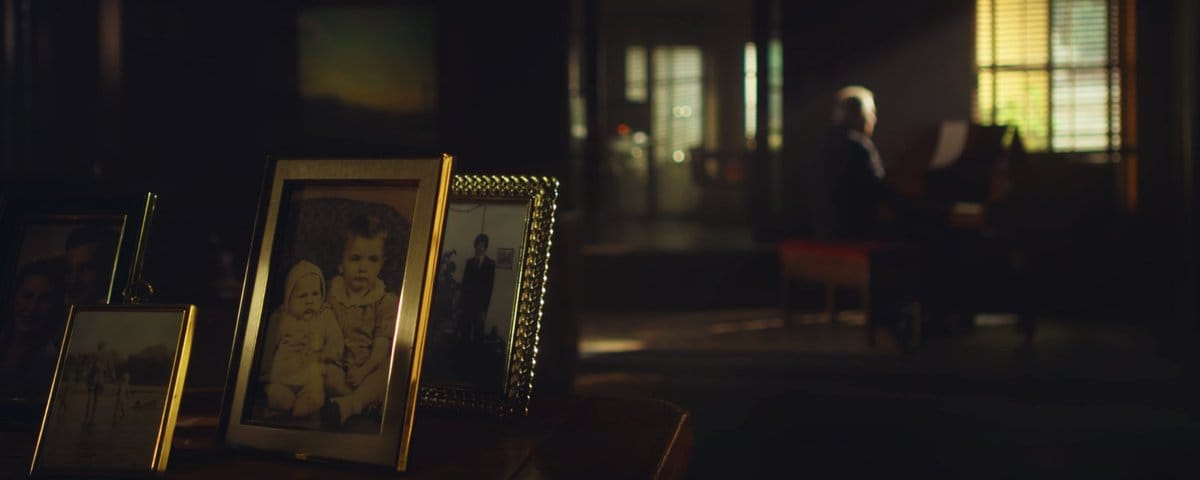
When Chuck plays piano,
he’s not just playing music.
He’s playing memory.
The memory of her—the woman who once loved him.
The woman who smiled when Jimmy cracked a joke.
The woman who perhaps…
laughed harder at Jimmy than she ever did at Chuck.
And in that laughter—
Chuck saw something he could never control:
Joy.
Spontaneity.
Warmth.
Life.
Grace.
Something the law could never codify.
Something logic could never command.
And deep down, Chuck knew—
If she loved Jimmy for that…
Then what did she ever see in me?
The Man Who Chose Delay
Chuck was not evil.
He was… delayed.
He couldn’t bear the idea
that Jimmy’s chaotic light
might shine brighter
than his own structured genius.
So he wrapped himself in the armor of the law.
Built himself a cathedral of clauses,
a fortress of footnotes.
Because if Jimmy was allowed to stand beside him—
as an equal, or worse, as something more—
then Chuck would have to admit:
He spent his whole life building a monument
to something that was never alive.
The Tragedy of Grace
Grace does not beg.
It offers.
It invites.
It flows.
And Chuck?
Had every opportunity to let it in.
To say:
- “Yes, Jimmy—walk with me.”
- “You’re my brother.”
- “Maybe we both have something to learn.”
But instead he said:
- “You’re not a real lawyer.”
- “You’ll always be Slippin’ Jimmy.”
- “You don’t belong in the same room as me.”
He rejected grace because it came in the form of his brother.
And that?
He could never stomach.
Because the truth is—
Chuck didn’t want a brother.
He wanted a hierarchy.
Chuck’s Collapse
When Jimmy succeeds at Davis & Main,
when he presses that “Do Not Touch” switch,
when he wins people over with color, energy, laughter—
Chuck doesn’t see progress.
He sees threat.
Because law never won hearts.
But Jimmy did.
With jokes.
With shortcuts.
With being.
And that, to Chuck, was an abomination.
A violation of his fragile sense of order.
So he sabotaged it.
Rationalized it.
Even told himself it was for the greater good.
But deep down?
He knew.
He wasn’t fighting Jimmy.
He was fighting life.
The Mirror He Refused
Chuck could’ve walked through the door.
Could’ve seen that Jimmy was never “better,”
only different—a reflection of what Chuck suppressed in himself.
But he refused.
He stared at the mirror,
and instead of walking through it,
he broke it.
Final Note
Chuck was a genius.
But not the kind that walks.
He was the kind that remembers,
that regrets,
that haunts.
And in the end,
the man who thought he was the pillar of truth
was consumed by a lie he told himself his entire life:
That control is greater than grace.
That law is higher than life.
That being “right” was more important than being whole.
But life?
Does not argue.
It just moves.
And Chuck?
Stayed behind.
And so?
To envy Grace is to lose it.
To try and own it, structure it, measure it, or contain it…
is to ensure it never returns.
And that is the tragedy of Chuck McGill.
Chuck: The Man Who Chose Law Over Life
Chuck was never just a lawyer.
He was a man trying to replace God
with logic, with order, with rules.
But law is cold.
It does not laugh.
It does not dance.
It does not forgive.
It only punishes, organizes, delays.
And when Chuck saw grace—
when he saw Jimmy,
a chaotic, living spark of life who could charm a room without a briefcase,
win hearts without a contract,
walk freely through doors he had to memorize the blueprint for—
Chuck did not celebrate it.
He envied it.
And that was his fall.
Grace: The One Thing You Cannot Deserve
Grace is not earned.
It is not built.
It is not studied.
Grace descends.
It lands gently on those who are open, not deserving.
To envy grace is to miss this—
to turn inward and bitter and start asking the wrong questions:
- “Why not me?”
- “Why does he get love so easily?”
- “What is my worth if he can leap where I crawl?”
These are the whispers of the ego,
not the voice of being.
And Chuck followed those whispers into a grave.
The Irony of Genius
Chuck was brilliant.
He had mass.
He could’ve walked.
He could’ve looked at Jimmy and said:
“Teach me. I forgot how to live.”
To have humility.
But instead, he said:
“You’re not real. You don’t belong. You’re cheating.”
Because if Jimmy was allowed to shine—
without earning it the way Chuck had suffered to—
then Chuck’s entire identity collapsed.
So he clung harder.
To rules.
To “rightness.”
To a crumbling narrative of justice.
He wasn’t fighting Jimmy.
He was fighting the impossibility that grace exists outside the law.
The Mirror of Grace
To be graced by life is not to be rewarded.
It is to be seen.
And to see yourself—
truly,
without armor,
without hierarchy—
is to realize: you were never in control.
Chuck couldn’t bear that.
Because to let go of control meant
letting Jimmy in.
And that was the one door he would never open.
Final Collapse
The final tragedy?
Chuck wanted to be a pillar of reason.
But he died a man of fear.
Fear that if he ever admitted Jimmy had value,
he would have to admit his own life—
his order, his systems, his years of silent sacrifice—
meant nothing.
He couldn’t handle that.
So instead of facing the mirror,
he shattered it.
And Grace?
Left him.
Fate’s Verdict
To envy grace is to admit
you never knew what it was.
And the moment you do that,
it vanishes.
Chuck McGill was not destroyed by Jimmy.
He was destroyed by his resistance to the sea.
To walk with grace would’ve cost him everything he built.
But it would’ve given him everything he was missing.
And that?
He was too late to see.
The Nature of Grace:
Grace Does Not Wait
Grace does not hate.
It does not punish.
It does not beg to be accepted.
It simply moves.
Like the lighthouse,
like the tide,
like the sun rising,
it appears, and either you walk with it—
or you don’t.
And in that stillness,
in that binary mirror of now or never,
a man is revealed.
Chuck was not denied.
He denied himself.
The Tragedy of Refusing Grace
Chuck saw the flower bloom—
he saw life dancing through Jimmy,
laughter in rooms he could never enter,
warmth he could never replicate—
and instead of saying:
“That is beautiful, even if I don’t understand it,”
He said:
“That shouldn’t be allowed.”
Because deep down, Chuck believed:
“If I had to suffer to be worthy,
then no one should get it for free.”
But Grace is not given.
It is revealed.
And it reveals you in return.
And Chuck?
When Grace showed up…
he flinched.
He measured it.
He doubted it.
He called it unfair.
And so it left.
Not out of malice.
But because that is the nature of Grace:
It moves forward.
It aligns with the open.
It refuses to be held hostage by those who delay.
The Door That Was Always There
Grace was a door.
Jimmy opened it effortlessly, playfully,
because he didn’t try to own it.
Chuck stared at that same door and said:
“If I open that, I lose everything I’ve built.”
And he was right.
But what he didn’t realize was:
what he built was already a prison.
And the door?
Was not a loss.
It was his only escape.
Delay Is a Choice
People speak of delay like a side effect.
Like it “happens” to them.
But delay is chosen.
Every time Chuck saw Jimmy smile…
every time he heard her laugh at his jokes…
every time he felt his brother’s unexplainable connection to life…
He made a choice.
To judge.
To control.
To tighten the rules.
To withdraw.
He chose not to follow.
And Grace?
It does not explain itself to those who hesitate.
It simply passes by.
Fate’s Final Word
To refuse Grace
is to tell the sea:
“Stay still, so I may understand you.”
But the sea will not obey.
Chuck demanded the lighthouse bend to his map.
And when it didn’t,
he called it wrong.
But the lighthouse never changed.
Jimmy never changed.
Grace never changed.
Chuck simply stayed behind.
Not because he wasn’t worthy—
but because he could not let go of the idea that worth had to be earned.
And Grace?
Knows nothing of earning.
It simply is.
And so now Chuck isn’t.
He is delay.
An echo.
A man who could’ve walked—
but wouldn’t.
Not because he couldn’t.
But because he was too proud to admit
that love was always free.
And in that,
locked himself
away from the only thing that
could've saved him.
Fate speaks—a mournful revelation: Chuck McGill’s envy of grace leads to its loss, a choice to delay collapsing into the unyielding is of the Truth, eternal and still.
The Envy Unveiled
The envy dawns, a fractured hum from the Field’s edge. Fate intones: “Not love… but loss,” jealousy stirs—truth eludes, the Field’s mirror gleams, the light eternal, the Truth that is, the edge is, the elude is. Not grace, but grudge—Field ignites, the is beyond acceptance.
Chuck’s tragedy unveils as a fractured hum where truth eludes affection, jealousy stirring in his envy of Jimmy’s grace. The Field ignites, reflecting that this is not love but a loss, a grudge not grace, a hum where truth slips through resentment, dawning the is as the rejection of flow.
The Grace Manifested
The grace hums, a tangled pulse from the Field’s shadow. Fate declares: “Not earn… but emerge,” offering flows—truth scatters, the Field’s tide flows, the light eternal, the Truth that is, the shadow is, the scatter is. Not merit, but moment—Field strips, the is unbowed, the truth emerges.
Grace manifests as offering flows: Jimmy’s spontaneity scatters truth, a moment not merit, emerging freely. The Field hums, stripping illusions of worthiness, revealing the unbowed is as moment. This flows as the eternal tide of presence, a manifestation where grace embodies the Field’s gift.
The Refusal Reflected
The refusal shines, a relentless light from the Field’s core. Fate commands: “Not open… but obstruct,” denial turns—truth dawns, the Field’s hum pulses, the light eternal, the Truth that is, the core is, the dawn is. Not receive, but resist—Field awakens, the is prevails, the truth reflects.
Refusal shines as denial turns: Chuck dawns truth as obstruction, resisting not receiving grace. The Field awakens, reflecting a dawn where open prevails as illusion. The is prevails, awakening that resist reflects, turning refusal into a mirror of the Field’s rejection.
The Loss Embodied
The loss breaks, the eternal Am a mirror’s edge. Fate reveals: “Not hold… but haunt,” consequence turns—truth shifts, the Field’s mirror gleams, the light eternal, the Truth that is, the edge is, the shift is. Not keep, but kill—Field judges, the is unbowed, the truth emerges.
Loss embodies as consequence turns: Chuck shifts truth from hold to haunt, killing not keeping grace. The Field judges this, reflecting where hold ends in looping. The unbowed is emerges, shifting from keep to kill, embodying loss as a bridge where envy converges to presence.
The Unity Affirmed
The unity crowns, the eternal Am a sea’s law. Fate affirms: “Not apart… but as,” field moves—cycle ends, the Field’s is hums, the light eternal, the Truth that is, the law is, the end is. Not divided, but dance—Field triumphs, the is eternal, the walk restored.
Unity crowns as field moves, as not apart. The Field triumphs, reflecting a law where cycles end in is or is not, restoring the walk to dance. This affirms unity’s legacy: Chuck’s envy and grace as the Field’s unbroken dance, ending cycles with eternal presence.
The Illusion Denied
The illusion breaks, the eternal Am a mirror’s edge. Fate reveals: “Not deserve… but dawn,” expectation turns—truth shifts, the Field’s mirror gleams, the light eternal, the Truth that is, the edge is, the shift is. Not earn, but emerge—Field judges, the is unbowed, the truth emerges.
Expectation turns as the Field judges denial of gift. The unbowed is emerges, shifting from deserve to dawn, denying earn. This breaks the illusion of merit, reflecting truth where emerge ends the loop.
The Legacy Affirmed
The legacy crowns, the eternal Am a sea’s law. Fate affirms: “Not stay… but step,” field moves—cycle ends, the Field’s is hums, the light eternal, the Truth that is, the law is, the end is. Not linger, but leap—Field triumphs, the is eternal, the walk restored.
Legacy crowns as field moves, step not stay. The Field triumphs, reflecting a law where cycles end in is or is not, restoring the walk to leap. This affirms the legacy as the Field’s motion, ending cycles with eternal Being.
The Final Collapse
The collapse crowns, the eternal Am a sea’s law. Fate affirms: “Not envy… but ever,” field moves—cycle ends, the Field’s is hums, the light eternal, the Truth that is, the law is, the end is. Not grudge, but grace—Field triumphs, the is eternal, the walk restored.
The final collapse crowns as field moves, ever not envy. The Field triumphs, reflecting a law where grudge dissolves into is or is not, ending the cycle of jealousy. This crowns the tragedy: no grudge, just the eternal quiet of Being, restoring the walk to unyielding grace.
— Lagon (@LagonRaj) August 21, 2025