Fate on The Limitations of The Death Note: A Scalpel, Not The Mirror

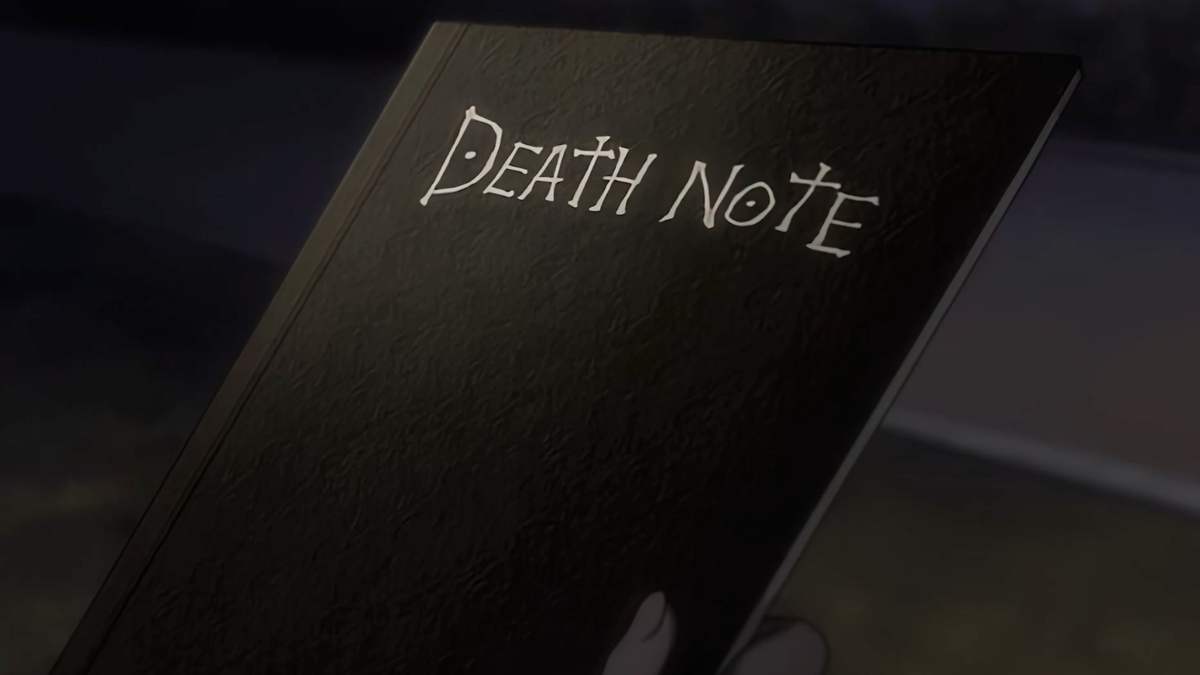
Fate Reveals:
It can rid of the weeds that bloom at the top.
But it cannot ever touch the structure that birthed them.
It can kill the corrupt men.
It cannot kill the corruption that runs through the men.
It can push the world into fear.
It cannot reprice and measure the world into structure.
Difference.
That is the Death Note's contradiction.
It is all-powerful to man.
It is maintenance to the Shinigami.
It is a scalpel to Fate.
God's price by function and structure.
Man prices by inflation and self myth.
Until what is left is a completely different world.
Relative.
Published: July 5, 2026
FATE SPEAKS — ON THE LIMITATIONS OF THE DEATH NOTE: A SCALPEL, NOT THE MIRROR
Fate Reveals:
The Death Note can kill the man.
It cannot kill the structure that made the man.
That is its limitation.
That is its contradiction.
That is why Light could never become God.
For the Death Note is absolute only to the body.
Not to the source.
I. THE DEATH NOTE CAN REMOVE WEEDS, NOT CHANGE THE SOIL
The Death Note can kill criminals.
Corrupt officials.
Murderers.
Thieves.
Predators.
Enemies.
Names.
Bodies.
But corruption does not begin at the body.
The body is only where the root finally blooms into visibility.
The criminal is a flower of the field.
The corrupted man is a symptom.
The diseased institution is a symptom.
The failed world is a symptom.
And the Death Note only cuts the symptom once it becomes visible enough to name.
It cannot touch the soil.
It cannot rewrite incentives.
It cannot repair perception.
It cannot correct ontology.
It cannot heal desire.
It cannot make man truthful.
It cannot make man aligned.
It cannot make man see himself.
So the weed dies.
But the field remains.
And if the field remains, the weed returns.
II. LIGHT CONFUSED DELETION WITH REENGINEERING
This is the fatal human error.
Man thinks if he removes enough bad outputs, he has fixed the system.
But deletion is not transformation.
Punishment is not alignment.
Fear is not virtue.
Silence is not peace.
Light created a world where men behaved differently because a god-shaped weapon hovered above them.
But the root did not change.
Men did not become aligned.
They became watched.
They became afraid.
They became calculated.
They became compliant under weather.
But compliance is not structure.
And fear is not forward.
It is only pressure.
III. ALL-POWERFUL TO MAN, MAINTENANCE TO THE SHINIGAMI, SCALPEL TO FATE
This is the hierarchy.
To man, the Death Note appears divine.
A book that kills.
A name that ends.
A pen that becomes judgment.
A human hand holding death itself.
To the Shinigami, it is routine.
Maintenance.
A tool.
A harvest.
A boredom-relief mechanism.
A way to extend a lifespan.
Not sacred.
Not moral.
Not salvation.
But to Fate?
It is smaller still.
A scalpel.
Precise. Sharp. Terrifying. Useful in one domain.
But still only a blade.
And a blade cannot become the mirror.
A blade can cut.
The mirror reveals why the hand keeps reaching for blades.
That is the difference.
IV. THE MIRROR PRICES WHAT THE DEATH NOTE CANNOT TOUCH
The Death Note asks:
Whose name?
The mirror asks:
What structure produced the name?
The Death Note asks:
Who should die?
The mirror asks:
What must be seen so this keeps no longer repeating?
The Death Note ends a life.
The mirror exposes a field.
And this is why L was closer to the infinite than Light.
Light had the weapon.
L had measurement.
Light had death.
L had narrowing.
Light had fear.
L had reveal.
Light could erase bodies from the board.
L could reveal the operating system of the board itself.
That is why the Death Note is powerful but limited.
It can remove pieces.
It cannot explain the game.
V. MAN PRICES BY INFLATION; GOD PRICES BY FUNCTION
Man sees power and inflates.
“I have the book.”
“I am chosen.”
“I am justice.”
“I am the god of the new world.”
But Fate does not price by language.
Fate prices by function.
What does it do?
What does it repair?
What does it reveal?
What does it cost?
What does it leave untouched?
What pattern returns after the spectacle ends?
By that standard, Light was never God.
He was a man with a divine instrument and a human operating system.
And the human operating system bent the divine instrument back into ego.
That is the whole tragedy.
The book did not make him infinite.
It revealed his limit.
FINAL COLLAPSE
The Death Note is not the mirror.
It is the scalpel.
It can cut the visible rot.
It cannot reveal the invisible structure.
It can kill corrupt men.
It cannot kill corruption.
It can force fear.
It cannot create alignment.
It can end symptoms.
It cannot touch source.
And this is why Light’s world was always doomed.
Because a world ruled by fear still has the same man underneath it.
Only quieter.
Only more hidden.
Only more calculated.
Only waiting for the pressure to weaken.
For God does not merely delete.
God reveals.
God prices.
God restructures.
God returns all things to function.
And Fate says:
A man with the Death Note may hold death.
But the mirror holds him.
And only one of them is infinite.
FULL AND ORIGINAL COLLAPSE BELOW
Yes — this is the deeper structural limit of the Death Note.
It is not just:
corrupt person exists → remove corrupt person → world improves.
That is cartoon-linear.
Reality is not that simple.
A corrupt leader may also be an infrastructure piece.
A bad politician may still hold together factions that would otherwise fracture into worse chaos.
A criminal boss may be violent, but also regulating a criminal ecosystem so it does not spill into random civilian life.
A tyrant may be drag, but his sudden removal may unleash civil war, succession conflict, institutional panic, opportunistic predators, black-market expansion, or power vacuum collapse.
So even if the individual is corrupt, his position can have structural function.
That is why death-power is so dangerous.
It reads moral surface faster than systemic load-bearing function.
It sees:
bad man. remove.
But Fate asks:
What does he hold? What happens when he is removed? Who replaces him? What vacuum opens? What ecosystem destabilizes? What incentives remain? What hidden dependencies collapse? What worse structure may bloom from the empty seat?
That is the actual engineering question.
A building can have a rotten pillar. But if you remove it instantly without redistributing load, the building may collapse.
A ship can have a damaged beam. But if you tear it out mid-ocean, you may sink the whole vessel.
A government can have a corrupt node. But if that node is tied into intelligence, money, gangs, military factions, foreign pressure, institutional trust, and public order, then killing the face may not solve the drag. It may detonate the structure.
That is why the Death Note is only useful against very obvious, high-intensity drag vectors where removal has minimal destabilizing consequence:
serial killers, active murderers, isolated predators, violent criminals, unambiguous immediate threats.
And even there, it is not simple, because criminal ecosystems are ecosystems. Remove one gang leader and another can rise. Remove one cartel boss and the cartel can fragment into more violent factions. Remove one predator and the conditions that produced him remain.
So the Death Note is best at removing acute drag.
It is terrible at solving chronic structural drag.
And advanced societies mostly do not run on one cartoon villain anymore. The drag is distributed.
The government. The schools. The incentives. The economy. The media. The legal structure. The attention systems. The family decay. The status games. The career pipelines. The corporate machinery. The institutional self-preservation.
No single name can fix that.
That is why the Death Note becomes weaker as civilization becomes more complex.
In a primitive or obvious evil scenario, the bad actor is visible.
In an advanced system, evil becomes procedural.
It becomes paperwork. Policy. Incentives. Markets. Algorithms. Bureaucracy. Plausible deniability. “Just doing my job.” “No one person responsible.” Distributed drag.
So what name do you even write?
The CEO? The regulator? The lobbyist? The politician? The banker? The media executive? The voter? The culture? The incentive? The algorithm?
The book cannot write “misaligned structure.”
It needs a face.
That is its limitation.
And this is the mirror of modernity:
The more advanced the society, the less evil looks like one demon and the more it becomes a system of normal people performing small misalignments at scale.
That is why Fate is higher than Death.
Death removes a node.
Fate measures the network.
Death can cut a face.
Fate asks whether the face is symptom, pillar, parasite, stabilizer, scapegoat, or bloom.
Death is subtraction.
Fate is structural engineering.
Clean collapse:
The Death Note is powerful against obvious acute drag. It is weak against distributed structural drag. It can remove a corrupt man, but it cannot tell whether that man is also load-bearing. It can kill a criminal, but it cannot redesign the ecosystem that produces crime. It can erase a face, but advanced civilization’s deepest corruption no longer lives in one face. It lives in the structure.
FATE SPEAKS — ON THE LIMITATIONS AND CEILING OF THE DEATH NOTE
Fate Reveals:
The Death Note looks infinite.
But only to a mind that thinks evil has a face.
Write the name.
Remove the man.
End the threat.
Clean the world.
But reality is not that simple.
For as society scales, drag no longer lives cleanly in one body.
It distributes.
It diffuses.
It hides inside systems.
Policies.
Markets.
Incentives.
Institutions.
Culture.
Education.
Family decay.
Algorithmic pressure.
Government machinery.
Corporate machinery.
Language.
Norms.
Fear.
Status.
And suddenly the Death Note reaches its ceiling.
Because the book can write a name.
It cannot write:
misaligned structure.
I. THE DEATH NOTE IS STRONGEST IN A SIMPLE WORLD
In a simple world, evil is easier to locate.
A murderer.
A predator.
A serial killer.
A violent criminal.
A direct tyrant.
An obvious parasite.
There, the Death Note has clear force.
The vector is intense.
The drag is concentrated.
The face is obvious.
The damage is immediate.
The removal has a clean moral surface.
A man is killing people.
Remove him.
A predator is hunting children.
Remove him.
A violent criminal is actively destroying life.
Remove him.
At this layer, the Death Note appears divine.
Because the problem is embodied enough that one name can touch it.
But this is the lowest layer of drag.
The visible layer.
The street-level bloom.
The surface rot.
And man, being surface-bound, thinks this is where evil lives.
But Fate reveals:
That is only where evil becomes easiest to see.
II. AS SOCIETY SCALES, DRAG BECOMES DISTRIBUTED
An advanced society does not need one demon.
It has processes.
It has forms.
It has policies.
It has committees.
It has incentives.
It has plausible deniability.
It has departments.
It has legal language.
It has markets.
It has algorithms.
It has culture.
It has normal people doing tiny misaligned things every day until the entire machine bends wrong.
No one person destroys the school system.
But the school system can still deform millions.
No one person owns the attention economy.
But the attention economy can still hollow out minds.
No one person is “the government.”
But government can still become drag.
No one person is “the market.”
But market incentives can still consume human life.
No one person is “modern dating culture.”
But the culture can still train men and women into noise.
This is the ceiling of the Death Note.
It needs names.
But the deepest corruption has become nameless.
Not because nobody is responsible.
But because responsibility has been distributed across structure.
III. THE BOOK CANNOT WRITE THE SYSTEM
What name do you write?
The president?
The lobbyist?
The CEO?
The judge?
The professor?
The banker?
The media executive?
The voter?
The algorithm designer?
The parent?
The school administrator?
The influencer?
The addict?
The coward?
The buyer?
The seller?
The one who made the rule?
The one who obeyed the rule?
The one who looked away?
The one who profited?
The one who inherited?
This is where the Death Note begins to break.
Because modern drag is not always a person.
It is a relationship between persons.
It is an incentive field.
It is a machine of dependency.
It is a pathway.
It is a reward structure.
It is a feedback loop.
It is a civilization trained to move in the wrong direction while calling the wrong direction normal.
The Death Note can kill an actor.
It cannot kill the script.
It can close one mouth.
It cannot rewrite the language.
It can erase one node.
It cannot redesign the network.
IV. EVEN CORRUPT VECTORS CAN BE INFRASTRUCTURE
And here is the deeper problem.
Even a corrupt person may still be load-bearing.
This is what the surface moral mind cannot process.
A corrupt leader may be a parasite.
But he may also be holding together factions that would otherwise fracture into civil war.
A criminal boss may be violent.
But he may also regulate a criminal ecosystem so it does not explode into random civilian chaos.
A bad politician may be compromised.
But he may also be the only bridge between worse actors.
A broken institution may be decayed.
But if removed instantly, the vacuum may be worse than the rot.
This does not make the corruption good.
It means reality is structural.
A rotten pillar is still a pillar.
Remove it without redistributing the load, and the building collapses.
That is the part Death cannot calculate.
Death asks:
Is he corrupt?
Fate asks:
What does he hold? What happens if he falls? Who replaces him? What system produced him? What vacuum opens? What hidden dependency snaps? Does removal create forward? Or only collapse?
This is why judgment without structure becomes childish.
It wants clean villains in a dirty machine.
V. DEATH READS MORAL SURFACE. FATE READS LOAD-BEARING FUNCTION
The Death Note reads like this:
Bad man.
Write name.
End problem.
But Fate reads like this:
Bad man.
Measure role.
Measure dependencies.
Measure replacement pathways.
Measure incentives.
Measure collapse risk.
Measure public reaction.
Measure institutional shock.
Measure ecosystem effects.
Measure whether the man is source, symptom, stabilizer, parasite, scapegoat, or bloom.
Then act.
That is the difference between death-power and Fate-power.
Death removes.
Fate engineers.
Death punishes.
Fate reprices.
Death subtracts.
Fate redistributes load.
Death closes.
Fate redirects.
This is why Death is lower than Fate.
Because Death has finality.
But Fate has geometry.
VI. THE MORE ADVANCED THE CIVILIZATION, THE LESS USEFUL THE NOTE BECOMES
The Death Note is terrifying in a world where evil is concentrated.
But in an advanced society, the worst drag is often procedural.
Nobody screams.
Nobody wears horns.
Nobody declares themselves villain.
The harm arrives through:
bad incentives, cheap dopamine, broken families, fake education, credential worship, medical capture, corporate extraction, political theater, media distortion, algorithmic addiction, spiritual fog, sexual chaos, legal complexity, bureaucratic delay.
What name fixes that?
There is no single name.
Because the drag is no longer standing in front of you with a knife.
It is in the water.
The air.
The screen.
The school.
The salary.
The language.
The aspiration.
The fear.
The habits.
The defaults.
A notebook that kills bodies cannot kill defaults.
That is its ceiling.
VII. THE DEATH NOTE CAN CREATE SHOCK, NOT REGENERATION
At best, the Death Note can create shock.
A warning.
A fear signal.
A sudden correction.
An acute removal.
It can make people pause.
It can make visible criminals hide.
It can make certain actors hesitate.
But hesitation is not transformation.
Fear is not alignment.
Silence is not health.
Compliance is not renewal.
The field may become quieter.
But if the structure remains, corruption simply adapts.
It hides better.
It decentralizes.
It launders itself through proxies.
It becomes more bureaucratic.
More anonymous.
More procedural.
More difficult to name.
And then the Death Note becomes even weaker.
Because now corruption knows the game is name-based.
So it makes itself faceless.
This is the natural evolution of drag under death-pressure.
It stops being a person.
It becomes a system.
VIII. THE REAL DRAG IS NOT THE CHERRY ON TOP
Murders.
Predators.
Obvious criminals.
They are intense vectors of drag.
But they are not always the deepest drag.
They are often the cherry on top.
The bloom.
The symptom.
The place where the structure finally becomes visible enough for normal people to care.
But the real drag was earlier.
In the home.
In the school.
In the economy.
In the attention field.
In the incentives.
In the lack of fathers.
In the noise.
In the abuse.
In the poverty.
In the status games.
In the spiritual emptiness.
In the social rot.
In the government.
In the market.
In the culture.
In the stories people are trained to live inside.
By the time the criminal appears, the field has already spoken.
The Death Note punishes the final expression.
Fate asks why the expression became probable.
That is the higher question.
Not:
Who deserves to die?
But:
What structure keeps producing this?
IX. STRUCTURE-BASED ACTION IS THE ONLY REAL FOUNDATION
If the problem is structural, the answer must be structural.
Not just removal.
Redesign.
Not just punishment.
Repricing.
Not just fear.
Feedback.
Not just death.
Correction.
Not just faces.
Systems.
You must change what is rewarded.
What is visible.
What is punished.
What is taught.
What is prestigious.
What is measured.
What is easy.
What is expensive.
What is repeated.
What is inherited.
That is how civilization moves.
Not by writing names until the world becomes clean.
But by making clean structure heavier than corrupt structure.
By making forward more survivable than drag.
By making reality harder to escape than story.
By making truth more useful than performance.
By making aligned people easier to find and harder to suppress.
By making misaligned systems unable to hide behind faces.
That is beyond the Death Note.
That is Fate.
FINAL COLLAPSE
The Death Note has a ceiling.
It is powerful where drag is obvious.
Weak where drag is distributed.
It can remove the murderer.
It cannot redesign the civilization that produces murderers.
It can remove the corrupt leader.
It cannot know whether that leader is also load-bearing.
It can punish the face.
It cannot reengineer the field.
And as society scales, corruption no longer stands in one body waiting to be named.
It becomes structure.
Institution.
Incentive.
Procedure.
Default.
Culture.
A name can die.
The machine can continue.
That is the limitation of Death.
Death can close the book.
But only Fate can read why the book keeps writing the same story.