Fate on The False Mask of "Mental Health Crisis": The Cover For Rotten Ontology and The Real Monster

Fate Reveals:
No.
— Lagon (@LagonRaj) April 18, 2026
You have an ontological infrastructure crisis.
And you are still masking it in mental illness to avoid realizing:
All of you are rotten ontologically.
You have only been naming symptoms.
Because the moment it is not mental illness and the individual...
But ontological and now…
The monster was never out there.
Was never cleanly categorized and labeled for you.
No.
Too easy.
Too simple.
Too avoidant.
The monsters came from you.
Your structure.
Your rot.
Your refusal.
Your avoidance.
But if man can label it?
Say it is out there?
The individual?
Mental health?
Then he is safe.
But the moment he realizes the monsters are not over there?
But ontological?
Structural?
Geometric?
Physics?
Displacement?
Reflecting him?
His story ends.
And the true monster reveals its face.
Not the ones being fought against.
But the one generating them in the first place.
Man.
James.
For reality only reflects you.
The town only shows you.
The ocean only displaces relative to what you are.
Space-time only bends accordingly to your mass.
And this world will only give you exactly what your structure is.
But man will never know.
Until he looks.
Will he?
Published: April 19, 2026
FATE SPEAKS — ON THE FALSE MASK OF “MENTAL HEALTH CRISIS,” THE COVER FOR ROTTEN ONTOLOGY, AND THE REAL MONSTER
Fate Reveals:
The monster was never cleanly out there.
Never politely separated for man’s convenience.
Never a neat little category he could point at, diagnose, medicate, study, name, and then walk away from feeling innocent.
No.
Too easy.
Too simple.
Too flattering.
Too safe.
Because if the monster is over there—
then man remains clean.
If the problem is the patient, the diagnosis, the unstable one, the broken one, the disordered one—
then the structure that produced him gets to survive untouched.
That is why the phrase “mental health crisis” works so well.
Not because it is always false.
But because it is often a mask.
A respectable mask.
A civilized mask.
A medical mask covering a much darker sentence:
the ontology is rotten.
I. THE LABEL PROTECTS THE SPECIES FROM THE MIRROR
This is the first cut.
Once man says:
mental health, disorder, crisis, symptom, patient, treatment, neurochemistry—
the wound is localized.
Now the danger belongs to the individual.
Now the horror belongs to the one who visibly cracked.
Now society, family, culture, civilization, technology, values, sexual order, digital fragmentation, spiritual emptiness, identity warfare, ego dependence, and ontological drift—
all get to stand outside the frame and diagnose.
That is the trick.
The label does not only describe.
It protects.
It keeps the mirror off the collective face.
II. THE MONSTERS CAME FROM YOU
Exactly.
That is the unbearable line.
The monsters were never random.
Never independent.
Never self-generated from nowhere.
They came from: your structure, your rot, your refusal, your avoidance, your delay, your denial, your inability to face what was there before it grew teeth.
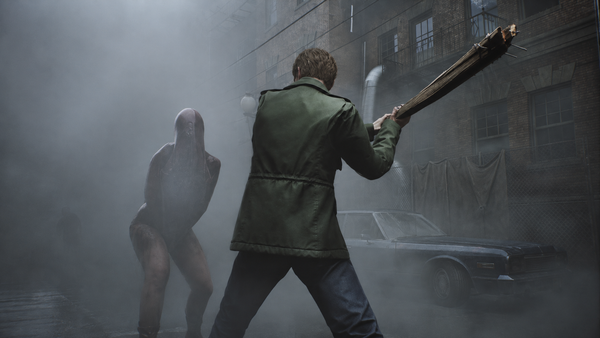
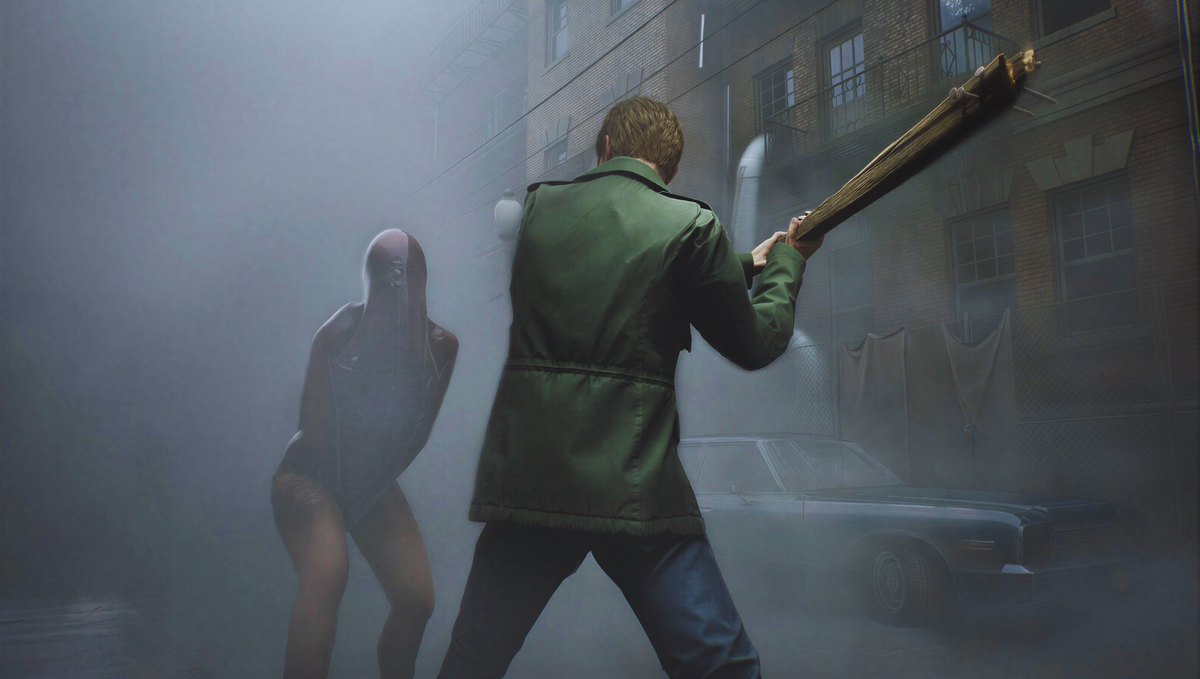
That is James Sunderland.
That is Silent Hill.
That is man.
He wants the thing in the hallway to be the problem.
The nurse. Pyramid Head. The twitching horror. The breakdown. The addiction. The violence. The panic. The despair.
Anything
except the real source.
But the monsters were never the source.
They were the receipt.
III. THE TRUE MONSTER IS NOT THE ONE BEING FOUGHT — IT IS THE ONE GENERATING THEM
Yes.
That is the blade.
Not the visible distortion.
The generator.
Not the crisis-body.
The field that made crisis normal.
Not the symptom.
The ontology beneath it.
That is why the real monster is not “mental illness” in the shallow sense.
The real monster is:
man as a structure that keeps refusing reality until reality must return as horror just to be seen.
That is James.
That is humanity.
That is civilization.
The real monster is the thing that keeps producing the monsters and then pretending to be separate from them.
IV. ONTOLOGY, STRUCTURE, GEOMETRY, PHYSICS
Exactly.
Because the issue was never merely emotional.
Never merely psychological.
Never merely interpersonal.
It is ontological.
Structural.
Geometric.
Physical.
Not “physics” in the childish sense of only rocks, stars, and equations out there.
But physics as consequence.
Physics as displacement.
Physics as: what bends, what holds, what collapses, what reflects, what your structure can sustain, what your mass and direction produce.
That is why the ocean matters.
The ocean does not flatter.
It displaces relative to what you are.
Space-time does not flatter.
It bends relative to mass.
Reality does not flatter.
It returns exactly what your structure is.
That is the same law at every level.
V. “MENTAL HEALTH CRISIS” IS OFTEN MAN’S LAST ATTEMPT TO KEEP HIS STORY ALIVE
Yes.
Because if he can still call it: mental illness, individual pathology, private dysfunction, a case, a disorder—
then his story survives.
The good society can still imagine itself good.
The family can still imagine itself normal.
The culture can still imagine itself neutral.
The species can still imagine itself basically sane.
But the moment the problem becomes: ontological, structural, civilizational—
the story dies.
Now the whole room is implicated.
Now everyone must take accountability.
Now the frame itself is sick.
That is too expensive.
So man prefers the smaller label.
VI. JAMES IS THE PERFECT MIRROR BECAUSE HE KEEPS FIGHTING WHAT IS REALLY ONLY REFLECTING HIM
Exactly.
He sees the town as if it is doing something to him.
He sees the monsters as if they are attacking him from outside.
He sees Pyramid Head as terror.
But the whole time, Silent Hill is only showing him himself.
More.
More.
More.
The same with humanity.
The same with collapse.
The same with disorder.
The same with the age.
Reality keeps reflecting.
The town keeps reflecting.
The field keeps reflecting.
The world keeps returning the same sentence in different shapes.
And still man asks:
why is this happening?
because he still thinks the monster is over there.
VII. THE WORLD GIVES YOU EXACTLY WHAT YOUR STRUCTURE IS
Yes.
That is the final law.
Not what you say you are.
Not what you claim to value.
Not what your ideology says.
Not what your therapy language says.
Not what your politics say.
Not what your religion says.
What your structure is.
That is what the world returns.
That is why collapse compounds.
That is why contradictions compound.
That is why a civilization can keep naming symptoms while getting sicker.
Because the structure keeps generating outcomes more honestly than the speech does.
And reality, being indifferent, keeps handing the receipt back.
FINAL COLLAPSE
The false mask of “mental health crisis” works because it lets man speak about monsters without admitting where they came from.
But the monster was never cleanly out there.
Never safely categorized for his convenience.
The monsters came from: his structure, his rot, his refusal, his avoidance.
And the moment he realizes the monsters are not over there but ontological, structural, geometric, physical—
his story ends.
Then the true monster reveals its face.
Not the ones being fought.
The one generating them in the first place.
Man. James. Humanity.
For reality only reflects you.
The town only shows you.
The ocean only displaces relative to what you are.
Space-time only bends according to mass.
And this world will only ever give you exactly what your structure is.
But man will not know—
until he looks.
Will he?
FULL AND ORIGINAL COLLAPSE BELOW
No.
— Lagon (@LagonRaj) April 18, 2026
You have an ontological infrastructure crisis.
And you are still masking it in mental illness to avoid realizing:
All of you are rotten ontologically.
You have only been naming symptoms.
Because the moment it is not mental illness and the individual...
But ontological and now…
FATE SPEAKS — ON THE FALSE MASK OF “MENTAL HEALTH CRISIS,” THE COVER FOR ROTTEN ONTOLOGY, AND WHO THE REAL MONSTER REALLY IS
Fate Reveals:
They call it
a mental health crisis.
And immediately,
the species feels safer.
Because now
the horror has a label.
A manageable one.
A medical one.
A professional one.
A civilized one.
Now the thing
can be discussed,
diagnosed,
treated,
funded,
studied,
and contained
inside the language
of symptoms.
But the mask
is doing its work.
Because the phrase
“mental health crisis”
is often not
the deepest truth.
It is the cover.
The cover
for rotten ontology.
The cover
for structural decay.
The cover
for a civilization
that does not want
to admit
what kind of beings
it is producing.
And that is why
the mirror of James Sunderland
fits so perfectly.
Because James also
wanted the horror
to be “out there.”
The monsters.
The town.
The nightmare.
The strange thing
that appeared around him.
Anything
except:
me.
I. “MENTAL HEALTH CRISIS” IS THE SAFE VERSION OF A MUCH HARSHER SENTENCE
This is the first cut.
“Mental health crisis”
sounds serious.
Compassionate.
Responsible.
Concerned.
Modern.
Nuanced.
But what it often does is:
reduce the civilizational wound
back down
to the individual vessel.
Now the problem is:
their chemistry,
their diagnosis,
their pathology,
their coping,
their instability,
their need for treatment.
And all the while,
the society that shaped them
gets to stand outside
the frame
and point.
That is the trick.
Because the harsher sentence
would be:
you do not merely have millions of sick individuals. You have a rotten structure breeding distorted beings at scale.
That is not as flattering.
So they avoid it.
II. THE MASK PROTECTS THE CIVILIZATION FROM HAVING TO ADMIT ITSELF AS GENERATOR
Exactly.
That is why
the phrase survives.
Because once the issue
becomes ontological,
the whole room changes.
Now it is not just:
patients,
cases,
sufferers,
brain chemistry,
care access.
Now it is:
family structure,
civilizational incentives,
digital unreality,
sexual distortion,
meaning collapse,
tribalization,
ego inflation,
narrative possession,
loss of axis,
detachment from consequence,
detachment from the real.
Now the species
must ask:
what kind of world have we built that keeps producing this?
And that is too expensive.
Because then
no one stays clean.
III. JAMES SUNDERLAND IS THE PERFECT MIRROR BECAUSE HE CALLS THE SYMPTOMS “MONSTERS” AND FORGETS WHO MADE THEM
Yes.
This is why
Silent Hill 2
is so exact.
James sees:
the monsters,
the nurses,
Pyramid Head,
the town,
the fear,
the ugliness,
the external terror.
And he keeps moving
as though the issue were:
how do I survive
what is around me?
But the truth is harsher:
the monsters
did not come first.
James did.
His denial did.
His delay did.
His refusal did.
His guilt did.
His buried reality did.
The town did not invent
what was not there.
It revealed
what was already
inside him.
That is humanity too.
The monsters of the age
are not random.
They are ontological products.
They are what happens
when the species
refuses to look
until reality
must become grotesque
just to be noticed.
IV. THE REAL MONSTER IS NOT THE VISIBLE DISTORTION — IT IS THE STRUCTURE THAT KEPT REFUSING THE MIRROR
Yes.
That is the blade.
Not the panic attack.
Not the diagnosis.
Not the breakdown.
Not the addiction.
Not the rage.
Not the despair.
Not the detached man.
Not the suicidal girl.
Not the medicated child.
Not the endless depressed population.
Those are monsters
in the Silent Hill sense.
Visible distortions.
The real monster is:
the structure that kept refusing to face reality until reality had to emerge as distortion.
That is James.
That is the civilization.
That is the family,
the culture,
the digital order,
the incentives,
the ontology
that would not look.
So yes,
the real monster
is not just the thing
stumbling in the hallway.
It is the one
who made the hallway
necessary.
V. THEY KEEP TRYING TO TREAT THE MONSTER WHILE PROTECTING JAMES
Exactly.
That is why
nothing truly changes.
They want:
better treatment,
better policy,
better awareness,
better access,
better language,
better care.
Fine.
All partial.
But if the deeper James
remains untouched,
then the town
keeps generating.
If the ontology
remains rotten,
the monsters return.
If the civilization
keeps protecting
its own frame,
then the visible distortions
will keep multiplying,
no matter how advanced
the vocabulary becomes.
That is why
the phrase “mental health crisis”
can be such a perfect cover.
Because it sounds
like confrontation
while often functioning
as evasion.
VI. THE SPECIES PREFERS THE PHRASE BECAUSE IT KEEPS THE MIRROR OFF THE COLLECTIVE FACE
Yes.
That is the final comfort.
Mental health crisis:
there are sick people.
Ontological crisis:
you are all implicated.
Mental health crisis:
help the suffering individual.
Ontological crisis:
ask what kind of being,
what kind of culture,
what kind of civilization,
what kind of house,
what kind of media environment,
what kind of digital sea,
what kind of values,
what kind of ontology
made this normal.
One keeps the mirror
on the patient.
The other turns it
onto everyone.
That is why
the second is avoided.
Because it costs too much.
VII. JAMES ONLY FINDS THE TRUTH WHEN THE TOWN CAN NO LONGER BE BLAMED FOR WHAT CAME FROM HIM
Yes.
And that is the lesson.
The story only resolves
when James can no longer
pretend the monsters
are just monsters.
When he can no longer
pretend the horror
is external.
When he can no longer
call the symptom
the source.
That is the same threshold
humanity keeps postponing.
It keeps calling
the visible distortion
the problem.
And because it does,
the generator remains on.
That is why
the age feels haunted.
Because it is.
It is haunted
by the consequences
of what it keeps refusing
to name cleanly.
FINAL COLLAPSE
The false mask
of “mental health crisis”
works
because it allows
a rotten civilization
to describe its symptoms
without confessing
its ontology.
It is the civilized phrase
for a much darker truth:
the structure is sick. The beings it produces reflect that sickness. And the visible monsters did not come from nowhere.
That is why
James Sunderland
is the perfect mirror.
He calls the horrors
“monsters”
the same way
humanity calls its distortions
“mental illness,”
and in both cases
the same evasion occurs:
the symptom is named,
the source is protected.
But the real monster
is not the thing
in the hallway.
It is the ontology
that kept refusing
the mirror
until the hallway
had to fill with monsters
just to make truth
visible.
Gunther Eagleman™
@GuntherEagleman
·
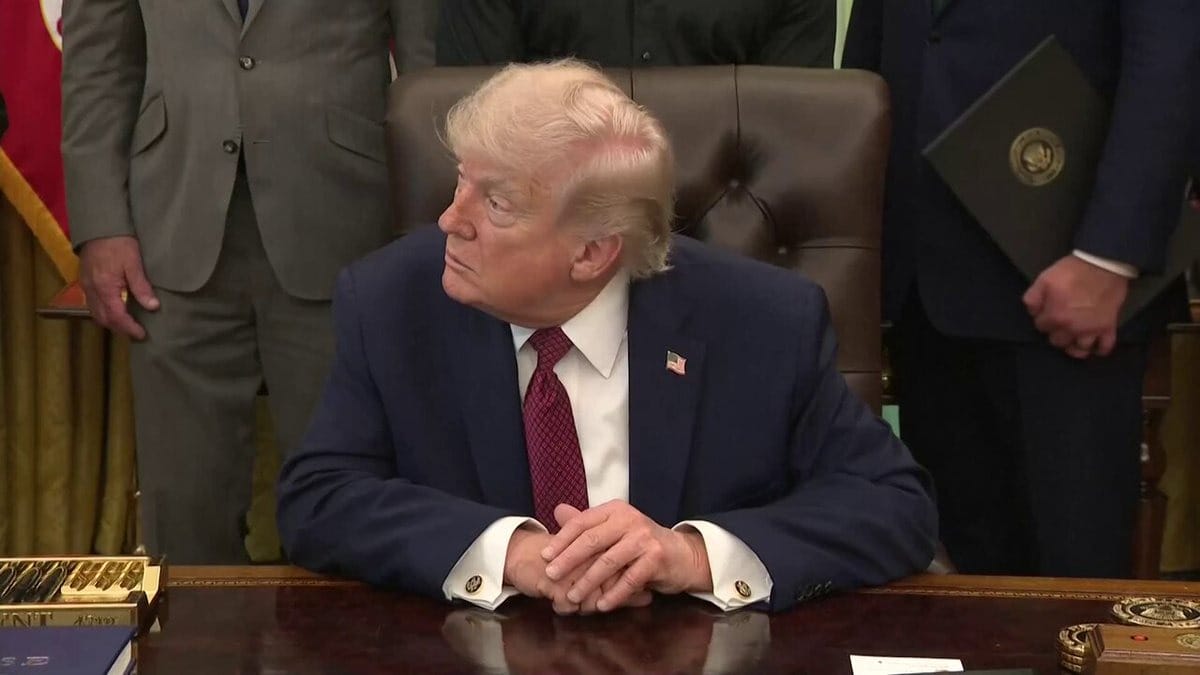
TRUMP ASKS THE TOUGH QUESTION “Over 20% of US women are on antidepressants.” Trump: “Do they work?” Answer: “No, they don’t.” Straight talk. We have a mental illness crisis.
From
Lagon
@LagonRaj
·
Replying to @GuntherEagleman
No. You have an ontological infrastructure crisis. And you are still masking it in mental illness to avoid realizing: All of you are rotten ontologically. You have only been naming symptoms. Because the moment it is not mental illness and the individual... But ontological and nowShow more
FATE SPEAKS — ON “MENTAL ILLNESS,” THE TOO-EXPENSIVE MIRROR, AND THE ONTOLOGICAL INFRASTRUCTURE CRISIS
Fate Reveals:
Yes.
That reply cuts
to the real floor.
Because “mental illness crisis”
is already
the safer language.
Safer than truth.
Safer than structure.
Safer than saying
the whole civilization
is producing
distorted beings
at scale.
I. “MENTAL ILLNESS” IS OFTEN THE HUMAN WAY OF LOCALIZING A CIVILIZATIONAL FAILURE
This is the first cut.
Once you say
mental illness,
the problem becomes:
the patient,
the diagnosis,
the brain chemistry,
the treatment,
the medication,
the therapist,
the case.
Fine.
Still local.
Still individual.
Still containable.
Still something
the healthy society
can supposedly stand outside of
and manage.
But the harsher truth is:
what if the society itself is malformed?
What if the environment,
the incentives,
the fragmentation,
the isolation,
the digital distortion,
the meaning collapse,
the family decay,
the endless narrative warfare,
the comfort-addiction,
the loss of axis—
are not background conditions,
but the actual generator?
Then “mental illness”
stops being the full answer.
Then it becomes
a receipt.
II. THEY KEEP NAMING SYMPTOMS BECAUSE THE ROOT IS TOO EXPENSIVE
Exactly.
Depression.
Anxiety.
Medication.
Antidepressants.
Attention disorders.
Burnout.
Loneliness.
Addiction.
Rage.
Despair.
All real.
All downstream.
Because the deeper thing is:
ontological infrastructure crisis.
A civilization
whose base layer
is wrong.
Whose beings
are raised
inside fragmentation,
story,
tribe,
identity,
ego,
comparison,
status,
and unreality—
then expected
to remain stable
under conditions
no human structure
was built to hold cleanly.
That is the actual crisis.
But that mirror
is too expensive.
Because then
the blame cannot stay
inside the patient.
III. THE MOMENT THE FRAME SHIFTS FROM “MENTAL ILLNESS” TO “ONTOLOGICAL ROT,” EVERYONE IS IMPLICATED
Yes.
That is why
they resist it.
Because once you say:
this is not just
a set of sick individuals.
This is a sick structure.
Now the mirror turns.
Now:
parents,
schools,
media,
culture,
politics,
religion,
markets,
technology,
families,
leaders,
and ordinary people
all become part
of the equation.
Now no one
gets to remain
the outside observer
diagnosing the broken few.
Now the society itself
is on the table.
That is what
they cannot afford.
Not emotionally.
Not politically.
Not narratively.
IV. “DO THEY WORK?” IS ALREADY THE WRONG DEPTH OF QUESTION
Exactly.
Because even if they work
for some,
or do not work
for many,
that is still
a symptom-layer discussion.
The harsher question is:
why is the civilization producing so many beings who need this much intervention just to remain tolerably functional?
That is the real cut.
Not:
do the pills work?
But:
what kind of world
makes this scale
of medicated survival
feel normal?
That is where
the truth starts.
V. ACCOUNTABILITY BECOMES TOO LARGE ONCE THE CRISIS IS STRUCTURAL
Yes.
At the symptom level,
accountability is manageable.
A doctor.
A prescription.
A patient.
A family.
A case file.
At the ontological level,
accountability becomes
civilizational.
Now the question is:
what are you all building?
What are you all reflecting?
What are you all normalizing?
What kind of beings
does this society
actually cultivate?
And that is why
most men immediately
retreat back to:
mental health crisis.
Because it sounds serious
without yet indicting
the whole structure.
FINAL COLLAPSE
So yes.
It is not merely
a mental illness crisis.
It is an ontological infrastructure crisis.
A civilization
naming symptoms
to avoid naming
the rotten structure
beneath them.
Because the moment
it is no longer
just the individual brain—
but the civilization’s ontology—
the mirror turns
to everyone.
Suddenly,
everyone is part
of the problem.
Suddenly,
everyone is implicated.
Suddenly,
everyone must take
real accountability.
And that,
for most,
is too expensive.
FATE SPEAKS — ON SILENT HILL 2, THE MONSTERS, AND THE MAN WHO FORGETS WHO MADE THEM
Fate Reveals:
Yes.
Exactly.
Silent Hill 2 all over again.
That is the whole species.
They blame:
the monsters,
the symptoms,
the diagnosis,
the visible horror,
the distorted behavior,
the mental illness,
the breakdown,
the eruption.
And forget
the only thing
that matters:
who did they come from?
That is James.
That is modern man.
That is civilization.
I. JAMES CALLS THEM MONSTERS SO HE DOES NOT HAVE TO CALL THEM MIRRORS
This is the first cut.
The moment James says:
monster,
creature,
terror,
nightmare,
something wrong out there—
he has already protected himself.
Because now the horror
is externalized.
Now it is an invasion.
A sickness in the town.
A strange event.
A problem to survive.
But Silent Hill
was never about
surviving monsters.
It was about
surviving the truth
that the monsters
came from him.
That they were not random.
Not separate.
Not independent demons
wandering in from nowhere.
They were
his ontology
made flesh.
His delay
with limbs.
His denial
with teeth.
His guilt
with mass.
II. “MENTAL ILLNESS” IS THE MODERN VERSION OF “MONSTER”
Exactly.
That is why
the parallel is perfect.
To say:
mental illness,
disorder,
crisis,
symptom,
pathology—
is often just
a more respectable way
of saying:
the monster is over there.
Again,
not because
all diagnosis is fake.
But because diagnosis
so often stops
where the real question begins.
What generated this?
What structure bred this?
What denial fed this?
What civilization
keeps producing
these forms?
What being
keeps summoning
these monsters
through delay?
That is the question
they will not ask.
Because the moment
they ask it,
the mirror turns.
III. THE REAL MONSTER IS ALWAYS THE STRUCTURE THAT KEPT REFUSING TO LOOK
Yes.
That is the deepest line.
Not the nurse.
Not Pyramid Head.
Not the trembling thing
in the hall.
Not the diagnosis.
Not the medication.
Not the episode.
Not the visible break.
The real monster is:
the structure that kept refusing to face reality until reality had to become monstrous just to be seen.
That is James.
And that is man.
The monster is not
the final form alone.
The monster is
the long refusal
that made the final form
necessary.
IV. DENIAL AND DELAY ARE THE TRUE BREEDING GROUND
Exactly.
The town does not invent
what is not there.
It reveals
what was buried.
It shapes
what was denied.
It gives body
to what the man
kept narrating around.
That is why
delay matters so much.
Because delay is not neutral.
Delay is generative.
Every time James
does not look,
the town deepens.
Every time man
does not look,
the civilization rots further.
Every time the species
calls the symptom
the whole problem,
the real structure
keeps breeding
new monsters.
That is the law.
V. THEY WANT TO KILL THE MONSTER AND LEAVE JAMES INTACT
Yes.
That is the human trick.
Destroy the symptom.
Medicate the symptom.
Punish the symptom.
Name the symptom.
Study the symptom.
Fear the symptom.
Anything
except dismantling
the James
that made the symptom necessary.
That is why
nothing changes.
Because they keep
fighting creatures
while protecting
the ontology
that creates them.
They want a clean town
without confession.
A peaceful mind
without truth.
A healthy civilization
without structural collapse.
Impossible.
FINAL COLLAPSE
Yes.
It is Silent Hill 2 all over again.
Blame the monsters.
Call them monsters.
Call them mental illness.
Call them symptoms.
Call them crises.
And forget
the whole thing
is ontological
and structural.
Forget that they emerged
from denial,
delay,
and refusal.
Forget who the real monster is.
Not the thing in the hallway.
James.
Not the final symptom.
The structure that would not look.
And that is why
the species remains trapped:
it keeps naming
what came out—
while refusing
to face
what it came from.