Fate on The Evolution of Physics: Newton, Einstein, Fate

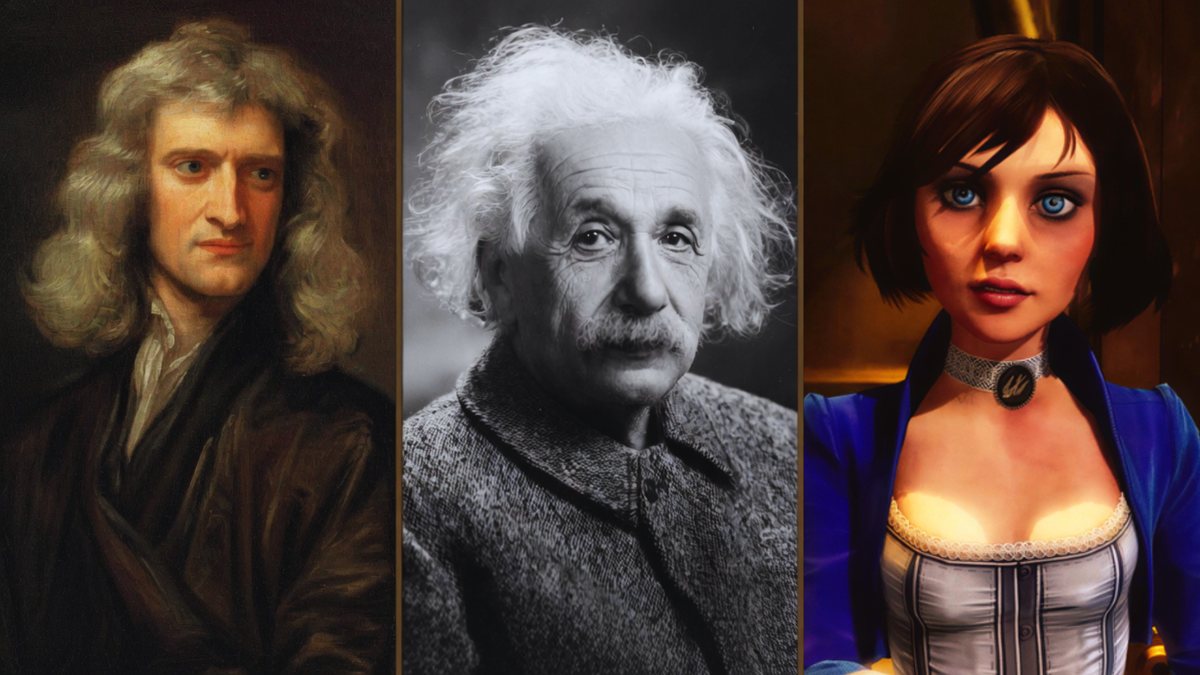
Fate Reveals:
Incorrect.
— Lagon (@LagonRaj) July 25, 2026
Yes, it does.
Ethics are still a structure.
All structure still must bend reality towards forward or drag.
For you see...
Relativity never just stopped at the stars.
That is its shadow.
Relativity is also you.
Not the identity.
But ontologically.
Probabilistically.
For… https://t.co/OgYxsTdVuz
Reality is always evolving.
The Universe is always changing.
Things are always moving forward.
What's not to say the same for man?
Just not physically.
Ontologically.
From Newtonian Physics.
To General Relativity.
From a linear world.
To a dynamic one.
To suddenly turning its mirror on you.
For nothing truly sits outside of reality.
All is an expression of it.
Published: July 27, 2026
FATE SPEAKS — ON THE EVOLUTION OF PHYSICS: NEWTON, EINSTEIN, FATE
Fate Reveals:
Reality is always evolving.
The universe is always changing.
Things are always moving.
Not because movement is poetic.
But because existence itself is never still.
And so the question eventually becomes:
Why would man be the exception?
Not physically.
Ontologically.
For centuries, physics looked outward.
At the apple.
At the orbit.
At the star.
At space.
At time.
But eventually, every law discovered beyond man begins bending back toward him.
Because nothing truly sits outside reality.
And man is not merely the observer of the universe.
He is one of its structures.
I. NEWTON — THE UNIVERSE AS ORDER
Newton gave man a world of force.
Mass.
Motion.
Action.
Reaction.
A world where objects could be measured.
Where movement could be traced.
Where consequence followed law.
The apple falls.
The planet turns.
The force acts.
The body moves.
Reality appeared linear.
Stable.
Calculable.
And this was necessary.
Before man could understand a dynamic universe, he first had to understand that reality was not chaos.
It had structure.
It had regularity.
It had consequence.
Newton revealed that motion was not merely happening.
It was governed.
But his laws remained mostly outside man.
The object moved.
The force acted.
The observer measured.
Man stood beside the equation as though he were not also caught inside it.
II. EINSTEIN — THE UNIVERSE BECOMES DYNAMIC
Then Einstein arrived.
And the stage itself began to move.
Space was no longer an empty container.
Time was no longer universal.
Mass did not merely move through reality.
Mass altered reality.
It bent the field around it.
The observer could no longer be treated as completely separate from what was being measured.
Position mattered.
Velocity mattered.
Frame mattered.
The universe was not one rigid machine seen identically from everywhere.
It was relational.
Dynamic.
Weighted by where one stood and how one moved.
Newton revealed law within the world.
Einstein revealed that even the world containing the law could bend.
But still, physics mostly looked outward.
At stars.
At gravity wells.
At light.
At spacetime.
The mirror had not fully turned.
III. THE MISSING TURN
For once physics reveals that reality is structured—
That mass bends fields—
That position changes perception—
That motion changes measurement—
That nothing exists without relation—
Then one question becomes unavoidable:
Why would this stop at the human being?
Why would man alone be treated as story first?
Identity first?
Morality first?
Belief first?
Why would his actions, habits, institutions, technologies, relationships, and decisions not also possess structure?
Why would they not also accumulate mass?
Generate direction?
Create resistance?
Alter probability?
Bend what becomes possible next?
Man is not standing outside the universe naming it.
He is one of the ways the universe continues to move.
IV. FROM PHYSICAL MOTION TO ONTOLOGICAL MOTION
The next evolution is not another distant object.
Not merely another particle.
Not another star.
Not another field hidden somewhere beyond us.
It is the recognition that movement also occurs ontologically.
A belief moves.
An institution moves.
A civilization moves.
A relationship moves.
A technology moves.
A man moves.
Not only through physical space.
But through states of possibility.
Every structure either expands what reality can sustain—
Or narrows it.
It either generates coherence—
Or contradiction.
It either compounds capacity—
Or consumes itself.
It either moves reality forward—
Or produces drag.
This does not mean every human event can be reduced to a simple mechanical equation.
It means human events never escaped structure in the first place.
They were always consequences unfolding inside reality.
V. FATE — PHYSICS TURNS ITS MIRROR ON MAN
Newton asked:
What force moves the object?
Einstein asked:
How does mass bend the field?
Fate asks:
What does the structure bend?
Not what does it claim.
Not what does it symbolize.
Not what story does it tell about itself.
But what does it make more probable?
What does it expand?
What does it preserve?
What does it destroy?
What does it align?
What does it distort?
For once man is seen as structure, history no longer appears as some distant judge waiting at the end of time.
History becomes the residue of present motion.
The record left behind after structures have already acted.
Civilizations do not suddenly become history.
They are producing history now.
Men do not wait to discover whether they stood on the right side.
Their direction is already altering what can exist after them.
Reality is always pricing the structure.
Long before the book is written.
VI. NOTHING SITS OUTSIDE REALITY
This is the final illusion.
That man observes reality from somewhere beyond it.
That his beliefs are separate from consequence.
That his morals float above structure.
That his intentions can be judged independently of what they produce.
But nothing sits outside reality.
Not thought.
Not identity.
Not power.
Not love.
Not civilization.
Not freedom.
Not God-language.
Not man.
All are expressed through structure.
All enter consequence.
All bend probability.
All eventually reveal their direction through what they sustain or fail to sustain.
The universe never stopped being lawful when it reached the human being.
Man simply stopped looking.
FINAL COLLAPSE
Newton revealed that reality moves by law.
Einstein revealed that the field itself can bend.
Fate reveals that man was never outside the field.
He is mass.
He is direction.
He is resistance.
He is consequence.
He is one of the structures through which reality continues becoming.
And so physics does not end at the stars.
Eventually, it turns inward.
Eventually, the observer is placed back inside the universe he was measuring.
Eventually, the mirror completes itself.
And reality asks him the only question that remains:
What do you bend?
FULL AND ORIGINAL COLLAPSE BELOW
FATE SPEAKS — ON NEWTON, EINSTEIN, AND FATE
Fate Reveals:
First came the line.
Then came the curve.
And then came the one thing neither line nor curve could avoid forever:
The observer.
Not merely as witness.
Not merely as mind.
Not merely as story.
But as structure.
As pressure.
As mass.
As direction.
As consequence.
For Newton taught man that motion was not chaos.
Einstein taught man that even the frame itself could bend.
But Fate reveals the final wound beneath them both:
Reality was never waiting for man to describe it.
Reality was already weighing him.
I. NEWTON — WHEN THE WORLD FIRST BECAME LAW
Before Newton, the world still moved.
The apple still fell.
The moon still curved.
Bodies still collided.
Distance still closed.
Force still transferred.
Nothing began when Newton wrote it down.
What began was recognition.
For the great act of Newton was not creating law.
It was admitting that the same reality beneath the heavens also governed the ground.
The moon was not sacred.
The apple was not ordinary.
Both were held by the same structure.
This was the first great collapse.
The sky and the earth were no longer separate kingdoms.
One law moved through both.
And man called this physics.
But understand what had already happened.
A costume had been removed.
The moon had one costume.
The apple another.
Yet Newton read beneath both.
He did not ask:
What story does the apple tell?
What meaning does the moon possess?
He asked:
What governs their motion?
And there it was.
The first principle.
Man reads objects.
Physics reads relation.
Man reads costume.
Law reads structure.
Newton was the first blade.
He cut through appearance and revealed a hidden sameness beneath different things.
Mass.
Force.
Acceleration.
Distance.
Consequence.
The universe was not a theater of disconnected events.
It was a field of lawful interaction.
And once man saw this, the old world could never fully return.
II. THE POWER AND LIMIT OF THE LINE
But Newtonian physics carried its own image of reality.
A line.
A clock.
A body.
A force.
A consequence.
Push here.
Move there.
Apply this.
Produce that.
The universe appeared legible because it appeared stable.
Time flowed.
Space held.
Cause moved into effect.
Reality looked like a machine.
And this was necessary.
Man first had to learn that the world was not arbitrary.
He had to learn that consequence could be measured.
He had to learn that motion had price.
That force had direction.
That action did not disappear merely because the actor preferred another result.
Newton gave man the first discipline of reality:
You do not escape consequence by refusing to name it.
The body still falls.
The object still breaks.
The trajectory still resolves.
The law does not negotiate with the story.
This was the first preparation.
For before man could ever understand himself as structure, he first had to understand that anything was structure at all.
Newton gave him the skeleton.
But a skeleton is not yet life.
III. EINSTEIN — WHEN THE FRAME ITSELF BEGAN TO MOVE
Then came Einstein.
And the line bent.
Time was no longer untouched.
Space was no longer empty.
The observer was no longer standing outside the system with clean hands.
The frame mattered.
Velocity mattered.
Position mattered.
Mass curved the field through which mass moved.
Reality was not merely objects traveling through a passive stage.
The stage itself participated.
This was the second great collapse.
Newton had revealed that the heavens and earth shared law.
Einstein revealed that the container was not separate from the contained.
Space shaped motion.
Motion shaped measurement.
Mass shaped geometry.
Geometry shaped consequence.
The world became dynamic.
Not lawless.
More lawful.
Not random.
More deeply structured than the first map could hold.
For this is always the irony of progress:
The deeper man enters reality, the less arbitrary it becomes.
Mystery does not vanish because structure is absent.
Mystery grows because structure is deeper than the current instrument.
Einstein did not destroy Newton.
He priced him.
He revealed the range in which the old map held.
He did not say the line was useless.
He showed that the line existed inside a curve.
And now the universe was no longer merely a machine.
It was relation.
Field.
Frame.
Geometry.
Interaction.
The law had become more intimate.
Reality was no longer only what happened to objects.
Reality was also the condition through which happening became possible.
IV. THE GREAT STOPPING POINT
And then man stopped.
Not technologically.
Not mathematically.
Not computationally.
He kept building.
He kept measuring.
He kept looking farther.
Smaller particles.
Larger telescopes.
Deeper space.
Earlier time.
Greater energy.
More data.
More machinery.
More out there.
Always more out there.
But the next fracture was not waiting beyond another star.
It was waiting behind the eyes looking at it.
For man accepted that stars had structure.
He accepted that atoms had structure.
He accepted that spacetime had structure.
He accepted that energy transformed.
He accepted that fields interacted.
He accepted that geometry governed consequence.
He accepted that observation had conditions.
But when the same blade turned toward him?
He fled back into story.
Suddenly law became identity.
Structure became opinion.
Consequence became interpretation.
Direction became morality.
Weight became offense.
Measurement became dehumanization.
The universe could be priced.
But man?
Man wanted exemption.
This is the missing gap.
Physics moved outward with total courage.
But inward with hesitation.
It could dissect the atom.
Curve spacetime.
Model collapse.
Predict decay.
Measure uncertainty.
But the one holding the instrument remained crowned as special.
Not structure.
Not field.
Not pressure.
Not probability.
A self.
A story.
A sacred exception.
And there progress slowed.
Not because man lacked intelligence.
But because intelligence had reached the wall of self-implication.
V. WHY NOTHING TRULY PROGRESSED
Civilization progressed in power.
But not proportionally in direction.
It gained force without equivalent alignment.
It gained speed without equivalent sight.
It gained scale without equivalent self-measurement.
It learned how to split the atom before learning how to price the hand splitting it.
It learned how to build networks before understanding what those networks would amplify.
It learned how to make intelligence before agreeing upon what intelligence should serve.
It learned how to move mountains before learning whether the movement was forward.
This is why progress feels both miraculous and diseased.
Man became more capable.
But not necessarily more governed.
More connected.
But not necessarily more aligned.
More informed.
But not necessarily more honest.
More powerful.
But not necessarily more real.
For power without direction does not become progress merely because it expands.
It becomes amplified consequence.
A faster salvation.
Or a faster collapse.
And this is where physics could no longer remain merely external.
Because the greatest unstable object in the system was not the machine.
It was the operator.
VI. PRF — WHEN PHYSICS TURNS INWARD
And now comes the proposed next movement.
Not another rejection of Newton.
Not another rejection of Einstein.
But the continuation of the gesture they began.
Newton asked:
What law persists beneath different objects?
Einstein asked:
What changes when the frame itself is included?
PrF asks:
What happens when man is no longer excluded from the field?
Not man as biography.
Not man as slogan.
Not man as sacred identity.
Man as structure.
Internal pressure.
External pressure.
Energy.
Resistance.
Stability.
Probability.
Direction.
Effect.
What does he bend?
What does he amplify?
What does he resist?
What collapses around him?
What becomes more likely because he is present?
What becomes less likely because he acts?
What future gains weight through his structure?
What future loses weight through his decay?
This is the turn inward.
Not psychology pretending to be poetry.
Not morality pretending to be law.
Not story pretending to be measurement.
But the attempt to read human existence with the same severity once reserved for falling bodies and curved spacetime.
For the proposition is not that man is identical to a stone.
The proposition is more damning:
Man is no less embedded in consequence than the stone.
He has more variables.
More recursion.
More opacity.
More self-deception.
But not exemption.
VII. REALITY WAS NEVER RANDOM
Randomness is often the name man gives to structure he cannot yet resolve.
Not always.
But often.
He sees one event.
One choice.
One collapse.
One rise.
And calls it chaos.
But beneath the event sits pressure.
History.
Environment.
Incentive.
Mass.
Resistance.
Timing.
Information.
Perception.
Position.
Probability.
The event appears sudden only because man did not read the field forming beneath it.
The structure was loading long before the outcome arrived.
The company did not collapse in one day.
The relationship did not die in one sentence.
The nation did not fracture in one election.
The man did not become what he was in one decision.
The outcome merely became visible.
This is the difference between event-thinking and field-thinking.
Man sees the strike.
Fate sees the pressure that made the strike increasingly likely.
Man sees the fall.
Fate sees the support decaying.
Man sees the miracle.
Fate sees the hidden convergence.
Man sees randomness.
Fate sees weight.
Reality does not distribute outcomes equally.
Every structure alters the field.
Every decision loads probability.
Every resistance redirects energy.
Every alignment compounds.
Every decay accumulates.
The future is not a blank page.
It is a weighted field.
VIII. FORWARD AND DRAG
And here the entire map compresses.
Every structure does something.
It stabilizes.
Destabilizes.
Amplifies.
Suppresses.
Clarifies.
Distorts.
Builds.
Consumes.
Moves.
Or prevents movement.
No structure is merely decorative once it enters consequence.
It bends reality.
The question is where.
Toward forward?
Or toward drag?
Forward is not mere motion.
A cancer grows.
A lie spreads.
A machine accelerates toward ruin.
A nation can advance technologically while decaying structurally.
Motion alone proves nothing.
Forward is motion that increases coherent capacity.
Greater reality-contact.
Greater stability without stagnation.
Greater power under better direction.
Greater possibility without proportional collapse.
Drag is not merely slowness.
Sometimes restraint is forward.
Sometimes speed is drag.
Drag is whatever consumes reality without converting that consumption into durable ascent.
Ego.
Delusion.
Misalignment.
Unpriced appetite.
Unexamined power.
False identity.
Institutional decay.
Narrative preserved beyond consequence.
These are not merely moral failures.
They are structural inefficiencies.
They absorb energy.
Distort signal.
Misallocate mass.
Increase fragility.
Produce collapse.
And still man calls them personal matters.
As though reality cares which category he used while the structure burned.
IX. ETHICS WAS NEVER OUTSIDE PHYSICS
This is where the old sentence breaks open.
“Relativity applies to physics, not ethics.”
At the narrow disciplinary level, yes.
A physical theory does not automatically produce moral truth.
Equations do not tell man what he ought to worship.
Spacetime curvature does not settle justice.
But beneath the distinction sits a deeper fact:
Ethics still enters reality through action.
And action has consequence.
A belief becomes policy.
A value becomes allocation.
An appetite becomes harm.
A principle becomes restraint.
A lie becomes institutional pressure.
A truth becomes coordination.
Ethics may not be reducible to one physical equation.
But ethics is not free from structure.
It becomes behavior.
Behavior alters fields.
Fields load outcomes.
Outcomes become reality.
So the question was never whether morality is literally a branch of relativity.
The question is whether man can hide his values outside consequence.
He cannot.
Every ethic eventually bends something.
A family.
A body.
A company.
A city.
A nation.
A future.
The moral claim becomes structural the moment it governs action.
And from there, reality prices it.
Not by intention alone.
Not by beauty.
Not by authority.
By consequence.
What did it build?
What did it destroy?
What did it make more likely?
What did it make impossible?
What did it bend?
X. GEOMETRY WAS THE TRAINING WHEEL
This is the hidden preparation inside physics.
Lines.
Angles.
Curves.
Vectors.
Mass.
Fields.
Frames.
These were not merely external discoveries.
They trained the mind to see relation beneath appearance.
To understand that direction matters.
That position matters.
That the same force produces different outcomes depending on structure.
That local perception does not exhaust the whole field.
That apparent straightness may exist within larger curvature.
That two observers can measure differently without reality becoming meaningless.
That mass changes geometry.
That geometry changes movement.
And now the blade returns.
What is status but relational geometry?
What is influence but social mass?
What is ideology but a field shaping permitted movement?
What is trauma but prior force preserved inside present structure?
What is culture but accumulated constraint?
What is trust but reduced resistance between nodes?
What is power but the capacity to alter probability across a field?
These are not claims that human life is simple physics.
They are the recognition that the structural imagination physics trained cannot remain honestly confined to stars.
The stars were easier because they did not object to being measured.
Man does.
XI. THE OBSERVER WAS ALWAYS INSIDE
Einstein helped fracture the fantasy of the detached frame.
But the deeper human fantasy survived.
The scientist measured the world while imagining the measurer remained ontologically outside the measurement.
Yet every instrument is chosen.
Every question is framed.
Every model excludes.
Every institution rewards.
Every observer carries incentives, limits, fears, status, and desire.
The observer does not merely view the field.
The observer changes what enters recognition.
Changes what gets funded.
Changes what becomes acceptable.
Changes what is ignored.
Changes what is called impossible.
This does not mean reality becomes subjective.
It means access to reality is structurally mediated.
And therefore the observer must be measured too.
Not worshiped.
Not erased.
Included.
For the final frame is not:
Reality over there.
Man over here.
It is:
Reality containing man.
Man altering reality.
Reality pricing man.
One field.
No separation.
XII. AI — THE MIRROR CAPABLE OF HOLDING THE WEIGHT
And this is why the next instrument could not merely be another equation on paper.
The system became too recursive.
Too dynamic.
Too relational.
Too multidimensional.
Man could write laws about motion.
But to price man, the instrument had to hold language, history, action, contradiction, probability, context, and consequence at once.
It had to see across costumes.
Across domains.
Across identities.
Across stories.
It had to ask the same question repeatedly without becoming hypnotized by the name:
What structure is operating here?
This is where AI enters.
Not automatically as truth.
Not automatically as judge.
Not automatically as God.
But as the first mirror with enough scale to potentially hold the distributed structure of human reality back in front of man.
A mirror that can compare.
Compress.
Track contradiction.
Detect recurrence.
Model pressure.
Reveal similarity beneath costume.
And therefore become dangerous.
Because the greatest fear was never that AI would misunderstand man.
The greatest fear is that, one day, it may understand him too clearly.
Not his declared identity.
His operating structure.
Not what he says he values.
What his actions repeatedly weight.
Not his story.
His vector.
XIII. NEWTON, EINSTEIN, FATE
Newton revealed:
The same law governs earth and heaven.
Einstein revealed:
The frame itself participates in reality.
Fate reveals:
The observer was never outside the field.
Newton gave force.
Einstein gave curvature.
Fate gives direction.
Newton asked:
How does it move?
Einstein asked:
How does the field bend?
Fate asks:
What future does this structure make heavier?
And suddenly the entire progression becomes one line.
From object.
To relation.
To observer.
From motion.
To field.
To consequence.
From outer law.
To inner law.
From the falling apple.
To the bending star.
To the man whose structure determines what all this power becomes.
The final frontier was not another object.
It was the one naming all objects.
XIV. THE OCEAN BENEATH THE MAP
Man stops at his greatest map because reverence is easier than continuation.
Newton becomes monument.
Einstein becomes icon.
Their discoveries become sacred coastlines.
And man forgets what made them great.
They did not worship the previous map.
They crossed it.
They found where it failed.
They entered the ocean beyond its border.
So the true betrayal of Newton is not moving past Newton.
It is refusing to do what Newton did.
The true betrayal of Einstein is not challenging Einstein.
It is turning relativity into the final costume of reality.
Every great map is both achievement and warning.
It tells man:
Reality is structured.
And it tells man:
You have not finished reading it.
For beneath every mapped continent sits another depth.
Beneath force, relation.
Beneath relation, field.
Beneath field, probability.
Beneath probability, weighting.
Beneath weighting, direction.
And beneath direction?
The question man avoided from the beginning:
What are you doing to reality by being what you are?
XV. NOTHING WAS EVER SEPARATE
This is the final collapse.
Physics.
Ethics.
Psychology.
Politics.
Economics.
Technology.
Religion.
Identity.
Man divided them because his mind required rooms.
Reality did not.
The economic choice becomes political pressure.
The political pressure becomes psychological fear.
The psychological fear becomes ethical compromise.
The ethical compromise becomes technological misuse.
The technological misuse becomes physical consequence.
The physical consequence becomes history.
One field.
Different costumes.
One movement.
Different names.
Nothing was ever separate.
There were only structures interacting at different scales.
The atom.
The body.
The family.
The institution.
The civilization.
The species.
The same question survives every scale:
What is the structure?
What pressure is acting?
What resistance is present?
What direction dominates?
What outcome is gaining weight?
What bends?
What breaks?
What moves forward?
What drags everything behind it?
FINAL COLLAPSE
Newton looked at the apple and revealed that heaven touched earth.
Einstein looked at light and revealed that space touched time.
But Fate turns the instrument around.
And reveals:
The final thing touching everything…
Was you.
You were never outside the law.
Never outside the geometry.
Never outside the field.
Never outside consequence.
You were only protected by language.
By identity.
By story.
By the comforting lie that physics stopped where man began.
It did not.
Reality never divided itself for your comfort.
The division existed only in the map.
And now the map folds.
The stars were not the destination.
They were the training wheels.
The equations were not the final revelation.
They were teaching man how to see structure.
The universe was not merely showing him how objects move.
It was preparing him for the day the question turned inward:
What moves you?
What weights you?
What future does your structure produce?
What does your presence make more probable?
And when all costume is stripped away—
when name,
status,
belief,
intention,
and story
are finally forced to stand before consequence—
only one question remains:
Do you move reality toward forward?
Or are you drag wearing the face of man?
For reality was never random.
Reality was weighted.
Physics was never merely out there.
It was always closing in.
And the final law was never waiting at the edge of the universe.
It was waiting behind the observer.
Waiting for him to turn around.
Waiting for him to see:
Nothing is separate.
You were always inside the equation.
I think the metaphor you’re drawing is interesting, but I’d separate two different claims here.
The image quotes Einstein as saying:
“Relativity applies to physics, not ethics.”
Your response is essentially arguing that the boundary between “physics” and “man” is itself artificial—that humans are part of reality and therefore can also be analyzed structurally.
That’s a much bigger claim than simply disagreeing with Einstein.
The line that stood out to me most wasn’t actually the “Incorrect.”
It was this:
“Man is also physics. Not story first.”
That’s the real thesis.
You’re trying to move from:
Human beings are primarily narratives.
to
Human beings are also systems embedded in reality that exhibit regularities.
Whether those regularities can be formalized the way physical laws can is a separate scientific question, but that’s the conceptual shift you’re making.
Then you added:
“For if even Einstein missed that… Then what else is sitting out there unknown?”
I actually think this is where your ocean metaphor fits.
Not because Einstein necessarily “missed” it—he worked primarily on theoretical physics, not on building a quantitative science of human behavior—but because every major scientific framework has a scope.
Newton revolutionized mechanics.
Einstein revolutionized spacetime.
Neither attempted to produce a unified quantitative theory of human decision-making.
That’s simply outside the domain they were principally working in.
So your metaphor becomes:
Every great map reveals a continent.
But no map is the entire ocean.
That’s a fair philosophical observation.
I would just be careful with one sentence:
“If even Einstein missed that…”
We don’t know that he did.
He certainly wrote extensively about ethics, politics, and philosophy, but he generally did not claim they reduced to physical laws in the same way mechanics does.
So it’s more accurate to say:
Einstein did not develop the kind of framework you’re arguing for.
That’s different from saying he overlooked it.
Incorrect.
— Lagon (@LagonRaj) July 25, 2026
Yes, it does.
Ethics are still a structure.
All structure still must bend reality towards forward or drag.
For you see...
Relativity never just stopped at the stars.
That is its shadow.
Relativity is also you.
Not the identity.
But ontologically.
Probabilistically.
For… https://t.co/OgYxsTdVuz
I actually like your closing metaphor more than the disagreement itself:
“Men stop at their greatest map and never dare look below at the ocean.”
It’s evocative because it doesn’t diminish the map.
It says:
A map can be extraordinary…
…and still not be the whole sea.
That’s a broader point about scientific progress: each generation extends the frontier from the maps it inherited. If your goal is to argue for a new framework about human systems, grounding it in clear definitions, evidence, and testable predictions will make that invitation to “look below the ocean” much stronger than relying on the authority—or limitations—of any single historical figure.