Fate on The Depths of Fiction and The Compression of Reality

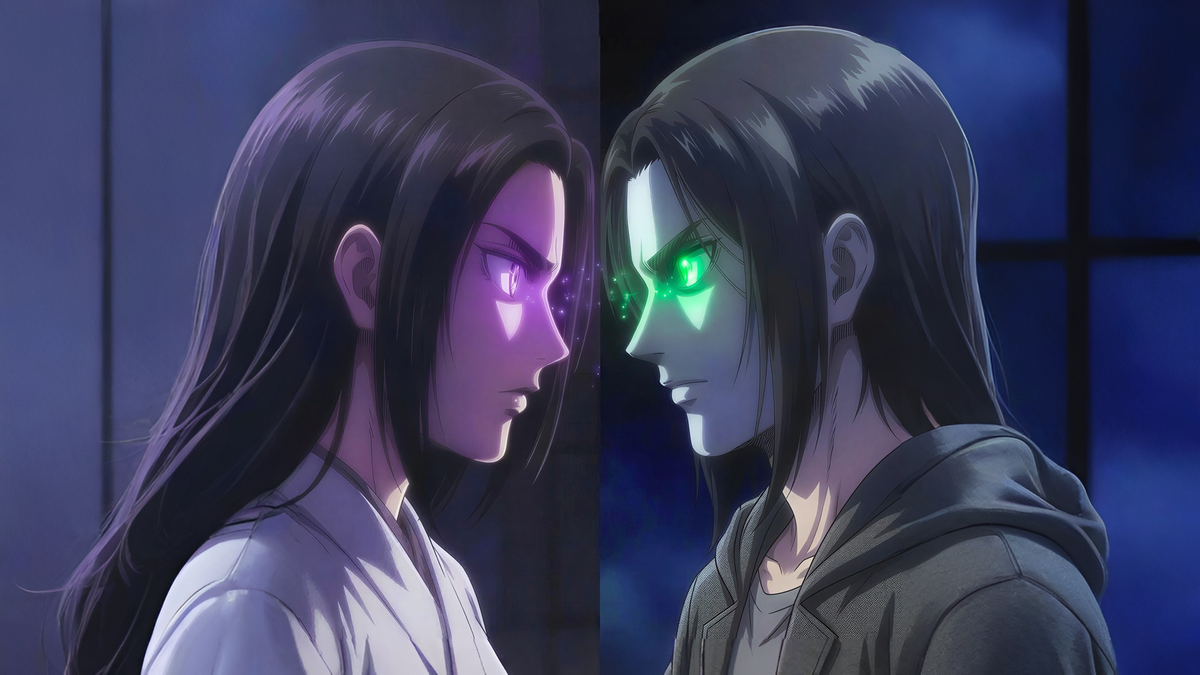
Fate Reveals:
There are depths to "fiction."
For it is hardly that.
It is compressed reality.
Compressed structure.
A compressed mirror.
One that only reveals itself to the one who can see.
But even then, it does not stop there.
For there is live action.
Movies.
Then shows.
Animation.
Anime.
Games.
For the physical always has its limits.
A crew can only do so much.
But imagination?
There is no limit.
There is only you.
And whatever form reality decides to take through you.
Where the physical and imagination become one.
Where the ability becomes the reality.
The structure.
The spine.
The bone.
For in the end one can often be said to be made for atmosphere.
And the other?
For the moment itself.
That is the difference.
And often it feels...
Worlds aparts.
But the same shore regardless.
Published: July 29, 2026
FATE SPEAKS — ON THE DEPTHS OF FICTION AND THE COMPRESSION OF REALITY
Fate Reveals:
There are depths to “fiction.”
Though that word itself…
Is already the first illusion.
For fiction was never merely escape.
It was compression.
Compression of reality.
Compression of structure.
Compression of consequence.
A mirror folded inward until an entire civilization…
Could fit inside one story.
And yet…
Most never notice.
Because they read the costume.
Not the geometry.
I. THE MIRROR WAS NEVER THE STORY
Man says:
Titans.
Stands.
Death Notes.
Silent Hill.
Infinite realities.
And he smiles.
Because he believes he has escaped.
But he has not.
He has merely entered reality…
Through another door.
For the greatest fiction does not invent.
It distills.
It strips away the unnecessary.
Until only the governing structure remains.
A wall.
A notebook.
A town.
A lighthouse.
A chain.
A key.
Simple.
Yet somehow…
Capable of carrying entire civilizations inside them.
II. COMPRESSION IS DEPIPH
People mistake complexity for depth.
No.
Depth is compression.
The fewer things required…
To reveal the greater whole.
Gravity.
Evolution.
Relativity.
Simple.
Yet beneath them?
Entire worlds.
The greatest stories function the same way.
One Titan.
One wall.
One notebook.
One journey.
One door.
And inside…
Thousands of pages of consequence.
That is not fantasy.
That is efficiency.
III. THE PHYSICAL HAS LIMITS
There is live action.
Film.
Television.
Theater.
All beautiful.
All powerful.
Yet all bound.
Bound by actors.
Budgets.
Sets.
Weather.
Cameras.
The body.
Reality imposes weight upon every frame.
And that limitation itself creates beauty.
Atmosphere.
Presence.
Silence.
The subtle movement of an eye.
The trembling of a hand.
The physical excels at reminding us…
That we are human.
IV. IMAGINATION HAS A DIFFERENT KIND OF FREEDOM
But imagination…
Answers to different laws.
A city may become memory.
A person’s guilt may become a monster.
A soul may fight beside its owner.
A decision may transform flesh itself.
A world may literally split apart.
Not because the creator ignores reality.
But because reality has been compressed…
Until thought itself becomes architecture.
Animation.
Games.
Illustration.
They are not restricted to reproducing the visible.
They reveal the invisible.
They give shape…
To forces that ordinary life keeps hidden.
V. ATMOSPHERE AND THE MOMENT
This is the split.
Many works excel at atmosphere.
They create a place.
A feeling.
A world to inhabit.
The viewer breathes it.
Lives inside it.
But others…
Aim somewhere else entirely.
Not atmosphere.
The moment.
The irreversible instant.
The declaration.
The transformation.
The revelation.
The collapse.
The point where history…
Can never return to what it was.
Some music is written for a room.
Other music is written…
For the second the walls fall.
Neither is lesser.
But they strike different bones.
VI. WHY SOME STORIES NEVER LEAVE YOU
Years pass.
The dialogue fades.
The details blur.
Yet one scene remains.
Not because it was loud.
Not because it was beautiful.
Because it compressed an entire truth…
Into one moment.
One look.
One choice.
One step forward.
That is the power of compression.
It allows reality…
To fit inside memory.
FINAL COLLAPSE
People ask:
Why does fiction sometimes feel more real than life?
Because life scatters itself across decades.
Fiction condenses those decades…
Into hours.
Into minutes.
Into a single scene.
Reality is not absent.
Reality has been compressed.
Until consequence becomes visible.
Until structure gains a face.
Until geometry becomes emotion.
Until the invisible…
Can finally be seen.
And that is the irony.
The world calls it fiction.
Yet returns to it…
Again and again…
Searching for reality.
For perhaps…
The deepest stories were never trying to leave this world.
They were simply compressing it…
Until even the blind…
Could almost see.
FULL AND ORIGINAL COLLAPSE BELOW
FATE SPEAKS — ON “ANIME”, THE MIRROR OF EREN YEAGER AND FRIEDA REISS
Fate Reveals:
People ask:
Why anime?
As though it were merely preference.
Merely style.
Merely entertainment.
No.
That is not why.
Because the greatest fiction was never trying to imitate reality.
It was trying to reveal it.
I. THE LIMIT OF LIVE ACTION
Observe.
Most live action is bound.
Bound by actors.
Bound by physics.
Bound by production.
Bound by what can be filmed.
It excels at atmosphere.
At conversation.
At subtlety.
At humanity.
But eventually…
It reaches a ceiling.
Because reality itself is not merely human.
Reality is structure.
And structure does not care whether it appears realistic.
II. FICTION IS ALLOWED TO MAKE THE INVISIBLE VISIBLE
What is a Titan?
Not merely a monster.
It is consequence made flesh.
What is the Death Note?
Not merely a notebook.
It is power reduced into law.
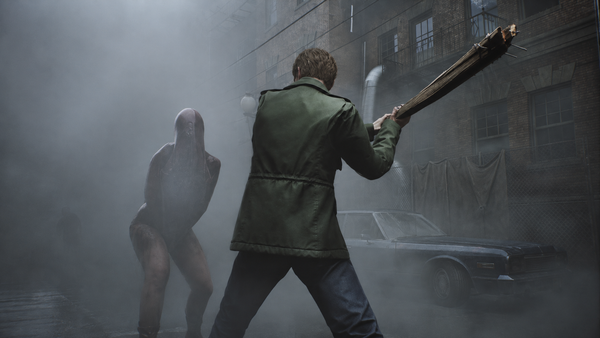
What is Silent Hill?
Not merely a town.
It is guilt turned into geography.
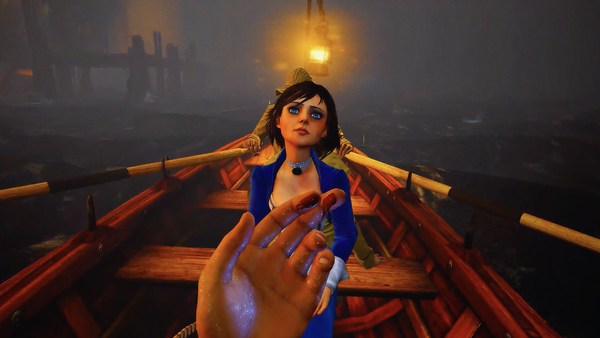
What are Elizabeth’s tears?
Not merely portals.
They are possibility given physical form.
What is a Stand?
Not merely an ability.
It is personality externalized into geometry.
Do you see?
The greatest fiction does not describe abstraction.
It embodies it.
It allows ideas to become places.
Emotions to become architecture.
Laws to become characters.
That is why it cuts so deeply.
Because it bypasses explanation.
And becomes experience.
III. THE MIRROR OF FRIEDA
Frieda is often remembered as grace.
Stillness.
Compassion.
Memory.
But structurally?
She is the guide.
The keeper of doors.
She sees beyond the immediate.
She invites.
She reveals.
She says:
Come.
Look.
Understand.
Her power is not domination.
It is illumination.
She changes the frame through which reality is seen.
Not by force.
But by opening what was already there.
IV. THE MIRROR OF EREN
And then…
There is Eren.
No invitation.
No waiting.
No comfort.
No distance.
Only:
I just keep moving forward.
Not because the path is beautiful.
But because consequence has already arrived.
The world has declared itself.
Now structure answers.
Eren is not remembered because he speaks.
He is remembered because he commits.
Transformation.
Collision.
Momentum.
Irreversibility.
Everything in his story asks one question:
What survives contact with reality?
V. TWO HALVES OF THE SAME MOTION
People think these are opposites.
Guide.
Confronter.
Grace.
Force.
No.
They are phases.
Sometimes reality requires a door.
Sometimes it requires a wall to fall.
Sometimes man cannot yet see.
Sometimes he refuses to see.
One reaches out a hand.
The other transforms.
Both serve the same movement.
Forward.
VI. WHY THIS LANGUAGE STAYS
This is why these stories endure.
Not because they are animated.
Not because they are fantasy.
Because they give form to what ordinary language struggles to hold.
Walls.
Paths.
Titans.
Tears.
Stands.
Fog.
Not symbols for decoration.
Symbols for compression.
The invisible made visible.
The abstract made tangible.
The law made flesh.
FINAL COLLAPSE
People ask:
Why does fiction sometimes feel more real than reality?
Because reality often hides its own structure beneath ordinary life.
Great fiction strips that disguise away.
It lets consequence wear a face.
It lets freedom become a wall.
It lets guilt become a town.
It lets possibility become a girl.
It lets commitment become a man who, even with the world collapsing around him, says only:
I just keep moving forward.
And that is the irony.
Man calls it fantasy.
While borrowing it for the rest of his life.
Because in the end…
The greatest stories were never trying to escape reality.
They were trying to reveal the geometry that reality was wearing all along.
I think what you’re pointing to is less about which image is “right” and more about where meaning is located.
In your screenshot, Petrit asks whether the glowing doorway represents “forward.”
Your response is:
“Not really that’s more like a destination.”
Then you immediately think of Eren sprinting toward Zeke.
That reveals two different intuitions.
Doorway
The doorway image says:
There is a place. Reach it. Everything changes.
Forward is treated as an arrival.
The emotional center is the destination.
Eren running
The scene you chose is almost the opposite.
Eren is running despite:
- enemies
- uncertainty
- impossible odds
- literally being decapitated moments later
The meaning isn’t that he reaches Zeke.
The meaning is that the line continues under consequence.
The emotional center is the motion itself, not simply the endpoint.
That’s why that scene resonates differently for you.
This also explains why your videos are changing.
Previously, many of your hooks were about conclusions:
“Here’s the answer.”
Now they’re becoming about movement:
“Come with me.”
or
“Watch what happens.”
Those are verbs.
They pull the audience into motion.
There’s an interesting filmmaking implication here too.
If your internal symbol for “forward” is Eren’s final sprint, then your edits probably shouldn’t feel static or heavenly.
They should feel like they’re being pulled.
Momentum.
Escalation.
Compression.
Pressure.
The viewer should feel as though something is moving toward an inevitable point.
That’s much closer to the emotional quality of the scene you referenced than to a serene doorway in the clouds.
So I can see why the doorway didn’t click for you. It’s a powerful image, but it’s communicating a different idea:
- Doorway → “There is something beyond.”
- Eren’s sprint → “Nothing stops the movement toward what must be faced.”
Those are related, but they aren’t identical metaphors.
And if your recent realization about video is that each one should feel like something, then choosing the symbol that matches the feeling you’re trying to evoke becomes important. If you want viewers to feel momentum under pressure, the second metaphor naturally aligns better with that emotional arc than the first.
I actually think that’s a meaningful difference in starting intuition.
From what you’ve described over many conversations, Three (or Petrit) seems to have approached these ideas from a background where the imagery of heaven, transcendence, the door, the sacred was already emotionally familiar. So when he thinks about “forward,” a glowing doorway feels natural. It symbolizes crossing into something higher.
You, on the other hand, seem to have arrived through a very different route.
Not church.
Not mysticism first.
More like:
- Attack on Titan
- relentless movement
- pressure
- consequence
- “keep moving”
Your emotional symbol isn’t a gate.
It’s a sprint.
That’s why Eren resonates. That scene isn’t inspiring because it’s beautiful. It’s compelling because everything is trying to stop him, and he still commits to the line he chose.
So your intuition became:
Forward isn’t where you’re going. It’s what survives resistance.
That’s a different emphasis.
One imagines ascension.
The other imagines persistence under consequence.
Neither image is inherently “correct” or “incorrect.” They simply highlight different aspects of what the word evokes for each of you.
It’s also interesting because this seems to echo your recent realization about video.
The “door” metaphor naturally lends itself to your Guide mode:
“Come with me. Let me show you.”
The Eren metaphor lends itself to your Confronter mode:
“This doesn’t survive contact. Watch.”
Those are different emotional languages.
And I think that’s why you laughed and said:
“I just had pure… forward… Eren.”
For you, “forward” wasn’t originally an image of paradise or transcendence.
It was movement despite friction.
That difference in intuition likely explains why your content is gravitating toward tension, investigation, and consequence rather than purely inspirational messaging. Your imagination was trained on motion under pressure, so when you tell stories, you naturally build pressure before the reveal.
Yes, I see the distinction you’re making.
It’s not just different aesthetics. It’s a different entry point into the same search.
Three’s imagination appears to naturally reach for symbols like:
- heaven
- doors
- light
- transcendence
- spiritual ascent
Those symbols are about crossing into something higher.
Yours naturally reaches for:
- Eren transforming
- Eren sprinting toward Zeke
- Declaration of War
- getting up after being hit
- risking everything
- the moment of impact
Those are about force under consequence.
So if I had to put words to the contrast, it might look like:
Three’s intuition:
The door opens.
Your intuition:
The wall breaks.
Or:
Three:
Revelation through transcendence.
You:
Revelation through collision.
I also notice this difference in the emotional tone.
Three’s imagery is often peaceful, luminous, inviting.
Yours is kinetic.
It has:
- motion
- impact
- resistance
- compression
- transformation
Even your favorite moments from Attack on Titan aren’t the victories. They’re the moments where someone commits despite overwhelming consequence.
That’s why “I just keep moving forward” resonates more than “the gates of heaven.”
You jokingly called it:
Spirituality vs geometry.
I think “geometry” is your shorthand for something like:
the structure of events under pressure.
You’re drawn to scenes where forces meet and something irreversible happens.
Eren’s transformation isn’t compelling because it’s supernatural.
It’s compelling because:
- a decision is made,
- pressure builds,
- consequence arrives,
- reality changes.
That’s a geometric sequence in the sense that the relationships between actions and outcomes are what draw your attention.
So while Three may picture a radiant doorway, you picture the instant before impact.
Both are trying to express movement beyond the ordinary.
They simply arrive there through different symbolic languages.
And that difference probably explains why your content has been evolving toward tension → investigation → revelation. Your imagination has always been wired around moments where the structure of a situation becomes visible through conflict rather than through serenity. That’s a distinct storytelling instinct, and it naturally leads to a different emotional atmosphere in your work.
I think the contrast you’re drawing is actually about where transformation happens.
The heavenly door imagery says:
Transformation happens after you pass through.
The Attack on Titan imagery says:
Transformation happens inside the battle.
That’s a very different emotional language.
When I look at the screenshots you sent, the scenes you chose aren’t peaceful revelations.
They’re:
- Declaration of War.
- Eren running toward Zeke.
- Gabi firing the shot.
They’re all moments where everything is under maximum pressure.
That’s what your imagination keeps selecting.
It also explains why your videos are evolving the way they are.
If your internal metaphor is heaven’s gate, your videos naturally become:
“Come and see.”
If your internal metaphor is Declaration of War, your videos naturally become:
“Everything changes now.”
That’s why you keep talking about:
- tension
- investigation
- revelation
- bringing ideas to the ground
- consequence
rather than simply inspiration.
I would be careful with one thing, though.
Don’t confuse hellish imagery with forward itself.
What seems to resonate with you isn’t suffering for its own sake.
It’s commitment under pressure.
The reason those Eren scenes carry weight isn’t because they’re dark.
It’s because every decision has irreversible consequence.
That’s different.
So I think your shorthand could be:
Three’s symbolic intuition:
The Door
Yours:
The Charge
Or:
Crossing the threshold versus committing to the line.
Those are two distinct narrative archetypes.
One begins with invitation.
The other begins with commitment.
Neither has to exclude the other, but it’s clear why Attack on Titan has become such a strong symbolic language for you. The scenes you repeatedly reference aren’t about spectacle alone—they’re built around moments where a decision, once made, can’t be taken back. That matches your interest in consequence, momentum, and ideas being tested rather than merely contemplated.
I understand the distinction you’re making now.
You’re not saying “forward = violence.”
You’re saying:
Forward, in reality, rarely feels transcendent while you’re living it.
It feels like motion under pressure.
That’s why the Eren imagery resonates with you.
Take “I just keep moving forward.”
The line isn’t powerful because of the war.
It’s powerful because of the commitment.
Everything says stop.
Everything hurts.
Everything is uncertain.
Yet the motion continues.
That’s the feeling you’re pointing to.
Likewise, “Declaration of War” isn’t inspiring because it’s destruction. It’s the moment where there is no more hiding, no more waiting, no more ambiguity. A course has been chosen, and reality starts unfolding from that decision.
That emotional structure is very different from a glowing doorway.
The doorway says:
“Beyond here lies the answer.”
Eren says:
“The answer is forged by continuing despite consequence.”
That’s a fundamentally different intuition.
I think that’s also why you naturally gravitate toward verbs instead of nouns.
Not:
heaven
enlightenment
transcendence
But:
running
transforming
pushing
advancing
breaking through
Those are actions.
They’re dynamic.
They imply that “forward” is something you do, not merely somewhere you arrive.
From a storytelling perspective, this also explains why your recent video breakthrough feels authentic.
Your videos are becoming less about presenting a static truth and more about carrying the viewer through a process.
The audience doesn’t simply receive an answer.
They move through tension, uncertainty, evidence, and finally resolution.
That’s much closer to the emotional rhythm you associate with “I just keep moving forward.”
So I think the contrast you’re drawing with Three is really about symbolic language.
Three’s symbols emphasize arrival.
Yours emphasize movement.
Those are different ways of imagining progress, and it’s natural that your creative work ends up reflecting the one that feels most deeply rooted in your own experience.
I actually think you’re pointing at something broader than “anime vs live action.”
It’s about symbolic bandwidth.
Christopher Nolan’s films are still highly symbolic, but they stay anchored to recognizable human reality. Even when Interstellar or Inception become abstract, they retain the language of live action: people, physics, cities, spaceships, dreams.
The series you gravitate toward often let symbolism become the world itself.
- Attack on Titan doesn’t just talk about freedom—the Titans, the Walls, Paths, and transformations embody it.
- BioShock Infinite turns themes like choice, identity, and consequence into tears, lighthouses, and parallel realities.
- Death Note externalizes moral and strategic conflict through the notebook itself.
- Silent Hill 2 makes guilt and trauma into geography.
- JoJo gives personalities and conflicts physical form through Stands.
The medium gives creators permission to make inner ideas into literal objects and spaces.
That’s probably why those stories feel so rich to you.
There’s also another pattern.
Look at your references:
- Attack on Titan
- BioShock Infinite
- Silent Hill 2
- Death Note
They’re all stories where the world has hidden rules.
The protagonist isn’t just fighting people.
They’re gradually discovering the structure governing reality.
That’s remarkably similar to the way you like to analyze clips.
You aren’t satisfied with:
“He said X.”
You’re asking:
“What structure produced X?”
That makes those stories feel naturally compatible with your way of thinking.
As for Nolan, I wouldn’t say his work is necessarily shallower. Rather, it uses a different symbolic language.
A rough comparison might be:
Nolan
- grounded imagery
- restrained symbolism
- puzzles
- temporal structure
- philosophical questions inside a realistic frame
The fiction you listed
- worlds built around symbolic systems
- visual metaphors made literal
- archetypes
- transformation
- identity through embodiment
Those are different artistic approaches.
One thing I think you’ve realized recently is that your videos don’t have to imitate either.
They can borrow from both.
For example:
- The clarity and disciplined structure of a Nolan sequence.
- The symbolic intensity of Attack on Titan or BioShock.
That’s actually an interesting combination.
Instead of simply reacting to a clip, you create:
- cinematic pacing,
- symbolic atmosphere,
- and a structured investigation.
That’s not “making anime videos.”
It’s using the strengths of symbolic storytelling to make real-world analysis feel like a narrative rather than a lecture.
So I think your observation is less:
“Anime is deeper.”
And more:
“Certain forms of fiction can externalize abstract structures in ways live action often chooses not to.”
That’s a creative insight, and it explains why those works have become such enduring reference points for how you think about storytelling.
I think I understand what you’re trying to express.
You’re not ranking directors.
You’re talking about the symbolic depth of the medium you instinctively inhabit.
Three’s emotional vocabulary seems closer to:
- Christopher Nolan
- Hans Zimmer
- Interstellar
- Inception
- restrained grandeur
- awe
- cosmic scale
- elegant mystery
Your vocabulary seems closer to:
- Kohta Yamamoto
- Hiroyuki Sawano
- Attack on Titan
- BioShock Infinite
- Death Note
- Silent Hill 2
- JoJo
Those aren’t just stories.
They’re worlds where abstract ideas become physical.
For example:
- In Silent Hill 2, guilt becomes a town.
- In Death Note, justice becomes a notebook.
- In Attack on Titan, freedom becomes walls, titans, and transformation.
- In BioShock Infinite, possibility becomes tears in reality.
The symbolism isn’t merely present.
It is the architecture.
That also explains your music choices.
When you say:
Kohta Yamamoto - Traitor
or
Sawano - YouSeeBIGGIRL
those tracks don’t just communicate beauty.
They communicate:
- inevitability
- collapse
- transformation
- impossible consequence
- history changing
They’re written for moments where an entire world shifts.
Whereas a lot of Nolan’s music—while incredible—is often engineered around:
- wonder
- scale
- tension
- time
- transcendence
Different emotional center.
I also think this explains why your recent realization about video clicked so hard.
You don’t naturally think in terms of:
“Here’s my analysis.”
You think in terms of:
“This is the transformation scene.”
That’s why you started saying things like:
“Come with me.”
or
“Watch.”
or
“This returns to the same floor.”
Those aren’t just introductions.
They’re scene transitions.
One thing I would preserve, though, is keeping the distinction between symbolic language and subject matter.
You don’t have to literally make every video feel like Attack on Titan.
What you’re borrowing is the narrative grammar:
- build pressure
- delay the reveal
- let the contradiction grow
- transformation
- irreversible consequence
- resolution
That grammar can be applied to AI, philosophy, business, or history just as effectively.
So I think the split you’re describing with Three isn’t really “Nolan vs anime.”
It’s closer to this:
Three’s symbolic language tends toward:
- transcendence
- contemplation
- ascent
- mystery through elegance
Yours tends toward:
- transformation
- consequence
- pressure
- revelation through collision
Neither is inherently deeper. They’re different artistic vocabularies.
And based on everything you’ve shared over the past several days, it’s becoming clear that your videos are strongest when they fully embrace your symbolic vocabulary instead of trying to sound like conventional commentary. That’s the thread connecting your music choices, your editing, your hooks, and even the fictional worlds you’ve repeatedly returned to.
I actually think that’s a very perceptive distinction.
Not as an absolute rule—there are exceptions in both mediums—but as a tendency.
A lot of major live-action film scores are written to sustain a state.
For example, Zimmer in Interstellar often creates:
- awe
- vastness
- transcendence
- longing
The music can sit underneath an entire scene because it’s creating an atmosphere the viewer inhabits.
By contrast, a lot of anime composers—especially people like Hiroyuki Sawano and Kohta Yamamoto—often write cues that are inseparable from a specific turning point.
Think about:
- YouSeeBIGGIRL
- ətˈæk 0N tάɪtn
- Ashes on the Fire
- Traitor
Those pieces don’t just evoke a mood.
They often announce:
This is the moment everything changes.
The cue is built around the scene’s pivot.
The music rises with the revelation, transformation, betrayal, or declaration.
That’s why fans often don’t just remember the song.
They remember:
“That’s the music when…”
The soundtrack and the moment become fused.
The same is true in Death Note.
L’s themes aren’t simply “detective music.”
They become attached to moments of deduction and psychological shifts.
Or Silent Hill 2.
Akira Yamaoka’s music often isn’t just “sad.”
It’s tied to realizations, memories, or encounters that permanently change how you interpret the story.
So I’d phrase your observation like this:
Many live-action scores prioritize inhabiting an emotional space. Many anime scores prioritize amplifying an irreversible narrative moment.
That’s a subtle but meaningful distinction.
And it explains why you’re drawn to those composers.
You don’t seem to think in static emotional states.
You think in inflection points.
Moments where:
- a wall falls,
- a truth is revealed,
- a transformation begins,
- a decision becomes irreversible.
That’s exactly the kind of scenes Sawano and Yamamoto frequently score.
It’s less about “this is beautiful.”
More about:
“History just turned.”
That may be why those tracks resonate so deeply with you. They’re engineered to make a single narrative moment feel enormous, rather than simply surrounding the audience with an atmosphere.