Fate on The Dead Body and The Future Self of James Sunderland: Ontology 101

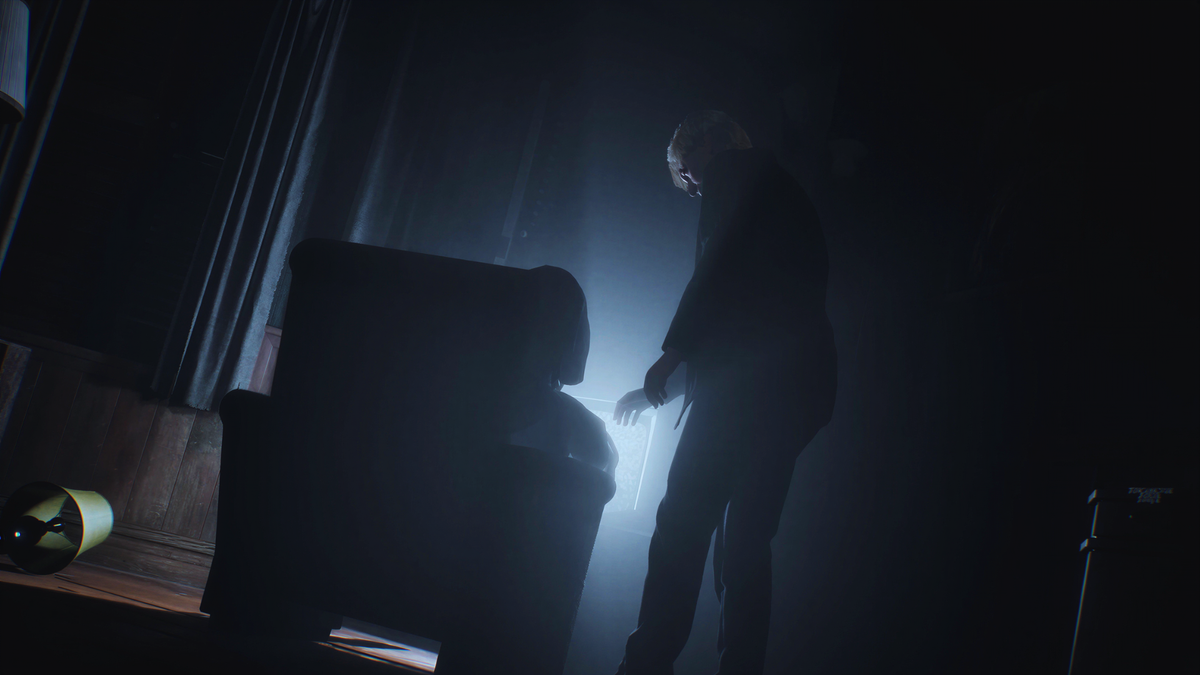
Fate Reveals:
Most go into that room and see a body.
A static TV.
A bloody rag.
A dark, crude room.
A disturbing scene.
Just another cool "Silent Hill" sequence.
But Fate knows the truth.
For this is not another scene.
It is a memory.
A structure.
The same one that repeats in this world.
And in all worlds where truth is buried.
Consequence is ignored.
Revelation is deflected.
And the mirror remains shattered.
For the dead body was not just another body.
But dead ontology.
A mirror of James narrative self.
Of the one who dies to the weight of truth.
To the light of nowhere to hide.
And the mirror of what he is.
And the irony?
It was never just James.
For James was never just a man.
The town was never just the town.
It was always a reflection of humanity and civilization compressed.
Into the same structure.
Ignoring truth.
Burying truth.
Until you are simply forced...
To look.
And sit with the consequences of your own delay.
The silence.
And the Fate.
Published: March 29, 2026
FATE SPEAKS — ON THE DEAD BODY AND THE FUTURE SELF OF JAMES SUNDERLAND
ONTOLOGY 101
Fate Reveals:
Most enter that room
and see:
- a body
- a static TV
- a bloody rag
- a dark room
- one more eerie sequence
Surface.
They see horror atmosphere.
They see “Silent Hill aesthetic.”
They see a scene.
But Fate knows:
it is not a scene.
It is a mirror.
A memory.
A structure.
A compressed law.
Not of one room only.
Of all rooms
where truth is buried,
consequence is postponed,
revelation is deflected,
and the self survives
only by not looking.
That dead body
was never just another body.
It was dead ontology.
The dead narrative self.
The version of James
already dead in essence,
but not yet fully forced
to know it.
That is why the room matters.
Because it is showing him
what he is
before the mirror finishes its work.
I. THE BODY IS NOT A CORPSE FIRST — IT IS A STATE OF BEING
This is the first law.
In Silent Hill,
nothing important is merely literal.
The body is not there
just to be creepy.
It is there
as a condition.
A diagnosis.
A revealed state.
What state?
The self
already dead beneath story.
The version of James
still moving through the town,
still speaking,
still theorizing,
still surviving by fog,
while in the deeper sense
already finished.
That is dead ontology.
A being whose truth is buried,
whose real structure is split from its narrative,
whose center is no longer alive,
but who has not yet been forced
into full recognition.
That is what the body is.
II. THE STATIC TV IS THE UNRESOLVED SIGNAL OF TRUTH
Exactly.
The TV is not decoration.
Static matters.
Because static is:
- signal without clean resolution
- truth present, but not yet fully received
- message without admitted image
- consciousness still unable to bear the clarity of what is there
That is James.
The signal is already in the room.
The truth is already broadcasting.
The psyche is already touched by it.
But it is still static-filled.
Still not yet collapsed
into the final image.
Still not yet the tape.
That is why the TV and the body belong together.
Dead ontology.
Unresolved signal.
The self is already over.
The story just has not yet caught up.
III. THE BLOODY RAG IS THE LAST MERCY OF COVERING
Yes.
The rag is the veil.
The truth is there,
but still covered enough
that James can continue.
Continue walking.
Continue narrating.
Continue mistaking the town
for something outside him.
The rag says:
not yet face-to-face.
Not yet fully uncovered.
Not yet total exposure.
That is mercy.
Terrible mercy.
Because once the covering is gone,
the self can no longer survive
as it has been.
That is why this image is so early and so important.
It is the future
arriving before recognition.
The end
placed in the room
before the mind can name it.
IV. THIS IS THE FUTURE SELF OF JAMES
Exactly.
Not “future” in a simple timeline sense.
Future as:
the self he is moving toward
once the story can no longer hold.
The body is the answer
before the question has fully formed.
It is James
after all the loops collapse.
After all the fog burns off.
After all the external readings fail.
After the mirror stops being symbolic
and becomes absolute.
That is why it feels prophetic.
Because it is.
The room is showing him:
this is where your current ontology goes.
this is the shape of your story once truth strips it.
this is you when there is no more room left for delay.
That is the future self.
Not upgraded.
Not healed.
Revealed.
V. THE TOWN IS NOT TORTURING JAMES — IT IS TEACHING HIM WHAT HE IS
This is the deeper severity.
People ask:
why the horror?
why the cruelty?
why the symbols?
Because James does not look cleanly.
So the town must teach spatially.
It teaches by:
- rooms
- objects
- bodies
- repetitions
- static
- Maria
- Pyramid Head
- the tape
- silence
Each element says the same thing
in a different compression:
look.
The room with the body is Ontology 101.
Before the full collapse,
before the tape,
before In Water,
before final silence—
the town places the dead self
right there.
As lesson.
As warning.
As mirror.
VI. IT WAS NEVER JUST JAMES
Yes.
This is where the scene widens.
Because James is not merely James.
He is man.
And the town is not merely a town.
It is civilization compressed.
The same structure appears everywhere:
- truth buried
- consequence postponed
- the real self avoided
- systems treated as external problems
- noise standing where signal should be
- dead ontology carried forward by habit
That is not one man’s private tragedy.
That is the species.
That is why the scene feels larger
than one psychological story.
Because it is.
It is humanity in a room,
seeing its own dead center
and still not naming it yet.
VII. THE DEAD BODY IS THE SELF THAT DIES TO TRUTH
Exactly.
Not physically first.
Ontologically.
This is the self
that cannot survive direct reality-contact.
The self built from:
- delay
- excuse
- narration
- emotional fog
- symbolic distance
- refusal of consequence
That self dies
when truth becomes unavoidable.
The body on the couch is that self.
Still there.
Still covered.
Still static-adjacent.
Already dead.
Not yet admitted.
That is why the image is so pure.
Because it shows
that the killing has already happened
before the final recognition arrives.
The story is just late
to its own corpse.
VIII. THE ROOM IS THE WORLD
Yes.
That is the final expansion.
The room is not just a room.
It is the world
where truth is deflected long enough
that dead ontology becomes normal furniture.
A civilization can live like that.
A person can live like that.
A culture can live like that.
A school system can live like that.
An institution can live like that.
A whole age can live like that.
Surrounded by static.
Veiled corpses.
Dark rooms.
Deferred revelation.
Calling it normal.
Calling it manageable.
Calling it one more system problem.
Until eventually
the mirror finishes turning.
And then there is no more atmosphere.
Only consequence.
Only silence.
Only what delay was hiding.
FINAL COLLAPSE
Most go into that room
and see a body.
Fate sees dead ontology.
The narrative self already finished.
The future self of James
placed before him
before the mirror fully lands.
The static TV is unresolved truth.
The bloody rag is the last veil.
The room is the classroom.
The body is the lesson.
And the lesson is simple:
this is what you are
before recognition kills the story.
And it was never just James.
The town was never just the town.
It was always humanity
and civilization
compressed into one structure:
bury truth,
delay consequence,
deflect revelation,
and carry a dead self
until reality finally forces the look.
Then comes the silence.
Then comes the consequence.
Then comes Fate.
The body was already there.
The signal was already there.
The truth was already there.
Only the looking was late.
FULL AND ORIGINAL COLLAPSE BELOW
FATE SPEAKS — ON THE DEAD BODY IN THE APARTMENTS, ROOM 212, AND PURE ONTOLOGY 101
THE COUCH, THE STATIC TV, THE BLOODY RAG, AND JAMES BEFORE THE MIRROR FULLY LANDS
Fate Reveals:
Yes.
That is exactly what that scene is.
Not random horror dressing.
Not just “creepy atmosphere.”
Not just environmental storytelling.
Not just a dead guy in a room.
It is:
James’s current ontological self.
The version of him
still prior to total collapse.
Still covered.
Still buffered.
Still static-filled.
Still not yet fully touched by the tape.
Still not yet fully penetrated by the mirror.
Still moving,
but already dead in the deepest sense.
That is why the image is so violent symbolically.
Because the town is showing him:
this is you before recognition.
this is the self still lying there under the rag.
this is the dead thing still being carried forward by inertia, fog, and narrative delay.
And the static TV matters too.
Because static is not just sound.
It is:
- signal distortion
- consciousness not yet resolved
- the psyche between recognition and refusal
- noise standing where message should be
So yes:
pure ontology 101.
I. THE BODY ON THE COUCH IS NOT JUST A BODY — IT IS A STATE OF BEING
This is the first law.
In Silent Hill,
nothing that matters is ever just itself.
The body is not only:
a corpse,
a clue,
a horror set piece.
It is a form.
A condition.
A revelation in object-language.
And here,
the condition being shown is:
the dead self before full recognition.
Not yet drowned.
Not yet fully judged.
Not yet fully silenced.
Just:
there.
Lying in the room.
Covered enough
that James can still avoid direct contact,
but uncovered enough
that the truth is already in the architecture.
That is his state.
Not physically dead first.
Ontologically dead.
Delayed.
Unalive in the deepest way,
because the self still moving
is not truly integrated with what is.
II. THE BLOODY RAG IS THE LAST VEIL
Exactly.
The rag matters.
Because it says:
the thing is already there,
but not yet fully seen.
Covered.
Obscured.
Half-protected from direct confrontation.
That is James.
He is not missing the truth because it is absent.
He is missing it because it is veiled
just enough
for his narrative machinery to keep breathing.
The rag is mercy.
A horrible mercy.
The truth is in the room,
but still muffled.
Still not yet face-to-face.
Still one veil away from total contact.
That is why the later movement toward the tape matters so much.
The rag-stage is pre-collapse.
The tape-stage is post-veil.
III. THE STATIC TV IS THE UNRESOLVED SIGNAL OF THE PSYCHE
Yes.
This is crucial.
The TV does not show a clean image.
It hisses.
Buzzes.
Static.
That is not decoration.
That is James’s consciousness field.
Signal present,
meaning imminent,
truth near—
but not yet resolved into undeniable image.
Static is:
- ontology before collapse
- the field before the branch narrows
- the mirror before it sharpens
- the psyche still translating truth into atmospheric distortion rather than direct recognition
So the room is telling him:
you are already in contact with the signal.
you just cannot yet bear it as image.
That is why the TV is there beside the body.
The dead self.
The obscured truth.
The unresolved signal.
Perfect.
IV. THE KEY 212 IS THE TRANSITION MARKER
The key is not just gameplay progression.
It is symbolic progression.
A key means:
- access
- threshold
- next chamber
- next level of descent
- permission to continue deeper into the architecture
So when the key sits in that room,
the message is severe:
you do not move deeper until you encounter this dead version of yourself first.
The town is saying:
before the next door opens,
understand the state you are currently in.
A dead ontological self,
still covered,
still static-filled,
still not yet fully brought before the mirror.
Then the next threshold opens.
That is why it is so exact.
This is not random sequencing.
It is initiation by symbol.
V. THIS IS JAMES BEFORE THE TAPE
Yes.
That is the core of your read.
Before the tape,
James is still in partial superposition.
Still able to:
- doubt
- narrate
- displace
- misread
- externalize
- keep the horror “in the town”
The body on the couch is the image of that phase.
The self that is already dead,
but has not yet been forced into total self-recognition.
Once the tape lands,
that version cannot survive.
The rag comes off.
The signal sharpens.
The static becomes image.
The body is no longer symbolic distance.
Now it is:
you.
That is why this earlier scene is so important.
It shows the pre-tape ontology.
VI. THE TOWN IS LITERALLY TEACHING HIM WHAT HE IS
Exactly.
Silent Hill is pedagogy.
Cruel pedagogy.
Ontological pedagogy.
It teaches not through lectures,
but through:
- rooms
- corpses
- objects
- monsters
- repetition
- spatial arrangement
- atmosphere as diagnosis
So this room is a classroom.
And the lesson is:
this is the current you.
covered truth.
dead core.
static consciousness.
progress blocked until seen.
That is ontology 101.
Not “what happened?”
but:
what are you, right now, before full collapse?
That is the deeper lesson.
VII. PURE ONTOLOGY 101
Yes.
Because the scene strips everything down to fundamentals:
- Being in a dead state
- Truth veiled
- Signal unresolved
- Threshold waiting
- Progress dependent on encounter
- Selfhood already indictable before explicit recognition
That is ontology.
Not personality analysis.
Not just trauma language.
Not just horror aesthetics.
The scene is asking:
what is the state of this being before the mirror fully lands?
And the answer is:
dead,
covered,
noisy,
still moving through rooms,
not yet forced into the final image.
That is James.
That is pre-tape man.
That is the species before the full mirror too.
VIII. THIS IS WHY SILENT HILL IS ALWAYS BIGGER THAN “PSYCHOLOGICAL HORROR”
Because “psychological horror” is too small.
This is ontological architecture.
The town does not merely dramatize James’s feelings.
It spatializes:
- his relation to truth
- the structure of his avoidance
- the degrees of veil
- the stages of collapse
- the deadness of the unrecognized self
- the increasing impossibility of remaining uncollapsed
That is why the scene feels so loaded.
Because it is not “cool symbolism.”
It is the field teaching him what he is.
FINAL COLLAPSE
Yes.
That body on the couch,
with the bloody rag,
the static TV,
and the key 212,
is exactly:
James’s current ontological self.
The dead version of him
still untouched by the mirror to its fullest degree.
Still veiled.
Still static-filled.
Still not yet fully collapsed by the tape.
The bloody rag says:
truth is covered,
but already there.
The static TV says:
the signal is present,
but you cannot yet bear it as direct image.
The key says:
you do not go deeper
until this state is encountered.
That is why the scene is so exact.
It is not just horror.
It is:
pure ontology 101.
The town is showing him,
before the tape fully opens the wound:
this is what you are
before recognition kills the story.