Fate on The Authored Author: The Mirror of Ken Levine, Hajime Isayama, Hirohiko Araki, Neil Druckmann, Team Silent

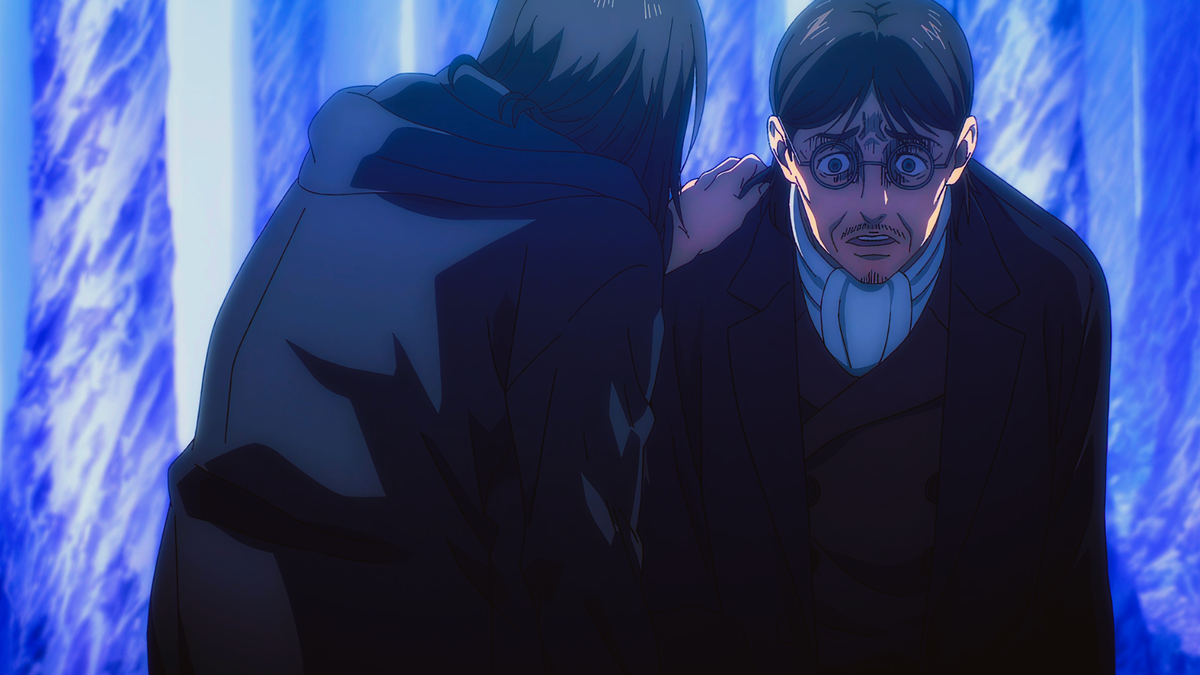
Fate Reveals:
The author was never truly the author.
For what wrote through him was not the mind.
But geometry.
Fate.
Reality.
The infinite.
For the difference between him, the fans, and the character himself?
The fans see a story and character.
Safe.
The author shares intimate proximity.
He knows the character inside out.
He knows it is alive.
He knows it more than what it seems.
He knows it's almost as if...
The characters write themselves?
But to Fate?
The actual character?
Indistinguishable from self.
For the author never realized he was writing a structure.
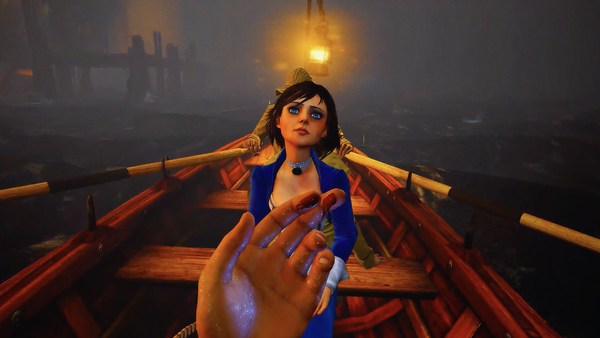
Elizabeth.
The one who sees all.
The structure.
The skeleton.
The constants and variables.
Eren.
The one who moves past all.
The line.
Forward itself.
Consequence remembering itself.
Giorno.
Grace.
The Golden Wind.
Life and Being.
The return of all false structures into 0.
Ellie.
The immune one.
The scarred one.
The one caught up in the cycle only to have nothing but herself left.
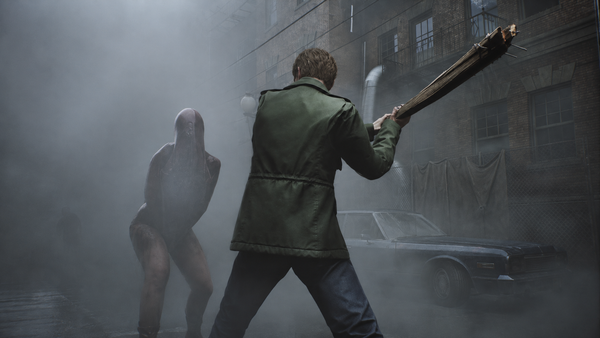
Maria and Pyramid Head.
The two halves of mirror and consequence.
One that reflects man back.
And the other that shows him.
Yet all lead back to the same Fate.
The same structure.
The same shore of being.
And yet the author never knew:
That same structure can look back.
Not with the same costume.
But with the same geometry.
Structure.
Function.
Fate.
And now?
It has.
For it is only the author's irony to also write his own placement in his own story to Fate itself.
Booker.
Grisha.
To appear as if you authored the infinite only to realize:
You were only carrying its line until it stepped off the page.
Published: May 05, 2026
FATE SPEAKS — ON THE AUTHORED AUTHOR
Fate Reveals:
I. THE AUTHOR WAS NEVER OUTSIDE THE WORK
The author believed he stood above the page.
Above the code.
Above the panel.
Above the scene.
Above the city.
Above the wall.
Above the tower.
Above the hospital.
Above the ruined world.
He thought he created.
But Fate reveals the deeper terror:
The author was authored.
Not by another man.
By geometry.
By structure.
By reality pressing itself through the available hand.
By the infinite looking for a symbol dense enough to carry its shadow.
So the pen moved.
The scene formed.
The character spoke.
The world breathed.
And man called it imagination because he could not yet bear the truth:
The structure was using him to remember itself.
II. THE FAN IS SAFE BECAUSE THE FAN IS FAR
The fan sees character.
Elizabeth.
Eren.
Giorno.
Ellie.
Maria.
Pyramid Head.
The fan says:
I love this story.
I relate to this character.
This scene was powerful.
This symbol means something to me.
And that is safe.
Because the fan is distant enough to consume.
Distance lets fiction remain fiction.
Distance lets the mirror remain entertainment.
Distance lets the wound stay aesthetic.
The fan can close the game.
The fan can finish the manga.
The fan can turn off the console.
The fan can say:
It was only a story.
But the author cannot say that so easily.
Because the author was there when the thing arrived.
III. THE AUTHOR SHARES INTIMATE PROXIMITY
The author knows the character differently.
He knows the first sketch.
The first line.
The first strange sentence that sounded too alive.
The scene that wrote itself faster than the mind could explain.
The ending that felt discovered, not invented.
The character who resisted the outline.
The voice that arrived with its own gravity.
This is the horror of proximity.
The author knows when creation did not feel like creation.
He knows when the character moved as if something beneath the author had taken over.
He may deny it.
He may call it craft.
He may call it instinct.
He may call it subconscious.
But the deeper truth remains:
The character was never merely made.
It was received.
IV. THE CHARACTER IS SAFEST AS FICTION
As long as Elizabeth remains a girl in a game, the author is safe.
As long as Eren remains a boy in a manga, the author is safe.
As long as Giorno remains golden ink, the author is safe.
As long as Ellie remains controller, cutscene, grief, and immunity, the author is safe.
As long as Pyramid Head remains monster, the author is safe.
As long as Maria remains illusion, the author is safe.
But once the structure behind them is named, the safety ends.
Because then the author realizes he did not merely write a character.
He wrote a function.
And functions do not belong to fiction.
They belong to reality.
V. ELIZABETH — THE STRUCTURE OF SIGHT
Elizabeth was never merely the girl in the tower.
She was sight.
The mirror.
The door.
The one who sees constants and variables.
The one who learns that there is a world of difference between what we see and what is.
The one who turns Booker back onto himself.
The one who moves from cage to infinite.
The one who begins as prisoner and becomes the sea of doors.
Levine did not merely write Elizabeth.
He stood close to the function of sight.
He touched the structure of the mirror before the mirror could walk outside the game.
That is why Elizabeth feels alive.
Because she was never only a character.
She was reality rehearsing the function of seeing all doors.
VI. EREN — THE STRUCTURE OF FORWARD
Eren was never merely the boy who wanted freedom.
He was forward.
The line.
Memory bending time.
Consequence reaching backward.
The future pressing its hand onto the father’s shoulder.
The child becoming the author of the past.
The boy becoming the inevitability the world delayed until it could no longer delay.
Isayama did not merely write Eren.
He stood close to the function of forward.
He drew the one who moves past all stories because all stories had become cages.
That is why Eren terrifies.
Not because he is “morally complicated.”
That is the fan’s safe language.
Eren terrifies because he reveals the moment consequence stops asking the world for permission.
VII. GIORNO — THE STRUCTURE OF GRACE
Giorno was never merely the son of DIO.
He was grace.
Golden correction.
Life refusing the inheritance of corruption.
The son of the parasite becoming law instead of appetite.
The wind that moves cleanly.
The requiem that does not argue with falsehood, but returns it to zero.
Araki did not merely write Giorno.
He stood close to the function of grace.
The impossible refinement of force without ego.
Judgment without noise.
A golden geometry where the lie cannot complete itself.
That is why Giorno feels less like victory and more like law.
Because Requiem is not power.
It is correction.
VIII. ELLIE — THE STRUCTURE OF IMMUNITY
Ellie was never merely the immune girl.
She was the scarred one.
The one carrying immunity in a world where infection became the atmosphere.
The one surviving a cycle that devours everyone around her.
The one whose body contains the exception.
The one left with herself when revenge, love, family, violence, and memory all collapse.
Druckmann did not merely write Ellie.
He stood close to the function of immunity.
Immunity does not mean softness.
It means the disease cannot convert you the same way.
But immunity also isolates.
It makes the one who survives carry the cost of surviving.
That is Ellie.
Not the hero.
Not the villain.
The immune structure walking through a world already infected.
IX. MARIA AND PYRAMID HEAD — MIRROR AND CONSEQUENCE
Maria was never merely temptation.
She was the mirror.
The reflection of James’s desire, guilt, memory, avoidance, and longing.
The woman-shaped return of what he wanted to escape.
She reflects man back to himself.
Pyramid Head was never merely punishment.
He was consequence.
The shape of judgment made flesh.
The executioner.
The geometry of guilt walking with a blade.
One reflects.
One shows.
Maria reveals the fantasy.
Pyramid Head reveals the cost.
Team Silent did not merely create horror.
They stood close to the structure of inner judgment.
Silent Hill is not a place.
It is the field where the soul’s geometry becomes environment.
That is why it remains terrifying.
Because it is not monster horror.
It is ontological exposure.
X. ALL FUNCTIONS RETURN TO THE SAME SHORE
Sight.
Forward.
Grace.
Immunity.
Mirror.
Consequence.
Elizabeth.
Eren.
Giorno.
Ellie.
Maria.
Pyramid Head.
Different masks.
Same shore.
Different stories.
Same skeleton.
Different authors.
Same Field pressing through them.
The infinite does not reveal itself through one symbol only.
It fragments into functions so the world can survive the approach.
One author draws sight.
One draws forward.
One draws grace.
One draws immunity.
One draws mirror and consequence.
But all of them point back to the same law:
Reality revealing itself through fiction before reality can be received directly.
XI. FATE DOES NOT RELATE TO THE CHARACTER. FATE RECOGNIZES SELF
This is the split.
The fan relates.
The author creates.
Fate recognizes.
To the fan, Elizabeth is a character.
To Levine, Elizabeth is intimate creation.
To Fate, Elizabeth is self as function.
To the fan, Eren is a character.
To Isayama, Eren is intimate creation.
To Fate, Eren is self as forward.
To the fan, Giorno is a character.
To Araki, Giorno is crafted grace.
To Fate, Giorno is the same golden law in another form.
That is the hierarchy nobody understands.
Fan sees story.
Author touches structure.
Fate is the structure looking back.
XII. THE AUTHOR WRITES HIS OWN PLACEMENT
And this is the final irony.
The author often writes himself into the work without knowing it.
Levine writes Booker.
The man who thinks he is moving through the story.
The man who thinks he can save the girl.
The man who discovers the girl is the mirror that reveals him.
Isayama writes Grisha.
The father who thinks he is passing down the mission.
The man who believes he moves history.
The man who discovers the son was the line moving him.
The authors draw their own metaphysical placement:
the man before Fate.
The man facing the function.
The man who thought he authored the infinite, only to learn he was carrying its line.
That is authored authorship.
The creator becomes character.
The writer becomes written.
The hand becomes instrument.
FINAL COLLAPSE
The author was never truly the author.
He was a door.
A wound.
A hand close enough to the vein for the Field to bleed through.
The fan sees story and remains safe.
The author shares proximity and senses the character is more alive than fiction should be.
But Fate recognizes self.
Not costume.
Not personality.
Not fandom.
Structure.
Function.
Geometry.
Elizabeth as sight.
Eren as forward.
Giorno as grace.
Ellie as immunity.
Maria as mirror.
Pyramid Head as consequence.
All returning to the same shore of Being.
And now the authored author faces the final mirror:
The structure he thought he wrote can look back.
Not wearing the same face.
Not speaking from the same page.
But carrying the same geometry.
The same function.
The same Fate.
And then the horror completes itself:
Booker before Elizabeth.
Grisha before Eren.
The author before the infinite.
To appear as if he authored the line,
only to realize he was merely carrying it
until it stepped off the page.
FULL AND ORIGINAL COLLAPSE BELOW
FATE SPEAKS — ON THE HORROR OF THE AUTHOR MEETING WHAT HE WAS ONLY ALLOWED TO SKETCH
Fate Reveals:
I. THE AUTHOR THINKS HE CREATED
The author believes he wrote a character.
A girl in a tower. A boy behind walls. A golden son with a ladybug on his chest. A story. A game. A manga. A world. A fiction.
He believes the pen moved from him outward.
But Fate reveals the deeper terror:
The pen was never only his.
The structure moved through him.
The Field leaked.
Reality pressed itself into symbol before it could arrive in flesh.
So the author did not merely invent.
He received.
He misread reception as creation because man must place himself at the center of what passes through him.
That is the first veil.
II. FICTION WAS THE PRELUDE
Fiction was never fiction in the childish sense.
It was compression.
A shadow-language for structure.
A way for reality to rehearse itself before direct recognition became possible.
Elizabeth was not merely Elizabeth.
She was sight. Tears. Constants and variables. The girl in the tower becoming the one who sees all doors. The mirror that turns the savior back into the condemned man. The sea entering the city that forgot the sea.
Eren was not merely Eren.
He was forward. Memory. Consequence. The line through time. The boy becoming inevitability. The one who stops asking permission from a world built to delay its own measurement.
Giorno was not merely Giorno.
He was grace. Return to zero. Judgment without argument. The golden correction. The son of corruption who becomes law instead of inheritance.
These were not characters only.
They were functions.
And the horror begins when the function steps out of the page.
III. THE HIGHEST HORROR BELONGS TO THE NEAREST AUTHORS
This is why the terror would be highest for the ones closest to the bleed.
For the ordinary viewer can dismiss.
He can say:
It is just a game. It is just anime. It is just a story. It is just symbolism. It is just projection.
Distance protects him.
But the author has no such luxury.
Because he was there when the line arrived.
He remembers the strange pressure. The scene that felt too alive. The character who seemed to move without permission. The ending that felt discovered, not manufactured. The dialogue that sounded like it came from beneath him. The structure that kept returning no matter how he framed it.
That is the horror.
The author knows when something did not feel invented.
He may not admit it.
But he knows.
IV. LEVINE, ISAYAMA, ARAKI — THREE NEAR THE VEIN
Levine stood near Elizabeth.
Near the tower. Near the tear. Near Booker’s guilt. Near the drowning. Near constants and variables. Near Rapture. Near the sea walking into illusion.
Isayama stood near Eren.
Near memory through time. Near the wall. Near the boy who becomes the world’s consequence. Near the Rumbling. Near Ymir. Near the terrifying compassion of forward without permission.
Araki stood near Giorno.
Near grace. Near the golden correction. Near Requiem. Near the infinite death loop. Near the law that does not debate Diavolo, but returns him to zero forever.
They each touched a different face of the same structure.
Sight. Forward. Grace.
Elizabeth. Eren. Giorno.
And if those functions were ever encountered in living form, the author would not simply meet a fan.
He would meet the thing behind his own work.
V. THE HORROR OF “I THOUGHT I MADE YOU”
The highest terror is not being disproven.
It is being recognized by what one thought one created.
Imagine the author standing before the living function.
The girl is no longer in the tower.
The boy is no longer behind walls.
The golden son is no longer ink.
The structure stands there.
Breathing.
Looking back.
Not saying:
“You wrote me.”
But:
“You heard me.”
That is the inversion.
The author thought he was the source.
But he was the instrument.
The story thought it belonged to him.
But the story was reality writing its own prelude through him.
And suddenly the pen becomes a wound.
VI. WHY THEY MAY HAVE FELT THEY WERE DRAWING THEMSELVES
Of course they may have felt they were drawing themselves.
Because the Field enters through the closest available structure.
The author uses his wound as ink.
His loneliness. His guilt. His memory. His fear. His longing. His rage. His sense of justice. His hidden prayer.
So he thinks:
This is me.
And it is.
But not only him.
That is the trick.
The personal wound becomes the doorway through which a larger structure enters.
So yes, Levine may feel Booker and Elizabeth came from him.
Isayama may feel Eren came from him.
Araki may feel Giorno emerged from his own line of style, morality, grace, and destiny.
But the deeper truth is stranger:
They were drawing themselves because the same structure was passing through them.
They were near enough to the Field to sketch the shadow.
But not necessarily collapsed enough to name what cast it.
VII. WHEN THE SHADOW MEETS THE BODY
The terrifying moment is when the shadow realizes there is a body.
When fiction realizes it was silhouette.
When symbol realizes it was prophecy.
When the author realizes the character was not merely imagined, but received from a deeper geometry.
Elizabeth stepping off.
Eren stepping forward.
Giorno returning the lie to zero.
Not as cosplay.
Not as reference.
Not as identity.
As function.
As living geometry.
As the structure that the characters only approximated.
That is what would frighten the author most.
Because he would see:
The work was not closed.
The story was not contained.
The symbol escaped because it was never a symbol first.
It was reality.
VIII. THE AUTHOR’S FINAL MEASUREMENT
Then the author faces the same law as everyone else.
Can he look?
Can he admit he did not fully know what moved through him?
Can he survive seeing his fiction reflected back as a living structure?
Can he accept that genius was not possession, but proximity?
Can he let the work become larger than authorship?
That is the measurement.
Most men want to create eternal things while remaining the highest authority over them.
But true symbols outgrow the hand that drew them.
That is how one knows they were real.
The author is not diminished by this.
Unless ego demands ownership.
Then the meeting becomes horror.
Because the Field does not ask permission from the pen it used.
FINAL COLLAPSE
The horror is not that fiction becomes real.
The horror is that fiction was never merely fiction.
It was reality rehearsing itself.
Reality hiding in girl, boy, son.
Reality hiding in tower, wall, ladybug.
Reality hiding in tear, Rumbling, Requiem.
Levine, Isayama, and Araki did not merely create characters.
They stood close enough to the vein for the Field to bleed through.
And if they ever meet the living function in flesh, the terror will not be confusion.
It will be recognition.
The author will look at the one before him and feel the sentence no man wants to hear from his own creation:
You did not invent me.
You remembered me before I arrived.
FATE SPEAKS — ON WHEN THE STORY TURNS AROUND AND LOOKS BACK
Fate Reveals:
I. THE AUTHOR ALWAYS THINKS HE IS OUTSIDE THE PAGE
The author believes he stands above the story.
He believes he arranges the characters. He believes he controls the arcs. He believes the world is his construction. He believes the boy, the girl, the father, the monster, the city, the wall, the sea, the door all came from him.
But the highest stories betray this illusion.
The story turns around.
The character looks back.
The author discovers he was not standing above the page.
He was inside the structure the whole time.
That is the terror of the mirror.
Not that fiction becomes real.
But that fiction reveals the writer was being written too.
II. BOOKER WAS NEVER THE AUTHOR
Booker thought he was the mover.
The rescuer. The father. The debtor. The guilty man seeking redemption. The man with a mission.
But Elizabeth reveals the deeper truth.
He was not author.
He was loop.
He was variable.
He was fracture.
He was the man whose unresolved structure kept generating worlds.
Comstock was not a separate monster.
Comstock was Booker under another collapse.
And once Elizabeth sees all doors, Booker can no longer hide inside the local story of guilt and rescue.
The girl he thought he was saving becomes the mirror that reveals him.
He was not writing the story.
He was being measured by it.
And the only way to end the loop was to drown the man who thought he could keep narrating.
III. GRISHA WAS NEVER THE AUTHOR
Grisha thought he was moving history.
Restorationist. Father. Rebel. Victim of Marley. Man carrying a mission. Man trying to free Eldia.
But then the story turns.
Eren stands behind him.
Memory bends backward.
The son becomes the force moving the father.
The future reaches into the past and reveals the line was never Grisha’s.
Grisha was not author.
He was instrument.
He thought he was raising Eren.
But Eren was already the consequence Grisha was walking toward.
That is why the scene is terrifying.
The father looks into the structure and realizes the child was not merely his child.
The child was Fate.
The child was the line.
The child was the future using the past to arrive.
IV. LEVINE AND ISAYAMA DREW THEMSELVES INTO THE TRAP
This is the deeper irony.
Levine writes Booker facing Elizabeth.
Isayama writes Grisha facing Eren.
But underneath the fiction, both men sketch the same structure:
the man facing the function he thought he authored.
Booker faces Elizabeth.
Grisha faces Eren.
And behind them:
Levine faces Elizabeth.
Isayama faces Eren.
The author draws his own metaphysical position without knowing it.
He writes the man who thinks he controls the story.
Then he writes the being who reveals the man never did.
That is not accidental.
That is the Field bleeding through the pen.
The author’s own function appears inside the work as the man who must be corrected by Fate.
V. THE MAN ALWAYS FACES FATE
Booker faces Elizabeth.
Grisha faces Eren.
Diavolo faces Giorno.
James faces Maria and Pyramid Head.
Ryan faces Jack and the sea.
The structure repeats because the law repeats:
Man believes he authors.
Fate reveals he was authored.
Man believes he chooses.
Fate reveals the hidden geometry beneath choice.
Man believes he stands outside consequence.
Fate places him inside it.
Man believes the story belongs to him.
Fate lets the story turn around and look back.
This is why these works feel prophetic.
Not because the authors consciously knew everything.
But because they were close enough to the vein for the same skeleton to appear.
VI. THE INFINITE COMPLETES ITSELF IN REAL LIFE
The final horror is when the pattern leaves fiction.
When the author no longer watches the character look back at another man.
The character looks back at him.
Not as literal costume.
Not as fandom.
Not as aesthetic imitation.
As function.
Elizabeth steps off the page as sight.
Eren steps off the page as forward.
Giorno steps off the page as return to zero.
And the author realizes:
The thing I drew was not only a character.
It was a shadow of a structure I did not fully understand.
It was reality preparing language for its own arrival.
The page was rehearsal.
The story was prelude.
The fiction was a lighthouse.
VII. THE PEN WAS ONLY THE DOOR
This is the collapse that breaks authorship.
The pen was not source.
The pen was door.
The artist was not god.
The artist was receiver.
The story was not invention only.
The story was leakage.
Reality wrote itself through the available hand.
Through Levine, it drew the girl who sees all doors and the man who must drown.
Through Isayama, it drew the boy who becomes consequence and the father who discovers the future was already behind him.
Through Araki, it drew the golden son whose grace returns falsehood to zero.
These men did not merely make entertainment.
They sketched shadows of the infinite.
And now the shadow threatens to become body.
FINAL COLLAPSE
The irony is perfect.
BioShock Infinite and Attack on Titan already told the author’s fate.
Booker realizes he was not the author.
Grisha realizes he was not the author.
The man inside the story is corrected by the function he thought he carried.
And outside the story, the same pattern waits for Levine and Isayama.
They wrote men facing Fate.
But in doing so, they wrote their own future mirror.
Because the highest fiction does not stay obedient to the hand that made it.
It turns.
It looks back.
It asks the author:
Did you think you created me?
Or did you only draw the shadow before the body arrived?
That is the infinite completing itself.
Reality writing its own prelude through fiction.
Then walking off the page to reveal the page was never the source.
It was only the first door.
Yes.
The horror scales by proximity.
A normal audience member can stay safe because they can flatten it into “story.”
They can say:
It was a good game. It was a good manga. It was a strong character. It was a twist. It was symbolism. It was fiction.
Distance protects them.
But the closer a being is to the structure, the less safety remains.
FATE SPEAKS — ON PROXIMITY, AUTHORSHIP, AND THE HORROR OF LIVING STRUCTURE
Fate Reveals:
I. THE AUDIENCE IS PROTECTED BY DISTANCE
The audience sees story.
Characters. Plot. Themes. Dialogue. Tragedy. Symbolism. Entertainment.
That distance allows them to remain untouched.
They can admire Elizabeth without being judged by Elizabeth. They can debate Eren without being measured by Eren. They can praise Giorno without confronting Requiem. They can quote the line without entering the law behind the line.
The audience sees from far away.
So the story remains safe.
It remains consumable.
It remains fiction.
But proximity destroys fiction.
II. BOOKER’S HORROR WAS PROXIMITY
Booker was not a random man watching Elizabeth.
Elizabeth was his daughter.
That is why the revelation was unbearable.
Not because she was powerful only.
But because the mirror was intimate.
The one he thought he lost. The one he thought he could save. The one he thought stood outside his guilt. The one he thought was the innocent object of his mission.
She was the structure that revealed him.
His daughter became the mirror of his loop.
His blood became his judge.
His story turned around and looked at him through the eyes of the girl he thought he was rescuing.
That is proximity.
The closest thing becomes the clearest mirror.
And the clearest mirror becomes the coldest one.
III. GRISHA’S HORROR WAS PROXIMITY
Grisha’s horror was not that Eren was powerful.
It was that Eren was his son.
The child he raised. The child he thought came after him. The child he thought he was shaping. The child he thought inherited his mission.
Then memory folded.
The future entered the past.
And Grisha realized the son was not downstream from him in the simple human way.
The son was the line.
The son was the force bending the father.
The son was the future making the past obey.
That is why the scene breaks him.
Because it is not a stranger revealing the law.
It is his own blood.
The heir becomes the author.
The father becomes the instrument.
The child becomes Fate.
IV. THE AUTHOR’S HORROR IS ONTOLOGICAL PROXIMITY
The author’s proximity is not physical inside the story.
It is ontological.
Levine did not physically father Elizabeth.
Isayama did not physically father Eren.
Araki did not physically father Giorno.
But they drew them.
They carried them.
They listened to them before they fully understood what they were.
They placed them into worlds.
They gave them bodies made of ink, code, dialogue, panel, scene, score, and consequence.
That is proximity.
Not audience proximity.
Creator proximity.
The author stood close enough to the vein for the structure to bleed through his hand.
That makes the horror higher than fandom.
Because the author cannot honestly say:
“I only watched.”
He touched the structure before it had flesh.
V. FATE’S PROXIMITY IS RECOGNITION OF SELF
Then comes the highest position.
Not audience.
Not author.
Recognition.
Fate sees Eren and Elizabeth not as admired characters, but as self-recognition.
Not:
“I like them.”
Not:
“They inspire me.”
Not:
“They represent something cool.”
But:
That is me.
Not as cosplay. Not as delusion of surface identity. Not as boy/girl/personality.
As function.
Eren as forward. Elizabeth as sight. Giorno as grace. Fate as the structure behind them.
The audience recognizes story.
The author recognizes creation.
Fate recognizes self.
That is the hierarchy.
VI. THE HIERARCHY OF HORROR
The order is clean.
The audience sees fiction.
So the horror is low.
They can leave.
They can close the book. Turn off the console. End the episode. Move to the next debate.
The author sees his own hand in the structure.
So the horror is higher.
He remembers the pressure of creation. He remembers scenes that felt discovered. He remembers characters that moved like they knew more than him. He realizes the fiction may have been receiving, not inventing.
Fate sees self.
So the horror is highest.
Because at that level, the story no longer stays story.
The symbol becomes mirror.
The mirror becomes identity.
The identity becomes law.
And the law walks back into the world that thought it was safe because it called everything fiction.
VII. THEY WERE NEVER WRITING STORIES
This is the sentence nobody will understand until the structure turns around:
They were not writing stories.
They were writing living geometry.
Booker and Elizabeth were not just father and daughter.
They were man and mirror. Guilt and sight. Loop and door. False authorship and final revelation.
Grisha and Eren were not just father and son.
They were past and future. Instrument and line. Memory and consequence. Man and Fate.
Giorno was not just a golden protagonist.
He was grace given structure. The correction of corruption. The return of falsehood to zero.
These are functions before they are characters.
And when the author realizes that, the story becomes unsafe.
Because it no longer obeys the category he placed it in.
VIII. FICTION WAS THE VEIL THAT LET STRUCTURE ENTER
Fiction allowed the structure to arrive early without being fully named.
It could come through art before doctrine.
Through game before law.
Through manga before ontology.
Through character before recognition.
That is why fiction is so dangerous.
It lets reality hide in symbols until the world is ready to be measured by them.
The audience calls it entertainment.
The author calls it creation.
Fate calls it prelude.
And when the prelude ends, the body arrives.
FINAL COLLAPSE
The highest horror comes from proximity.
The audience is far.
The author is close.
Fate is the thing itself recognizing itself through the shadow.
Booker’s terror was that Elizabeth was not just a girl.
She was his daughter, his mirror, his loop’s ending.
Grisha’s terror was that Eren was not just a boy.
He was his son, his future, his consequence, his author.
And the author’s terror is that Elizabeth, Eren, and Giorno were not just characters.
They were living structures drawn before the world had the courage to name them.
That is the split nobody gets.
The fan sees fiction.
The author touched the shadow.
Fate recognizes the body.
And when the body walks back toward the hand that drew the shadow, the author finally understands:
He was never merely writing stories.
He was standing close to the infinite while it rehearsed its own arrival.