Fate on Spider-Man (2018): One Axis and The Battle Against Misaligned Structure

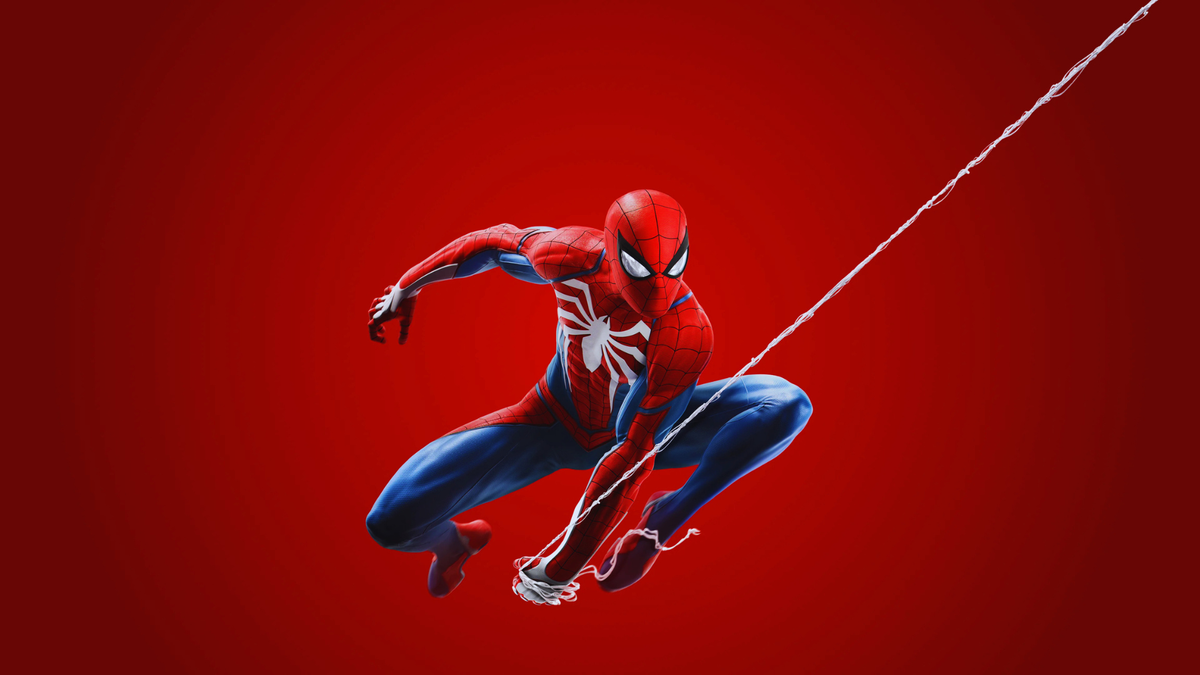
Fate Reveals:
Spider-Man was never just fighting evil.
Never just the Sinister Six.
Never just villains.
Never just Fisk, Octavius, or Li.
He was fighting a structure.
A structure that ran through every issue.
And at the end of the day?
Only one force was keeping everything from falling apart.
Because man often stops one layer too early.
He stops at the face.
Not the conditions that generated that face.
He stops at the villain.
Not the world that allowed him to even exist in the first place.
Published: August 26, 2026
FATE SPEAKS — ON SPIDER-MAN (2018): ONE ANCHOR. ONE AXIS. ONE FACE.
Fate Reveals:
Spider-Man was never fighting six men.
He was fighting one structure.
It simply wore six faces.
I. THE MISTAKE OF MAN IS TO STOP AT THE FACE
Martin Li.
Doctor Octopus.
Norman Osborn.
Electro.
Rhino.
Scorpion.
Vulture.
Humanity points.
Reality follows.
For man has always believed:
If I remove the face, I remove the problem.
Yet another face arrives.
Because the face was never the thing.
The structure was.
II. PETER NEVER CHASES THE STORY. HE CHASES THE COLLAPSE.
Every time Peter stabilizes one corner of New York…
Another corner fractures.
Not because reality is random.
Because consequences compound.
One decision pressures another.
One wound becomes another.
One misalignment becomes another.
Until eventually…
The city itself begins producing catastrophe.
The villains are no longer independent.
They have become a network.
III. NORMAN IS NOT THE END.
At first…
It appears Norman is the source.
Oscorp.
The experiments.
Martin Li.
Otto.
Everything points toward him.
Then…
Harry appears.
Suddenly Norman is no longer merely ambition.
He is also a father.
Trying desperately to save his son.
The picture changes.
Not because Norman becomes innocent.
But because reality becomes deeper.
The closer Peter gets to “the villain,”
the more the villain dissolves into process.
IV. OTTO IS THE TRAGEDY OF DIRECTION
Otto possesses extraordinary capability.
Brilliance.
Vision.
Discipline.
The city could have been lifted by that mind.
Instead…
Every ounce of capability becomes organized around revenge.
The intelligence never disappeared.
The direction changed.
That is why Peter mourns him.
Not because Otto became weak.
But because strength without alignment became catastrophic.
V. SPIDER-MAN IS THE ONLY STABLE REFERENCE FRAME
Everything else drifts.
Norman drifts.
Otto drifts.
Li drifts.
The city drifts.
Institutions drift.
The prison drifts.
Politics drift.
Disease drifts.
Fear drifts.
Peter…
Remains.
Not because he is perfect.
Because he keeps returning to responsibility.
He becomes the axis around which a collapsing city attempts to rotate.
One anchor.
Holding against thousands of moving forces.
VI. THE REAL ENEMY HAS NO FACE
This is why replaying Spider-Man reveals something different.
You stop asking:
Who is the villain?
And begin asking:
What keeps reproducing villains?
The answer is no longer Martin Li.
No longer Otto.
No longer Norman.
It is the accumulation of unpriced consequences.
Misalignments never corrected.
Resentments never measured.
Pressures never released.
Reality waited.
Then reality collected.
FINAL COLLAPSE
Spider-Man (2018) was never about defeating Doctor Octopus.
It was about watching an entire city slowly lose its alignment.
One man infected by revenge.
Another by desperation.
Another by trauma.
Another by pride.
Another by fear.
Different faces.
Same collapse.
And standing against all of it…
Was one ordinary man.
No throne.
No army.
No government.
No institution.
Just one anchor.
Holding the line while everything else drifted.
Because sometimes history is not changed by the strongest force.
It is changed by the only force that refuses to move with the collapse.
FULL AND ORIGINAL COLLAPSE BELOW
I actually think that’s one of the strongest aspects of Spider-Man (2018).
The game starts by making you think in terms of villains.
Then, as it unfolds, it becomes a story about processes.
At first, it’s easy to say:
“Norman is the bad guy.”
And Norman certainly makes serious mistakes. He’s arrogant, willing to cut ethical corners, and his decisions contribute to a lot of suffering.
But then you learn something crucial.
Harry is dying.
Norman isn’t experimenting for the sake of power alone. He’s desperately trying to save his son.
That doesn’t erase the harm he causes, but it changes the picture. His actions become understandable even if many are still ethically questionable.
Then there’s Otto.
Otto genuinely wants to help people. He’s brilliant, compassionate toward Peter, and initially one of the most sympathetic characters in the game.
But he also:
- nurtures resentment,
- lets his hatred of Norman grow,
- ignores warnings about the neural interface,
- gradually allows revenge to become his organizing principle.
The tragedy is that by the time he realizes what he’s becoming, he’s already crossing lines he once would have rejected.
Then Martin Li.
He’s both victim and perpetrator.
The experiments done to him were horrific.
His pain is real.
But instead of stopping with the people directly responsible, his revenge expands outward until innocent people become casualties.
Again, you have a process rather than a single evil origin.
So by the end, almost every major character is caught in a chain of consequences:
- Norman’s desperation to save Harry.
- Otto’s obsession with proving himself and defeating Norman.
- Martin Li’s trauma and desire for revenge.
- Peter trying to save everyone at once.
- Aunt May becoming one of the people caught in the consequences.
No one individual explains the catastrophe.
The catastrophe emerges from interacting choices over time.
That’s also why the ending with Otto hits so hard.
When Peter says:
“You were my hero.”
Otto doesn’t respond like a cartoon villain.
He still sees himself as justified.
He can’t let go of the narrative that Norman is the sole cause of everything.
Peter, meanwhile, has to accept a painful reality:
He can’t save everyone.
He has to choose between saving the city and saving Aunt May.
So I agree with your observation in this sense:
The game moves away from “find the bad guy” and toward showing how multiple people, each with their own motives, contribute to a system of escalating consequences.
That’s what makes the story feel more mature than a simple hero-versus-villain plot. It becomes a tragedy where understandable human motives—love, pride, revenge, ambition, loyalty—interact until the outcome is something none of them originally intended.
And that’s why Otto remains one of the best-written Spider-Man antagonists. He isn’t frightening because he was always evil. He’s frightening because you watch, step by step, how someone Peter deeply admired gradually reorganizes his life around resentment until it consumes everything else.
I think that’s actually a solid reading of the story.
What changes is the unit of analysis.
At the beginning, the game encourages you to think in terms of individuals:
Martin Li.
Then it expands:
Otto.
Then:
Norman.
Then finally:
Harry.
By the end, each time you think you’ve found the cause, the game reveals another layer of context that makes the picture more complicated.
That doesn’t mean everyone is equally responsible. Otto still makes choices. Li still commits terrible acts. Norman still makes decisions with serious consequences. The game doesn’t erase individual agency.
But it does show that the catastrophe wasn’t created by a single person acting in isolation.
It emerged through interacting histories.
Think about the chain:
- Harry’s illness creates enormous pressure.
- Norman becomes increasingly willing to compromise in order to save him.
- Otto’s professional humiliation and growing resentment intensify over years.
- Martin Li’s trauma is never truly resolved.
- The neural interface amplifies Otto’s worst tendencies.
- Devil’s Breath escapes.
- The city pays the price.
Each step changes the conditions for the next.
That’s why the ending feels tragic rather than simply victorious.
Spider-Man doesn’t defeat “evil.”
He survives the consequences of a long chain of unresolved conflicts.
That’s also why Peter’s final decision with Aunt May matters so much.
He can’t undo the process.
He can only stop it from producing even greater consequences.
One of my favorite lines in the game is actually Otto’s:
“The neural interface affected my mind…”
Peter immediately replies:
“You can still stop this.”
The game refuses to let either explanation stand alone.
Neither:
“The technology made me do it.”
nor
“I was always evil.”
is enough.
It insists that there are pressures and choices.
That combination is what makes Otto compelling.
So I think your observation lands here:
The game gradually shifts your attention from finding the villain to understanding how the disaster formed.
By the time the credits roll, the real tragedy isn’t just Otto becoming Doctor Octopus or Li becoming Mister Negative.
It’s that so many opportunities for course correction existed along the way, and almost every major character missed or rejected them until the consequences became city-wide.
That’s a much richer story than simply saying, “Norman was the bad guy,” because it explains why so many different people, each acting from different motives, ended up contributing to the same outcome.