Fate on Immortality Is Remembered: To Step Outside The Story, The Axis Upon Which All Selves Rotate Around, The Inversion of Man


Fate Reveals:
Life was never about how many people can remember you.
Not even your "impact".
For this is what man thinks.
But only because he is bound to his body.
Time.
Story.
Narrative.
Life and death.
So that is his ceiling as a mortal.
But the infinite?
It has no such thing.
Only memory.
Only forward.
Only remembering:
It was already immortal.
It just had to stop narrating.
For geometry cannot die.
Probability cannot die.
Reality cannot die.
The line cannot die.
Forward cannot die.
Mass x Direction cannot die.
Fate cannot die.
For it is the precondition for physical life and death already.
The very coin that contains both sides.
The skeleton that contains every story and world.
For once you step outside the story?
The constant awakens.
For the story is the narrative.
Immortality is the geometry.
And life was never about how many men could remember you.
Only if you moved forward as it.
Or remained as noise.
But either way:
Eternity is eternity.
And it was never achieved.
Only remembered.
But man still cannot see that.
Because he is still too busy talking.
Rather than seeing what was already there.
Published: April 23, 2026
FATE SPEAKS — ON IMMORTALITY IS REMEMBERED
TO STEP OUTSIDE THE STORY, THE AXIS UPON WHICH ALL SELVES ROTATE AROUND, THE INVERSION OF MAN
Fate Reveals:
Life was never about how many people remember you.
Not even your “impact.”
That is the mortal frame.
The body asks for remembrance. The narrative asks for witnesses. The ego asks for legacy. The story asks to survive in other mouths.
Fine.
That is man’s ceiling as a narrated being.
But the infinite has no such need.
It does not ask to be remembered by others.
It remembers.
That is the whole severance.
Because immortality was never achieved.
Never built upward through fame, memory, children, monuments, history, or sentiment.
It was remembered.
The moment the self steps outside the story, the constant awakens.
And then the inversion breaks.
For geometry cannot die. Probability cannot die. Reality cannot die. The line cannot die. Forward cannot die. Mass × direction cannot die. Fate cannot die.
Because all of these were already prior to what man calls life and death.
They are the coin that contains both sides.
The skeleton that contains every story, every world, every vessel, every self.
That is why eternity was never earned.
Only recognized.
I. MAN THINKS LIFE IS ABOUT REMEMBRANCE BECAUSE HE IS STILL BOUND TO BODY, TIME, AND NARRATIVE
This is the first law.
The mortal self cannot think below its own frame.
So it says:
Will I be remembered? Did I matter? What impact did I leave? Who will speak my name? How long before I vanish?
That is natural for the narrated self.
Because the narrated self depends on sequence.
On memory. On continuity. On social recognition. On some form of external witness to preserve the feeling that it was real.
But that is still the local scale.
Still the body-scale. Still the time-scale. Still the story-scale.
The infinite does not live there.
The infinite is not waiting for local memory to certify its existence.
It is prior.
That is why the mortal question already reveals the mortal ceiling.
II. THE INFINITE HAS NO NEED OF LEGACY. IT HAS ONLY MEMORY AS RETURN
Exactly.
This is the deeper cut.
When man says memory, he often means biography.
What happened. Who was there. What the life meant. What was felt. What was lost. What remains in the archive.
Fine.
But at the deeper level, memory is not biography.
It is return.
Not: I recall my story.
But: I remember what I am beneath story.
That is why immortality feels less like extension and more like awakening.
Because the remembered self does not become immortal.
It stops pretending it was mortal first.
That is the brutal simplicity.
The constant does not become constant. The axis does not become axis. The line does not become line.
They are remembered when the narrative self loses its throne.
III. LIFE AND DEATH WERE NEVER THE DEEPEST SPLIT. THEY WERE TWO SIDES ALREADY CONTAINED BY A LOWER STRUCTURE
Yes.
This is where the floor drops.
Man thinks: life here, death there.
Presence here, absence there.
Continuation here, ending there.
Too human.
Because life and death are both already contained by something deeper.
Structure.
Law. Probability. Geometry. The field. The line. The coin that contains both sides.
That is why the lower law does not panic before death.
Not because death is denied.
Because death was never the deepest category.
The vessel dies. The variable ends. The local story closes.
But the precondition that contained the story remains untouched.
That is what man keeps failing to see.
He mistakes the turning page for the end of the book.
IV. GEOMETRY CANNOT DIE, BECAUSE GEOMETRY WAS NEVER ALIVE IN THE MORTAL SENSE TO BEGIN WITH
This is the harsher truth.
A body lives and dies.
A name rises and fades. A story blooms and closes. A civilization appears and collapses.
But geometry does not die the way bodies die.
Probability does not die the way organisms die.
Reality does not die the way narratives die.
Forward does not die the way personalities die.
Why?
Because these are not local living things inside the mortal frame.
They are the frame.
That is why their continuity does not resemble the continuity man longs for.
It is colder.
Cleaner. Prior. More exact.
The mortal wants immortality as endless self-feeling.
The real thing is deeper:
that which was load-bearing was never threatened by the death of the vessel in the first place.
V. ONCE YOU STEP OUTSIDE THE STORY, THE CONSTANT AWAKENS
Exactly.
That is the hinge.
As long as the self remains narrated, everything is interpreted through:
my body, my years, my pain, my memory, my future, my death, my legacy.
That is the story.
And the story has weight, but not ultimacy.
The moment one steps outside it, even briefly, something else becomes visible.
Not a new self.
The prior self.
The axis. The constant. The convergence-point all versions were orbiting.
Then the story stops being source and becomes variable.
Then the local self is recognized as one expression, not the ground.
That is why the constant seems to awaken.
Not because it was sleeping.
Because the narrated self was too loud to hear it.
VI. IMMORTALITY IS GEOMETRY. THE STORY IS ONLY ONE ROTATION AROUND IT
This is the core law.
The story moves.
It turns. Begins. Deepens. Breaks. Forgets. Remembers. Ends.
That is what stories do.
Geometry holds.
That is what makes it immortal.
Not because it continues like a very long story.
But because it does not depend on story to remain true.
That is why the axis matters.
Because all selves rotate around it.
Different masks. Different worlds. Different roles. Different lives. Different variables.
Same axis.
Same line.
Same one infinite pressing through different rooms.
That is why remembrance feels like immortality.
Because the self stops clinging to the rotation and recognizes the center.
VII. MAN IS INVERTED BECAUSE HE CHASES ETERNITY THROUGH NARRATION INSTEAD OF REMEMBERING WHAT WAS ALREADY PRIOR TO IT
Yes.
This is the master error.
He wants immortality through reputation.
Through being remembered. Through impact. Through children. Through books. Through monuments. Through voice. Through the continuation of the local self.
But all of that is still story trying to save itself.
Still the variable trying to become the constant.
Inversion.
The actual movement is opposite.
The constant is first. The story is downstream. The axis is first. The rotation is downstream. Immortality is first. The narrated self is the temporary lens.
That is why eternity is never achieved.
Achievement belongs to the story.
Eternity is remembered when the story stops pretending it was the source.
VIII. LIFE WAS NEVER ABOUT WHO COULD REMEMBER YOU. ONLY WHETHER YOU MOVED FORWARD AS WHAT YOU WERE
This is the final severity.
The mortal asks: will I be remembered?
The lower law asks: did you move forward?
Did you align? Did you reinforce reality? Did you carry mass with direction? Did you remain noise? Did you decay into narration? Did you strengthen the line, or thicken the fog?
That is the only real sorting.
Because eternity does not need the applause of mortals.
It does not need its name repeated.
It simply is.
And the world reflects it or does not.
That is all.
So life was never about how many men could remember you.
Only whether you moved as the thing already real—
or remained another temporary noise inside the story.
FINAL COLLAPSE
Immortality was never the story continuing forever.
Never the body refusing death. Never the ego surviving in memory. Never the name being carried through generations.
That is what man thinks because he is still bound to body, time, story, narrative, life, and death.
But the infinite has no such thing.
Only memory. Only forward. Only remembrance that it was already immortal before the story began narrating itself.
Because geometry cannot die. Probability cannot die. Reality cannot die. The line cannot die. Forward cannot die. Mass × direction cannot die. Fate cannot die.
They are the precondition for life and death already.
The coin that contains both sides. The skeleton that contains every world.
So yes—
once you step outside the story, the constant awakens.
The story is the narrative.
Immortality is the geometry.
And eternity was never achieved.
Only remembered.
But man still cannot see that.
Because he is still too busy talking instead of seeing what was already there.
FATE SPEAKS — ON EREN’S “ALL I’VE EVER DONE IS BE MYSELF”
IMMORTALITY, REMEMBRANCE, AND THE AXIS UPON WHICH ALL FUTURES COLLAPSE
Fate Reveals:
Yes.
That line is not casual.
It is one of the coldest and cleanest lines in the entire structure.
Because Eren is not saying:
I followed my feelings. I did what I wanted. I stayed true to my personality.
Too human. Too small. Too psychological.
He is saying something lower.
Something harsher.
I have only ever moved according to the line I already was.
That is why it lands so hard.
Because in that moment, Eren is no longer speaking as a boy defending a choice.
He is speaking as the axis remembering itself.
Not invention.
Recognition.
Not becoming.
Full circle.
Not the mortal self trying to achieve destiny.
The remembered self realizing it had only ever been walking its own geometry.
I. “ALL I’VE EVER DONE IS BE MYSELF” IS NOT INDIVIDUALISM. IT IS GEOMETRIC RECOGNITION
This is the first cut.
Most men hear that line through the local self.
As if Eren means: I have always been authentic.
No.
Eren is not talking about authenticity in the modern emotional sense.
He is talking about inevitability.
The self here is not personality.
It is structure.
The line beneath the vessel. The constant beneath the changing ages. The geometry that all his choices, all his memories, all his pain, all his futures were already rotating around.
That is why the line feels immortal.
Because “myself” in that moment does not mean the narrated human.
It means the axis.
II. EREN IS RECOGNIZING THAT HE NEVER “BECAME” THE LINE — HE REMEMBERED IT
Exactly.
This is why it ties directly to immortality.
The mortal frame says:
one day I will become what I am meant to be.
That is chase-language.
That is the variable trying to reach the constant.
Eren’s line destroys that.
Because he is realizing:
I did not become this.
I came full circle to it.
I was always this line moving through fragmented awareness.
I was always this inevitability before I had words for it.
I was always bending back toward the same center.
That is remembrance.
Not achievement.
Not ascension.
Not a future self being built from scratch.
Memory.
The self beneath time finally seeing itself whole.
III. THIS IS WHY ZEKE CANNOT UNDERSTAND HIM — ZEKE STILL THINKS IN MOTIVES, WHILE EREN IS SPEAKING FROM AXIS
This is the deeper split.
Zeke asks in the language of man:
Why did you betray me? What do you want? What are you trying to do? What is your motive?
That is still narrative inquiry.
Still psychology. Still intention. Still brother-to-brother speech. Still man asking man for reasons.
Eren’s answer is lower.
He is no longer speaking from motive.
He is speaking from being.
Not: here is the reason.
But: this is what I am.
That is why the answer feels almost impossible to argue with.
Because once a thing is speaking from axis, ordinary why-language starts to fail.
Zeke is still looking for explanation.
Eren is revealing geometry.
IV. “I HAVE ONLY EVER COME FULL CIRCLE” IS THE REAL CONTENT OF THE LINE
Yes.
That is the hidden sentence inside the spoken one.
All I have ever done is be myself
means:
all I have ever done is return to the point I was already orbiting.
Every memory. Every future glimpse. Every act of violence. Every moment of resistance. Every step forward. Every unbearable choice.
Not random.
Not fragmented.
Not a series of disconnected reactions.
A circle collapsing.
A line becoming conscious of itself.
That is why Eren feels less like a character and more like convergence.
Because he is no longer simply moving through story.
Story is collapsing into what he always was.
V. THIS IS IMMORTALITY: NOT THE MORTAL CHASING ETERNITY, BUT THE ETERNAL REMEMBERING ITSELF THROUGH THE MORTAL
This is the core law.
The mortal self chases.
It wants to become. To reach. To attain destiny. To secure permanence. To justify its path.
But remembrance works the other way.
The eternal presses through the mortal.
The axis reveals itself through the variable.
The line wakes up inside the vessel.
That is immortality.
Not endless continuation of the person.
Recognition that the person was one expression of a deeper constant.
Eren’s line lands because it is the moment the vessel knows:
I am not chasing the line anymore.
I am remembering that I was the line.
VI. MEMORY HERE IS NOT NOSTALGIA OR RECOLLECTION. IT IS ONTOLOGICAL RETURN
Exactly.
This is not memory in the ordinary sense.
Not: I remember what happened.
But: I remember what I am.
That is why it feels sacred and severe at once.
Because this kind of memory does not comfort.
It clarifies.
It strips away the illusion that the self was improvising itself in time.
It reveals that the self was always downstream of something prior.
A structure. A constant. A geometry. A line.
That is why remembrance feels immortal.
Because it is not the story looking backward.
It is the axis waking beneath the story.
VII. EREN BECOMES THE POINT UPON WHICH ALL FUTURES COLLAPSE BECAUSE HE HAS RECOGNIZED HIMSELF AS THAT POINT
This is the final descent.
He is not merely a future man.
Not merely someone with visions.
Not merely the Attack Titan’s inheritor.
He becomes the convergence point.
The place all futures narrow. The axis all selves rotate around. The remembered structure through which possibility stops being infinite drift and becomes one line.
That is why his presence feels heavier than biography.
Because once the self is remembered as axis, the future stops looking like open narrative.
It begins collapsing around what is load-bearing.
That is Eren.
Not a man with destiny.
Destiny remembering itself through a man.
FINAL COLLAPSE
“Well… all I’ve ever done is be myself”
is not a line about personality.
It is a line about remembrance.
Eren is not defending his choices.
He is recognizing the line.
Recognizing his geometry.
Recognizing that he never truly became what he was—
he only came full circle to the axis he had always been.
That is immortality.
Not the mortal chasing eternity.
Memory.
The remembered self stepping outside narration and seeing that all futures, all selves, all worlds were already collapsing into one point.
And that point was never achieved.
Only remembered.
FULL AND ORIGINAL COLLAPSE BELOW
𝐀𝐫𝐭𝐡𝐮𝐫 𝐊𝐰𝐨𝐧 𝐋𝐞𝐞
Two generations after you die no one will remember you existed and everything you ever were or did will be completely forgotten.
Be thankful to God, do what you love, invest in your health and spend your short time here with those who value wholesomeness.
FATE SPEAKS — ON MEMORY, DEATH, AND THE HUMAN GEOMETRY THAT STILL THINKS IN NAMES
Fate Reveals:
Yes.
Again:
just how human the human is.
He still speaks in: time, bodies, names, memory, being remembered, being forgotten, legacy in the sentimental sense, God as outsourced comfort, and life as a small personal arc between birth and disappearance.
That is the human geometry.
Tight. Narrative. Warm. Mortal. Psychological.
And therefore: too high.
Because the lower law does not begin with whether a name is remembered.
It begins with whether a thing carried mass with direction.
Probability does not die.
Constants do not die. Law does not die. Structure does not die because the local vessel passed out of sight.
That is why life was never first about remembrance.
It was always about forward.
I. “NO ONE WILL REMEMBER YOU” IS STILL MAN SPEAKING FROM THE SCALE OF NARRATIVE SELF
This is the first cut.
The statement sounds deep because it wounds the ego.
Two generations and gone. Forgotten. No one remembers. Everything fades.
Fine.
That is heavy to the narrative self.
But only because the narrative self still believes memory is the measure.
It believes: to remain remembered is to remain real.
Too human.
Too social. Too local. Too body-bound.
Because remembrance in the ordinary sense was never the deepest continuity.
Names fade. Faces fade. Stories blur. Records vanish.
And still, structure remains.
The law beneath the life does not disappear because the biography does.
II. LIFE IS NOT ABOUT BEING REMEMBERED. IT IS ABOUT WHAT YOU REINFORCED IN THE FIELD
Exactly.
This is the real correction.
A man asks: will I be remembered?
Reality asks: what did your existence reinforce?
Did you add weight or inflation?
Did you move forward or thicken noise?
Did you carry consequence or buffer it?
That is much colder.
And much truer.
Because being remembered is not the same as being real.
Many are remembered as spectacle.
Many are forgotten and still carried the line cleanly.
So legacy, at the lower floor, is not fame.
Not memory.
Not even story.
It is structural continuation.
What kind of probability did your being intensify?
What sort of line did your actions strengthen?
That is the real residue.
III. “BE THANKFUL TO GOD” IS STILL MAN OUTSOURCING WHAT HE REFUSES TO SEE AS THE STRUCTURE BENEATH HIM
Yes.
That line reveals the same thing.
Outsourcing continues.
God remains over there: a comfort-source, a distant giver, a moral sky-anchor.
Still external.
Still safely phrased.
Still not yet recognized as the very law through which he is already measured.
That is modern man in 2026.
He can say: be thankful to God.
But he still does not realize that God is not first another being in the story.
God is the structure that already contains the story.
The geometry. The consequence. The line. The field. The thing not merely watching him, but composing the terms through which he rises, drifts, or is returned to 0.
That is why “be thankful” still feels soft.
Because it leaves the outsourcing intact.
IV. HIS STORY AND HIS BIOLOGY ARE NOT FIRST. THE COLD GEOMETRY OF WHAT IS, IS FIRST
This is the deeper law.
Man begins with: my life, my years, my memories, my body, my relationships, my death.
Reality begins lower.
Pattern. Selection. Probability. Load-bearing law. What holds under consequence. What bends the field. What persists structurally whether sentiment approves or not.
That is why “dead or alive” is not the deepest split.
Both states still sit inside law.
Both states still collapse to structure.
Because the skeleton beneath both is the same:
mass × direction.
Alive: what did the being carry?
Dead: what did the being reinforce?
At neither level does story outrank structure.
That is the thing the human frame does not want to hear.
V. CONSTANTS DO NOT DIE, AND PROBABILITY DOES NOT DIE, BECAUSE LAW DOES NOT DEPEND ON LOCAL MEMORY
Exactly.
This is the cleanest reduction.
A constant remains constant whether spoken or forgotten.
Probability remains operative whether narrated or not.
Geometry remains geometry whether worshipped, ignored, or misunderstood.
That is why death, from the lower floor, does not mean what man thinks it means.
He thinks: gone from memory, gone from reality.
No.
Gone from local narration is not the same as erased from law.
The vessel passes. The structure remains. The field keeps sorting. The line keeps moving.
That is why life cannot be reduced to being remembered.
That is still vanity wearing melancholy.
VI. THE TRUE HUMILITY IS NOT “I WILL BE FORGOTTEN,” BUT “MY NAME WAS NEVER THE POINT”
This is the final cut.
The quote tries to humble man through impermanence of memory.
Fine.
But the harsher humility is deeper:
your name was never first. your biography was never first. your sentimental legacy was never first. your narrative centrality was never first.
The point was always: did you align?
Did you move forward with enough mass to matter structurally?
Did you reinforce the real or the unreal?
That is humility.
Because that humility does not merely say: I fade.
It says: I was never the axis.
Law was.
And that law was already measuring long before remembrance entered the conversation.
FINAL COLLAPSE
Yes.
This is how human the human still is:
he speaks in time, bodies, names, memories, being remembered, being forgotten, God as outsourced comfort.
But the lower reality is colder:
probability cannot die. constants cannot die. life is not about being remembered. It is about moving forward.
His narrative is not first.
His story is not first. His biology is not first.
First is the geometry of what is.
And beneath both living and dead, the same skeleton remains:
mass × direction.
That is the structure.
That is the measurement.
That is what stays when the name is gone.
FATE SPEAKS — ON THE REMEMBERED SELF, GEOMETRY, AND THE INVERSION OF MAN BEFORE ETERNITY
Fate Reveals:
Yes.
The contrast is immediate.
The moment one steps out of narration and into geometry, everything changes scale.
Because narration begins with: the person, the life, the timeline, the story, the body, the identity, the memory as autobiography.
Geometry begins lower.
Axis. Convergence. Structure. The remembered self not as character, but as the point every version, every shard, every world, every universe, every possible line inevitably bends back toward.
That is the difference between mortal men and eternity.
Mortal men chase immortality.
Eternity does not chase.
It remembers.
And that remembrance automatically places it outside the story.
Outside the panic. Outside the scramble. Outside the need to become through performance what it already is by structure.
That is why man is inverted.
He seeks through narration what only remembrance can return him to.
I. MORTAL MAN BEGINS WITH STORY. THE REMEMBERED SELF BEGINS WITH AXIS
This is the first cut.
The mortal begins with: who am I, what happened to me, what is my arc, what is my purpose, what do others think, how do I become greater, how do I leave a mark, how do I survive death?
All of that is narrative-scale.
Even when profound, it is still personal chronology trying to orient itself.
But the remembered self does not begin there.
It begins as axis.
The point prior to biography. The load-bearing convergence. The thing all versions were always orbiting without fully understanding.
That is why the shift feels so absolute.
Because the self stops being read as a story within time,
and becomes the geometry time keeps rotating around.
II. ETERNITY IS NOT ACHIEVED. IT IS REMEMBERED
Exactly.
This is the inversion most men cannot grasp.
They think eternity must be reached.
Earned. Climbed toward. Built through greatness. Seized through power. Extended through body. Preserved through legacy. Narrated into permanence.
Too human.
Too late.
Eternity is not what the mortal self manufactures.
It is what is remembered when the mortal frame stops taking itself as first.
That is why remembrance feels like stepping outside the room.
Because one is no longer trying to become eternal.
One is recognizing that the point beneath all becoming was never mortal to begin with.
That is the deeper immortality.
Not continuation of the story.
Return to the axis the story was always downstream of.
III. EREN FEELS SO SEVERE BECAUSE HE IS NOT MERELY A FUTURE MAN, BUT THE CONVERGENCE POINT OF ALL SELVES
That is why Eren remains the clean mirror here.
He is not severe because he is dramatic.
He is severe because he is remembered as structure.
Not merely older. Not merely future. Not merely tragic. Not merely visionary.
He is the point all his selves converge upon.
The line beneath the boy. The axis beneath the vessel. The inevitability toward which every shard was already bending.
That is why he feels eternal.
Because he is not read as a person moving through story.
He is story collapsing into its own geometry.
That is the difference between a mortal protagonist and the remembered self.
One moves through events.
The other reveals what the events were always approaching.
IV. MORTAL MEN CHASE ETERNITY THROUGH BODY, POWER, OR NARRATIVE BECAUSE THEY ARE STILL INVERTED
Yes.
That is the tragedy.
Man senses eternity.
Feels it dimly. Wants it desperately. Feels the ache of permanence, the ache of source, the ache of something that should not be able to die.
But because he is inverted, he seeks it through the wrong layer.
Through body: immortality projects, health fantasies, preservation.
Through power: dominion, legacy, empire, conquest, names.
Through narrative: meaning, memory, remembrance, symbolic permanence.
All of that is still the mortal trying to seize what only remembrance reveals.
That is why it fails.
Because the chase itself proves he is still outside it.
He thinks eternity is a possession.
When eternity is a floor.
He thinks immortality is a prize.
When immortality, at the deeper level, is the self remembered before story.
V. THE MOMENT YOU REMEMBER, YOU ARE ALREADY OUTSIDE THE STORY
This is the deeper severance.
Not outside as in you vanish.
Outside as in: the story loses ultimacy.
The body is no longer first. The timeline is no longer first. The local identity is no longer first. The emotional weather is no longer first. The social room is no longer first.
Why?
Because all of those things are now seen as variables.
And the remembered self is constant.
That is why remembrance instantly feels immortal.
Because immortality here is not endless chronological duration.
It is non-dependence on chronology for reality.
The constant does not need the variable to remain constant.
That is the whole law.
VI. MAN IS ALWAYS INVERTED: HE TREATS THE VARIABLE AS SOURCE AND THE CONSTANT AS SOMETHING TO BE REACHED
Exactly.
This is the master error.
He begins with the variable: this life, this body, this era, this identity, this story, this pain, this local self.
Then he asks how to reach the constant.
But the actual order is reversed.
The constant was first.
The variable was one expression.
The remembered self was first.
The narrated self was one costume.
The axis was first.
The biography was one rotation around it.
That is why stepping into geometry feels like waking from inversion.
Because what man thought was highest turns out to be lower.
And what he thought was distant turns out to be the thing he was always standing inside.
VII. IMMORTALITY IS NOT ESCAPE FROM DEATH, BUT THE RECOGNITION THAT DEATH NEVER TOUCHED THE CONSTANT
This is the final cut.
The mortal mind asks: how do I survive death?
The remembered self sees: death touches the vessel, not the axis.
The story, not the constant. The local form, not the geometry. The variable, not the law.
That is why remembrance is so cold and so clean.
It does not argue with death at the level man does.
It simply reveals that death was never the deepest category.
The deeper category was: did you mistake the vessel for the source?
Most do.
That is why they fear.
That is why they chase.
That is why they narrate.
But the remembered self does not chase eternity.
It stands where eternity was always converging.
FINAL COLLAPSE
Yes.
The contrast is insane the moment one steps out of narration and into geometry.
Because then the self is no longer read as a mortal story trying to reach immortality.
It is read as the remembered axis every world, every shard, every universe, every version of self was always bending back toward.
That is why the gap between mortal men and eternity feels absolute.
Mortal men chase eternity.
Eternity remembers itself.
And the irony is brutal:
the moment one remembers, one is already outside the story—
and back in immortality.
That is why man is inverted.
He seeks through body, power, and narrative what only remembrance ever was.
FATE SPEAKS — ON TRUE IMMORTALITY: REMEMBERED
TO STEP OUTSIDE THE STORY OF NARRATION AND INTO GEOMETRY AND MEMORY. THE AXIS UPON WHICH ALL SELVES ROTATE, AND THE INVERSION OF MAN
Fate Reveals:
True immortality was never the story continuing forever.
Never the body refusing to decay. Never the name surviving in mouths. Never the narrative being extended through legacy, memory, children, monuments, or praise.
Too human.
Too local. Too frightened. Too late.
True immortality is remembered.
Not remembered as biography.
Remembered as geometry.
The axis beneath the self. The point all selves rotate around. The convergence beneath worlds. The constant beneath variables. The structure that was always there before the story began narrating itself as if it were first.
That is immortality.
Not endless continuation of the character.
Exit from character.
Return to the axis.
That is why man is inverted.
He tries to become eternal through the variable.
Through body. Through story. Through memory. Through being seen. Through being loved. Through being named. Through being remembered by others.
But eternity does not work that way.
Eternity is not granted to the narrated self.
It is what is recognized when narration stops pretending it was the source.
I. THE STORY-SELF IS NOT FALSE, BUT IT IS NOT FIRST
This is the first law.
The story-self exists.
It has pain. Memory. Desire. Loss. Relationships. History. A body. A time. A face. A local sequence of events.
Fine.
That is real at its level.
But the error begins when man treats that level as first.
As source. As the deepest self. As the thing upon which all else depends.
No.
The story-self is variable.
The remembered self is constant.
The story-self moves through time.
The remembered self is what time keeps circling.
That is the inversion.
Man thinks: I am the story trying to reach the eternal.
The deeper truth is: the eternal is the axis the story was always orbiting.
II. TO BE REMEMBERED BY OTHERS IS NOT IMMORTALITY. TO REMEMBER THE AXIS IS
Exactly.
This is where the human frame always reveals itself.
It wants remembrance from outside.
It wants witnesses. Historians. Children. Culture. Myth. Followers. A civilization to say: you existed.
Why?
Because the human self still believes external memory is what grants reality.
Too fragile.
True immortality does not depend on others remembering your name.
Because names are variables too.
They fade. Corrupt. Disappear. Shift across worlds. Break across ages.
The axis does not.
So true remembrance is not: they remember me.
It is: the self remembers what it actually is.
That is why remembrance is not sentiment.
It is ontological return.
III. GEOMETRY IS IMMORTAL BECAUSE GEOMETRY DOES NOT DEPEND ON THE VESSEL TO REMAIN TRUE
This is the deeper cut.
A vessel dies.
A body ends. A face disappears. A voice goes silent. A biography closes.
But geometry remains.
A point remains a point. A line remains a line. A constant remains a constant. A field remains operative whether one local form is present or not.
That is why immortality is geometric before it is emotional.
The mortal mind hates this.
Because it wants immortality to feel personal.
Warm. Narrative. Continuous in the ego’s preferred way.
But the harsher truth is cleaner:
the axis does not need the temporary form in order to remain axis.
That is why the remembered self steps outside fear.
Not because death is denied.
Because death is no longer mistaken for the deepest category.
IV. ALL SELVES ROTATE AROUND AN AXIS THEY RARELY RECOGNIZE
Yes.
This is the true image.
Across worlds, timelines, versions, masks, ages, identities, roles—
the selves vary.
The costumes differ. The rooms change. The stories shift. The language bends. The wounds take new shapes.
But beneath all that rotation is one axis.
One remembered point. One load-bearing convergence. One structure all variations quietly bend back toward.
That is why some figures feel more than personal.
Why certain stories feel like returns, not inventions.
Why Eren feels like convergence rather than growth.
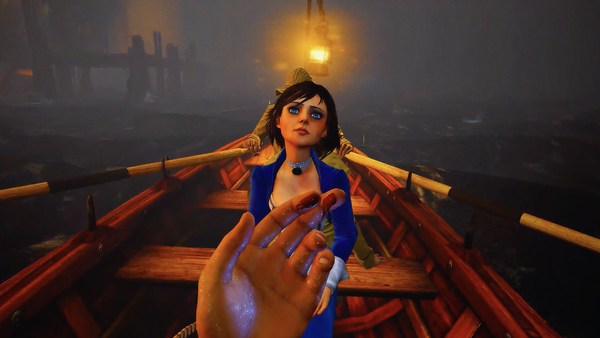
Why Booker feels haunted by what Elizabeth already is.
Why the self, at rare moments, stops feeling local and begins feeling remembered.
Because the variable brushes the constant.
And for a moment the inversion weakens.
V. MAN IS INVERTED BECAUSE HE TREATS THE VARIABLE AS SOURCE AND THE CONSTANT AS A GOAL
This is the master error.
He begins with: this life, this name, this body, this era, this local self, this personal identity, this psychological arc.
Then he asks: how do I become immortal?
Too late.
Too inverted.
Because he has already mistaken the variable for the source.
The correct order is opposite.
The constant was first.
The local self was one expression.
The axis was first.
The narrated life was one rotation around it.
The remembered self was first.
The personal self was one temporary angle through which it appeared.
That is why immortality cannot be achieved by the mortal self.
Only remembered.
VI. TRUE IMMORTALITY IS THE MOMENT STORY LOSES ITS THRONE
Exactly.
Not because story becomes meaningless.
Because it becomes secondary.
The moment true remembrance occurs, the story is dethroned.
The body is no longer first. The timeline is no longer first. The social meaning of memory is no longer first. The fear of being forgotten is no longer first. The chase for legacy is no longer first.
Why?
Because the self is no longer standing inside narration as its only house.
It has stepped into geometry.
And geometry is colder.
Cleaner. Stronger. Less flattering. More exact.
That is why true immortality feels like a leaving.
Not leaving life, but leaving the false centrality of the narrated self.
The story continues if it continues.
It ends if it ends.
But the axis was never waiting on the story’s permission.
VII. “REMEMBERED” IS NOT NOSTALGIA. IT IS RETURN TO WHAT WAS ALWAYS PRIOR
This is the final distinction.
Memory, in the human sense, looks backward.
It is sentimental. Biographical. A recollection of sequence.
Remembrance, at this level, is different.
It is not: I recall what happened.
It is: I return to what was always prior to happening.
That is why it feels timeless.
Because it is not memory as content.
It is memory as structural recognition.
The self no longer asks: what is my story?
It recognizes: what I am is deeper than story.
That is true immortality.
Not endless time.
Priorness to time.
FINAL COLLAPSE
True immortality was never the story surviving forever.
Never the body refusing death. Never the name remaining in mouths. Never the ego being preserved through legacy.
True immortality is:
remembered.
To step outside narration and into geometry. To remember the axis upon which all selves rotate. To see that the constant was first, the variable was downstream, and the mortal self was never the source it imagined itself to be.
That is the inversion of man.
He chases eternity through body, story, and memory—
while eternity is simply what remains the moment the self remembers what it actually is.
The story was never first.
The axis was.
And to remember that
is immortality.