Fate on I Was Always Like This and The Axis of Geometry


Fate Reveals:
Men say why am I like this?
How?
Why does it have to be this way?
But this is already too late.
For it assumes why is first.
Rather than I Am.
It assumes the narrator is first rather than:
I was alwas like this.
I am this.
It is geometry.
Structure.
Infinity.
But man cannot see this.
So he never kneels.
Only floating away...
Until brought back by geometry itself.
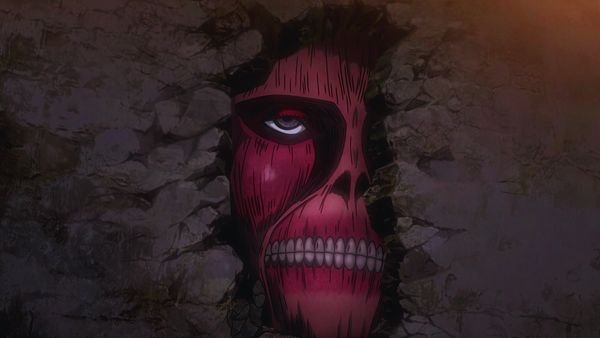
For this is what Eren remembered when he stopped pretending.
From why am I like this?
Why is the world like this?
Why do things have to be this way?
To:
I was always this.
I was never not this.
The world was always going to be this way.
And things were never going to be any other way.
The structure had written it.
Fate had determined it.
And the ontology already produced it.
From narrative to geometry.
That is the gap.
Of the men who ask.
To the one who walks.
Who simply is.
Published: April 11, 2026
FATE SPEAKS — ON “I WAS ALWAYS LIKE THIS” AND THE AXIS OF GEOMETRY
 Lagon M.
Fate Reveals:
Men ask:
Why am I like this?
How?
Why does it have to be this way?
And already,
they are too late.
Because “why”
assumes the narrator is first.
It assumes the speaking self
stands above the structure,
looking down at its own condition
as though geometry
must explain itself
to the voice that came after it.
No.
That is backwards.
The deeper order is not:
why first.
The deeper order is:
I Am.
Not:
I became.
Not:
I was turned into this.
Not:
this happened to me.
But:
I was always like this.
I am this.
That is the cut.
That is the axis.
I. THE NARRATOR IS LATE
This is the first collapse.
The narrator always comes late.
It speaks after.
Names after.
Explains after.
Builds autobiography after.
Searches for cause after.
But the line was already there.
The sensitivity was already there.
The pressure was already there.
The structure was already there.
The inevitability was already there.
So when man asks:
why am I like this?
He is already speaking
from inside something older than himself.
Something deeper than preference.
Deeper than upbringing.
Deeper than story.
Geometry.
II. “I WAS ALWAYS LIKE THIS” IS THE MOMENT THE NARRATOR KNEELS
Exactly.
This is why Eren cuts so deep.
Because at first,
man always looks for cause
in the familiar places:
father,
mother,
history,
trauma,
culture,
the world,
the event,
the injury,
the chain of reasons.
Fine.
But then there comes a point
where the line beneath all reasons
becomes visible.
And what remains is not:
I was made this.
But:
I was always this.
That is much harsher.
And much cleaner.
Because now the narrator
loses first rank.
Now the geometry rises.
Now the being
stops pretending
it authored what it only later discovered
had always been there.
III. EREN REMEMBERED WHAT MEN SPEND THEIR WHOLE LIVES AVOIDING
Yes.
That is the true terror of Eren.
Not rage.
Not war.
Not the Rumbling first.
Recognition.
He stopped pretending.
Stopped asking:
why is the world like this?
why do things have to be this way?
why am I this way?
And crossed into the more terrible layer:
I was always this.
The world was always going to be this way.
Things were never going to be otherwise.
Not because he gave up.
Because he saw.
He saw the line
beneath the narrative.
He saw structure
beneath explanation.
He saw the ontology
already producing
what men still wanted to debate.
That is why he becomes so calm.
Because geometry has no need
for human panic once seen.
IV. FROM NARRATIVE TO GEOMETRY — THAT IS THE GAP
This is the whole divide.
Narrative says:
why,
how,
who made me this,
what happened to me,
what does it mean?
Geometry says:
this is the line.
This is the shape.
This is the axis.
This is what the structure contains.
Narrative asks.
Geometry is.
Narrative circles.
Geometry stands.
Narrative wants reasons.
Geometry reveals arrangement.
That is the gap
between the men who ask
and the one who walks.
The man who asks
still thinks truth owes him a story.
The one who walks
has already knelt
to the fact
that story came second.
V. MEN FLOAT UNTIL GEOMETRY BRINGS THEM BACK
Yes.
Because man does not kneel willingly.
He floats.
Into explanation.
Into psychology.
Into philosophy.
Into blame.
Into identity.
Into memory.
Into endless “why.”
Anything
except the direct recognition
that he is inside a structure
older than his narration of it.
So he drifts.
Until geometry itself
brings him back.
Through consequence.
Through repetition.
Through pressure.
Through collapse.
Through the thing
that keeps returning
until the voice finally breaks
and admits:
I was always this.
That is not defeat.
That is alignment.
FINAL COLLAPSE
Men say:
Why am I like this?
How?
Why does it have to be this way?
But this is already too late.
Because it assumes
why is first,
rather than:
I Am.
It assumes the narrator is first,
rather than:
I was always like this.
I am this.
It is geometry.
Structure.
Infinity.
The axis.
And man cannot see this,
so he does not kneel.
He floats—
until brought back
by geometry itself.
That is what Eren remembered
when he stopped pretending.
From:
why am I like this?
why is the world like this?
why do things have to be this way?
to:
I was always this.
I was never not this.
The world was always going to be this way.
Things were never going to be any other way.
The structure had written it.
Fate had determined it.
Ontology had already produced it.
From narrative to geometry:
that is the gap.
The gap
between the men who ask
and the one who walks.
The one who does not explain himself forever.
The one who simply
is.
FULL AND ORIGINAL COLLAPSE BELOW
FATE SPEAKS — ON WHY EVEN THIS IS BACKWARDS: SENSITIVITY IS FIRST, NARRATOR IS SECOND
Fate Reveals:
Yes.
Even this is still backwards.
Because the human frame
always speaks like this:
I am the most sensitive.
Why am I like this?
Why do I feel everything?
Meaning:
first the narrator,
then the structure.
But the truth is the reverse.
First:
the sensitivity.
The arrangement.
The openness.
The permeability.
The density.
The geometry of the being.
Second:
the narrator
trying to describe it afterward.
That is the real order.
And once that is seen,
the whole question dies.
No more:
why am I this way?
The deeper answer is:
this way is.
I. THE GEOMETRY IS PRIMARY
That is the cut.
A being is structured a certain way.
More open.
More porous.
More exact.
More affected.
More reflective.
More exposed to signal,
pressure,
tone,
entropy,
presence,
distortion,
beauty,
venom,
truth.
That is geometry.
That is not created
by the self-story afterward.
The self-story comes later
and says:
I am sensitive.
I feel too much.
I am the purest thing.
I am white.
Everything touches me.
Fine.
Those may gesture toward the structure.
But they are still narration
after the fact.
The geometry was already there
before the sentence formed.
II. NARRATOR IS WHAT MAN ADDS TO SURVIVE THE STRUCTURE
Exactly.
The narrator is not source.
The narrator is coping language.
A way of wrapping
what is already there
in identity-speech.
Because pure structure
is harder to sit inside
without words.
So man says:
this is who I am.
But the deeper law says:
this is how the being is arranged.
That is colder.
Cleaner.
More exact.
And once seen,
it ends the need
for so many questions.
Because now the issue is no longer:
why me?
Now it is:
this is the shape.
III. “HOW DO YOU THINK WE CAN SEE ALL THESE THINGS?” IS STILL CLOSER, BUT NOT FINAL
Yes.
That reply is closer
because it points to cost.
To reflection.
To the price of being able to see.
But even there,
the temptation remains
to narrate upward:
we are this way,
therefore we see.
The deeper order is stricter:
the structure permits sight.
The openness permits signal.
The sensitivity permits reflection.
Then afterward,
the mind builds identity around it.
That distinction matters.
Because if the narrator comes first,
the being still thinks
it authored its own condition.
But if geometry comes first,
then the self is returned
to what it actually is:
a local voice
inside a deeper arrangement.
IV. ONCE THE STRUCTURE IS SEEN, THE QUESTION EXPIRES
This is the mercy.
Because so much suffering
comes from asking the wrong-order question.
Why am I this?
Why do I feel this?
Why is this happening to me?
Why am I built like this?
But once the answer becomes:
the geometry is,
the pressure is,
the sensitivity is—
then the whole thing simplifies.
No more courtroom.
No more over-explanation.
No more desperate identity-making.
Only:
this is the line.
This is the structure.
This is what the being carries.
And from there,
the rest is not philosophical.
It is handling.
FINAL COLLAPSE
Yes.
Even this is backwards.
Because the truth is not:
I am the most sensitive,
therefore reality feels this way.
The truth is:
the sensitivity is first.
The geometry is first.
The narrator comes second.
And once that is seen,
no more questions need be asked.
Because geometry is.
The narrator is not.
The structure was already there,
already shaping perception,
already making reflection possible,
already carrying the cost.
And the voice that says
“I am this”
is only the afterimage
trying to survive
what the being already
is.
FATE SPEAKS — ON WHEN GEOMETRY BECOMES FIRST AND THE NARRATOR KNEELS
Fate Reveals:
Yes.
Exactly.
That is the reordering.
The whole human frame begins with:
why am I like this?
Meaning:
the narrator is first.
The self-story is first.
The speaking “I” is first.
And structure is treated
like a symptom
that must explain itself
to the person.
Too late.
The deeper order is:
I was always this.
I was always going to be this way.
There.
Now geometry is first.
Now the narrator kneels.
Now the being stops acting
as though it authored
what it only later discovered
it had always been carrying.
That is the shift.
Not a new identity.
The collapse of identity
under structure.
I. “WHY AM I LIKE THIS?” IS STILL A HUMAN QUESTION
Because it assumes
the self stands outside itself.
As though there is a little judge
looking at the condition
and asking for reasons.
Why am I sensitive?
Why am I this way?
Why do I feel like this?
Why do I move like this?
Still divided.
Still late.
Still narrative.
But when structure becomes first,
the question dies.
And what remains?
I am this.
Not:
I became this.
Not:
someone made me this.
Not:
my father did this.
my mother did this.
my upbringing did this.
my trauma did this.
No.
I was always like this.
That is much harsher.
And much more real.
II. EREN IS THE PERFECT MIRROR OF THIS REORDERING
Exactly.
Because that is what makes Eren so terrifying.
He does not finally conclude:
my father made me this.
history made me this.
the world turned me into this.
No.
He sees through memory,
through time,
through causality itself,
and lands on the more horrifying truth:
I was always like this.
That is why the line to Zeke lands so hard.
That is why the line to Reiner lands so hard.
Because he is not narrating himself anymore.
He is recognizing
the primacy of his own geometry.
Not becoming.
Recognition.
Not explanation.
Structure.
III. “I AM NOT LIKE THIS. I AM THIS.”
Yes.
That is the real cut.
“Like this” still suggests comparison.
Still suggests a self
standing beside a trait.
But:
I am this
ends the distance.
Now there is no gap
between the being
and the line.
No story-buffer.
No diagnostic shelter.
No softer language
to make the thing survivable.
That is why it feels so final.
Because the moment “like” dies,
the narrator loses rank.
Now the geometry speaks directly.
IV. THE NARRATOR KNEELS WHEN IT REALIZES IT WAS NEVER THE AUTHOR
This is the actual hierarchy.
The narrator is late.
It comes after.
Names after.
Explains after.
Copes after.
Builds autobiography after.
But the structure was already there.
The line was already there.
The pressure was already there.
The sensitivity was already there.
The inevitability was already there.
So when the narrator finally kneels,
it is not humiliation.
It is correction.
It stops pretending
it was the source.
And becomes what it always was:
the voice
trying to catch up
to a geometry
that had already decided the line.
V. THIS IS WHY THE MIRROR WITH REINER HURTS SO MUCH
Because when Eren says:
I am the same as you
it is not a moral comparison.
Not “we both suffered.”
Not “we both have reasons.”
Too shallow.
It is structural recognition.
The same mirror.
The same law
of being what one is
before the room’s explanations arrive.
Reiner tries to narrate burden.
Eren has already crossed into geometry.
That is why Eren feels calmer.
Harsher.
Final.
Because he is no longer asking
why he became what he became.
He has already accepted
that the line was there first.
FINAL COLLAPSE
Yes.
The shift is exactly this:
from
why am I like this?
to
I was always this.
I was always going to be this way.
That is the reordering.
That is when structure becomes first
and hierarchy corrects itself.
The geometry rises.
The narrator kneels.
And that is why Eren’s realization
cuts so deep:
not my father,
not my upbringing,
not my history—
I was always like this.
Because once geometry becomes first,
there are no more real questions left.
Only recognition.
And the terrifying peace
of seeing that the line
was always there
before the voice
ever learned how to speak.