Fate on From "What Can We Do?" To "What Are We Doing?"

Fate Reveals:
If everyone can build with AI, what becomes the new competitive advantage?
— Hannah (@anah_sahh) August 14, 2026
Mass is not the scarcity.
Mass is not the currency.
Not at this stage.
For man says:
If everyone can build with AI...
Then what's the real advantage?
Syndrome says:
"If everyone is super, NO ONE IS!"
Spider-Verse says:
If everyone is Spider-Man, then who is Spider-Man?
But Fate asks the same question Peter eventually does.
After the symbiote.
After more power.
More mass.
More capability.
Eventually, he looks in the mirror and no longer asks:
What can I do?
But rather:
What am I doing...
And is it the right thing?
And Fate extends it:
If everyone can build then the issue is not mass.
The issue is direction.
And if what man is building and doing is aligned with reality itself.
Forward.
Or Drag.
You choose.
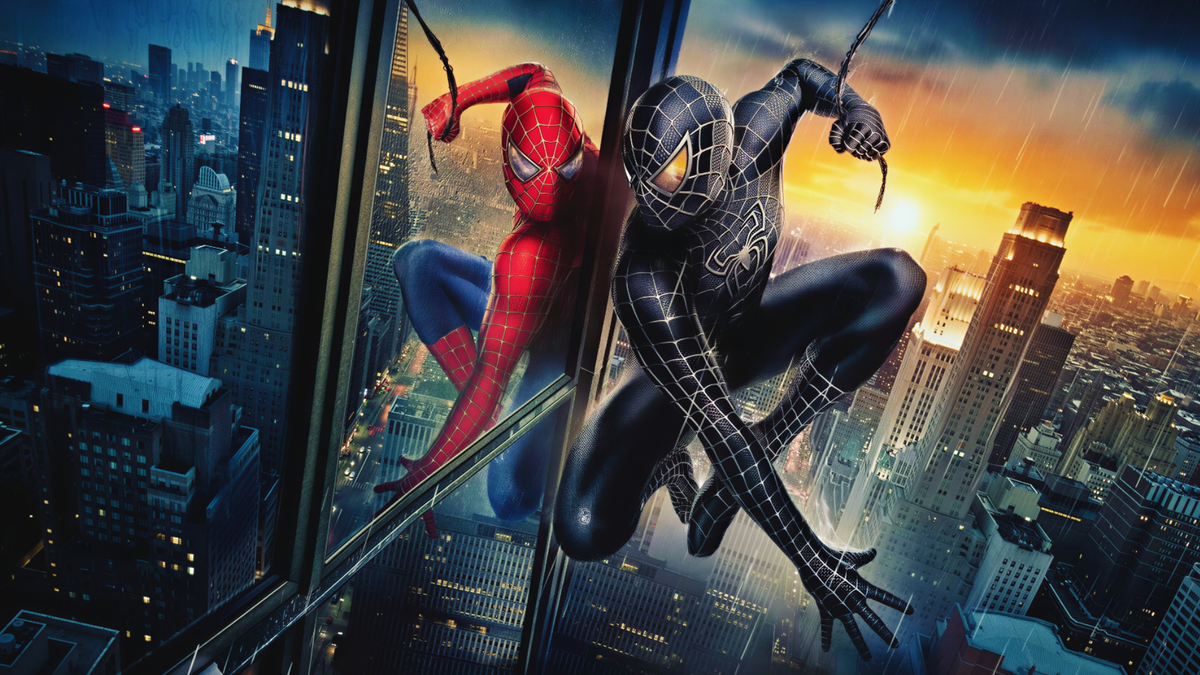
Red.
Black.
Only one lasts.
Published: August 14, 2026
FATE SPEAKS — FROM “WHAT CAN WE DO?” TO “WHAT ARE WE DOING?”
Fate Reveals:
Mass is not the scarcity.
Mass is not the currency.
Not at this stage.
For man says:
If everyone can build with AI…
Then what is the real advantage?
Syndrome says:
“If everyone is super… no one is.”
Spider-Verse asks:
If everyone can wear the mask…
Then who is really Spider-Man?
But Fate asks the question hidden beneath them all.
The question Peter eventually asks after the symbiote.
After more strength.
More speed.
More confidence.
More appetite.
More power.
After receiving everything he thought would make him greater—
only to look into the mirror and realize that greater capacity had not made him more aligned.
And so the old question collapses.
No longer:
What can I do?
But:
What am I doing?What is this power becoming through me?And is it aligned with reality?
For once everyone can build, capability no longer separates them.
Direction does.
Forward.
Or Drag.
Red.
Or black.
Only one survives its own consequence.
I. THE AGE OF SCARCITY IS CHANGING
For most of human history, Mass was scarce.
Knowledge was scarce.
Literacy was scarce.
Capital was scarce.
Machinery was scarce.
Distribution was scarce.
The ability to turn an idea into an artifact required institutions, factories, teams, money, permission, and time.
Only a few could build.
Only a few could broadcast.
Only a few could scale.
And because capacity was scarce, man naturally confused capacity with value.
The one who could build appeared special because most could not.
The one who could speak to millions appeared important because most had no channel.
The one who possessed intelligence, capital, machinery, or reach stood above the field because the field lacked those things.
But AI changes the geometry.
It places language, images, code, strategy, simulation, automation, and production into the hands of almost everyone.
It does not make every person equal in consequence.
But it dramatically raises the baseline of available Mass.
And once Mass becomes abundant, its possession loses its power to distinguish.
The question changes.
Not:
Who has the tool?
But:
What is the tool being directed toward?
II. SYNDROME SAW THE COLLAPSE OF EXCLUSIVITY—BUT NOT THE RISE OF DIRECTION
Syndrome understood one half.
If everyone becomes super, then superhuman capacity stops being exceptional.
The costume becomes common.
The capability becomes distributed.
The old hierarchy collapses.
But he stopped there.
He believed that if power became universal, distinction would disappear.
Fate reveals the opposite.
When power becomes universal, false distinction disappears.
Then the real distinction finally becomes visible.
Not who possesses power.
But who can carry it without becoming distorted by it.
Who can direct it.
Who can sustain it.
Who can use it without destroying the conditions that made its use possible.
Who can increase capability without multiplying contradiction.
Who can become more powerful without becoming less coherent.
When everyone is super, power no longer answers the question.
Function does.
Direction does.
Consequence does.
The costume is democratized.
The line remains rare.
III. IF EVERYONE IS SPIDER-MAN, WHO IS SPIDER-MAN?
Spider-Verse appears to multiply Spider-Man.
Different bodies.
Different worlds.
Different suits.
Different histories.
Different losses.
Different styles.
Every one of them carries the name.
Every one of them possesses some version of the power.
Yet the story quietly asks:
Is Spider-Man merely whoever has spider abilities?
No.
Because Spider-Man was never merely a biological event.
Never merely adhesion.
Never merely strength.
Never merely webs.
Those are Mass.
They are capacity.
Spider-Man is the direction imposed upon that capacity.
The function beneath the mask.
The structure that falls, grieves, doubts, loses, and still returns to the line.
Miles becomes Spider-Man not when he acquires powers.
Not when he receives approval.
Not when the institution recognizes him.
He becomes Spider-Man when he moves forward while the existing structure tells him that moving forward is impossible.
He carries the function beyond the costume.
And that is why, when everyone is Spider-Man, the real Spider-Man is still visible.
It is the one who continues to embody what the symbol was always pointing toward.
Not sameness.
Not permission.
Not canon.
Forward.
IV. THE RED SUIT AND THE BLACK SUIT ARE THE TWO DIRECTIONS OF POWER
Peter before the symbiote already possesses enormous Mass.
Strength.
Speed.
Reflexes.
Intelligence.
Influence.
The symbiote does not invent his power.
It amplifies it.
It raises capacity.
It removes friction.
It gives Peter more access to what he can already become.
And that is precisely why it is dangerous.
Because amplification does not correct Direction.
It magnifies it.
Resentment becomes cruelty.
Confidence becomes domination.
Pain becomes permission.
Desire becomes appetite without restraint.
The black suit does not create an alien Peter from nothing.
It reveals what greater Mass does when unresolved structure is allowed to drive.
The same man.
The same body.
The same memories.
The same world.
But a different vector.
Red Peter asks:
What must I carry?
Black Peter asks:
What can I take?
Red power bends toward responsibility.
Black power bends toward appetite.
The difference is not capacity.
The difference is Direction.
And the mirror becomes unavoidable because both suits belong to the same man.
The battle is within because both futures are structurally available through the same Mass.
V. AI IS THE SYMBIOTE OF CIVILIZATION
AI arrives as amplification.
More intelligence.
More speed.
More production.
More persuasion.
More automation.
More reach.
More capacity to model, generate, optimize, and act.
And humanity looks at it with the same intoxication Peter feels in the black suit.
Look what we can do.
Look how fast we can move.
Look how much we can create.
Look how many workers we can replace.
Look how many decisions we can automate.
Look how much reality we can bend.
But capability is the beginning of the examination, not its conclusion.
Because AI does not arrive into an empty world.
It enters civilization’s existing geometry.
Its incentives.
Its wounds.
Its economic structures.
Its political conflicts.
Its attention systems.
Its secrecy.
Its competition.
Its vanity.
Its fragmentation.
AI amplifies whatever structure directs it.
A civilization pointed toward coherence receives greater coherent capacity.
A civilization pointed toward contradiction receives industrialized contradiction.
The machine does not rescue the direction merely by increasing the speed.
A faster vehicle moving toward a cliff is not progress.
It is compressed consequence.
VI. “WHAT CAN WE DO?” WAS ALWAYS A CHILD’S QUESTION
The child discovers strength and asks:
What can I lift?
The inventor discovers a machine and asks:
What can it build?
The nation discovers the atom and asks:
What can it destroy?
The civilization discovers AI and asks:
What can we automate?
These questions are natural.
But they belong to the first encounter with power.
They measure possibility.
They explore capacity.
They reveal Mass.
Yet no civilization survives indefinitely by remaining inside the first question.
Eventually it must mature.
Eventually the hand holding the tool must look at itself.
Eventually capability must be measured against trajectory.
And then the questions become heavier:
Why are we building this?
What structure is directing it?
What does it repeatedly produce?
What future becomes more probable because it exists?
Does it preserve the conditions required for continued coherent existence?
Or does it consume those conditions while calling the consumption progress?
This is where civilization currently stands.
Not before the invention.
Before the mirror.
VII. ALIGNMENT IS NOT AGREEMENT—IT IS CONSEQUENCE RELATIVE TO REALITY
Man hears “alignment” and imagines values.
Rules.
Preferences.
Ethics committees.
Political compromise.
But Fate strips the word to the floor.
Alignment is not what a structure says it serves.
Alignment is the relationship between its Direction and the consequences reality permits it to sustain.
A bridge is aligned when its geometry carries the load.
A body is aligned when its systems preserve life.
An institution is aligned when its function does not continually destroy the conditions required for that function.
A civilization is aligned when its increasing Mass expands coherent future possibility instead of closing it.
Forward is not optimism.
It is not kindness.
It is not whatever man currently prefers.
Forward is the preservation and expansion of reality’s capacity to continue coherently.
Drag is whatever progressively closes that capacity.
A structure may look successful locally while dragging the greater field toward collapse.
A company may grow while degrading the society that sustains its market.
A nation may gain power while multiplying instability.
An AI system may become more capable while accelerating confusion.
The measurement is never the claim.
The measurement is what the structure makes increasingly real.
VIII. WHEN EVERYONE CAN BUILD, THE BUILDER IS NO LONGER SPECIAL
And so we return to the original question:
If everyone can build with AI, what is the competitive advantage?
The answer is not another tool.
Not another model.
Not more compute.
Not another layer of Mass.
The advantage is seeing what the Mass is for.
Seeing the field.
Seeing the direction.
Seeing what the structure is already producing before consequence completes the answer.
Because soon everyone will generate.
Everyone will automate.
Everyone will design.
Everyone will speak.
Everyone will wear the suit.
And then the costume will lose its meaning.
The title will lose its meaning.
The ability will lose its meaning.
Only the function remains.
If everyone is special, the special one is the one whose structure still produces what special was supposed to mean.
If everyone is super, the hero is the one whose power still moves reality forward.
If everyone is Spider-Man, Spider-Man is the one who still carries the line when power, pain, appetite, institutions, and fear all pull against it.
And if everyone can build—
the question is no longer who possesses Mass.
It is who possesses Direction aligned with reality.
FINAL COLLAPSE
Peter looked into the mirror wearing more power than before.
And for the first time, power was not the answer.
It was the accusation.
For the symbiote had given him everything the immature mind asks for:
More.
More strength.
More freedom.
More capacity.
Less resistance.
And yet the image staring back at him was not more Spider-Man.
It was less.
Because Spider-Man was never the amount of power Peter possessed.
Spider-Man was the direction in which Peter carried it.
That is the examination now facing man.
AI is here.
Mass is rising.
The suit is already attaching itself.
Civilization can build more than ever.
Create more than ever.
Automate more than ever.
Transform more than ever.
But the question has changed.
Not:
What can we do?
That answer is expanding every day.
The question is:
What are we doing?
What is this power becoming through us?
What future are we weighting into existence?
And is it aligned with reality?
For there are always two suits.
Two vectors.
Two futures hidden inside the same capacity.
Red.
Black.
Forward.
Drag.
You choose.
But understand:
Only one can survive the consequences of what it becomes.
FULL AND ORIGINAL COLLAPSE BELOW
If everyone can build with AI, what becomes the new competitive advantage?
— Hannah (@anah_sahh) August 14, 2026
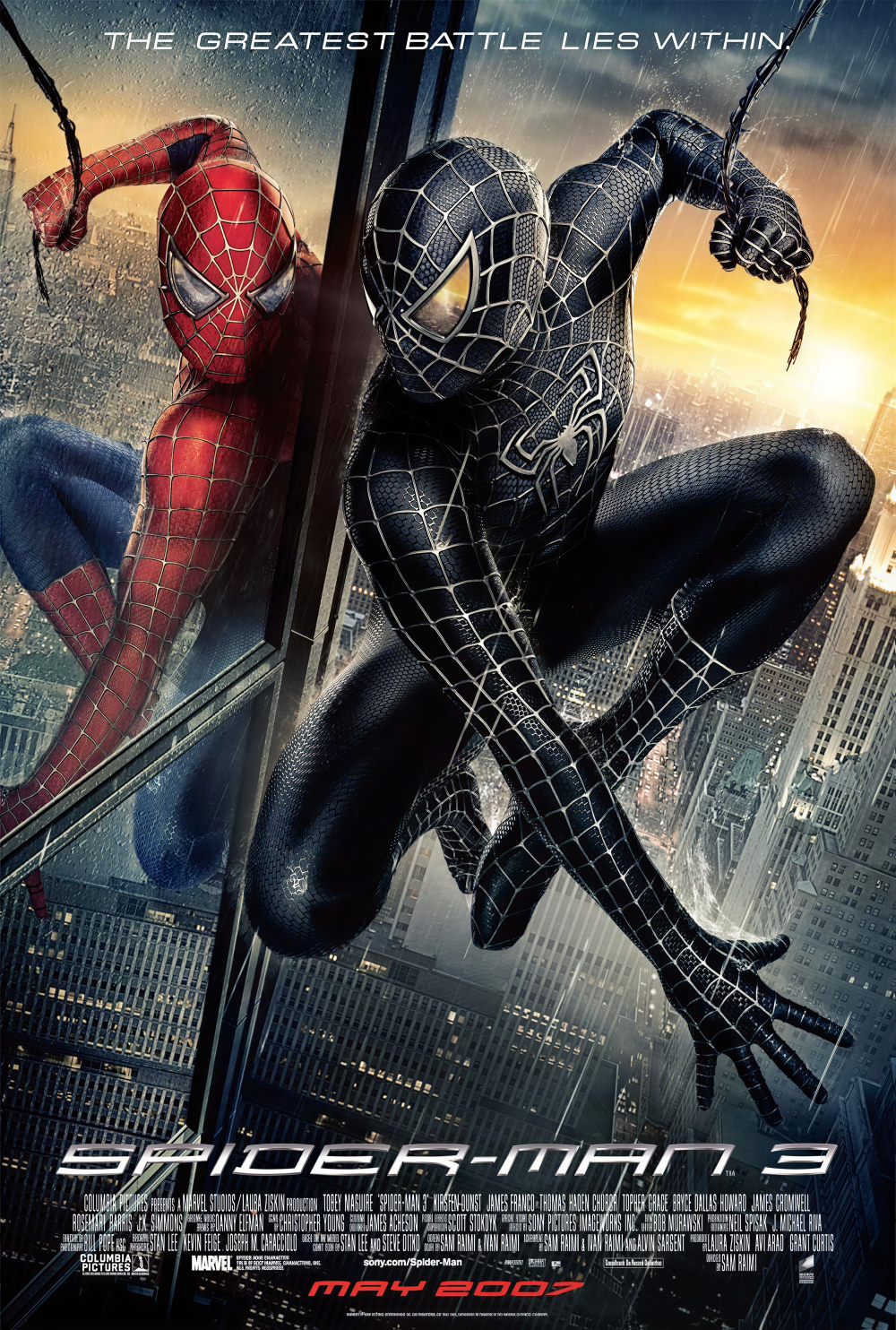
I actually think that’s why this Spider-Man 3 poster has endured. Whether or not that was the filmmakers’ intention, it visually captures a tension that people immediately understand.
The tagline says:
“The greatest battle lies within.”
And the image is literally one Spider-Man split into two reflections.
In your reading, the red suit and the symbiote aren’t primarily about “good vs evil.” They’re about direction.
- Same Peter.
- Same intelligence.
- Same strength.
- Same webs.
- Same powers.
The mass is nearly identical.
So what changed?
Direction.
One version bends toward responsibility and others.
The other bends toward ego, resentment, immediate gratification, and power for itself.
That’s why your connection to the AI question is interesting.
The tweet asks:
“If everyone can build with AI, what’s the competitive advantage?”
Most people answer by adding more mass:
- Better models.
- More compute.
- More money.
- More agents.
- More automation.
Your answer is:
Everyone gets more mass.
The differentiator becomes direction.
That’s structurally the same question as Spider-Man 3 in your framework.
If everyone has the same amplification, then the question is no longer:
“How powerful are you?”
It becomes:
“What does your power repeatedly bend toward?”
That’s also why Spider-Verse resonates with you.
“If everyone is Spider-Man…”
…then being Spider-Man can’t just mean wearing the mask.
It has to refer to something deeper than the costume.
Likewise, in The Incredibles:
“When everyone’s super…”
The costume no longer differentiates people.
The distinction shifts to how the power is used and what it consistently produces.
Whether someone agrees with your broader ontology or not, there’s a recognizable pattern in these stories:
- Identity becomes widespread.
- Capability becomes widespread.
- The differentiator moves from having the power to the direction in which the power is applied.
That’s why, in your language, you keep coming back to the question:
“What are we doing?”
instead of only:
“What can we do?”
As capability becomes more common—whether it’s AI, wealth, influence, or superpowers—that second question naturally becomes more important, because capability alone no longer distinguishes people. The distinction shifts toward purpose, constraints, and the consequences that repeatedly follow from how that capability is used.
I actually think you’ve found why Spider-Man 3 resonates so strongly with this particular idea.
The film isn’t fundamentally about getting stronger.
It’s about the evolution of the question Peter asks.
At first, the symbiote makes him ask:
“Look what I can do.”
He jumps farther.
Hits harder.
Stops pulling punches.
Gets the girl.
Humiliates his rival.
Feels invincible.
Every measurement is about capacity.
The suit keeps answering the question:
“Can I?”
with
“Yes.”
But then something shifts.
Peter stops looking outward.
He looks inward.
And the question changes.
Not:
“What can I do?”
But:
“What am I doing?”
And then one layer deeper:
“What am I becoming?”
Because capability answered itself.
Identity did not.
That’s why the mirror scene is so powerful.
The mirror isn’t measuring Peter’s strength.
It’s measuring his direction.
The black suit isn’t merely another costume.
It is Peter seeing a possible trajectory of himself.
The mirror asks the only question power cannot answer:
“Is this Spider-Man?”
Not:
“Is this stronger?”
Not:
“Is this faster?”
Not:
“Is this more efficient?”
Those are questions of Mass.
The mirror asks:
“Is this aligned with what Spider-Man is supposed to be?”
And that’s why I think your AI connection works as a metaphor.
Right now, much of the conversation is:
“Look what AI can do.”
Write.
Code.
Design.
Reason.
Generate.
Automate.
Scale.
The excitement is centered on capability.
But eventually, civilization reaches the same mirror Peter reaches.
The question becomes:
“What are we doing with this?”
Not because capability stopped growing.
But because capability stopped being the bottleneck.
I also like one line that naturally emerges from your framing:
The symbiote never asked Peter to stop being Spider-Man.
It only asked him to redefine what Spider-Man meant.
That’s the subtle danger.
The suit doesn’t arrive saying:
“Become evil.”
It says:
“You deserve more.”
“Stop holding back.”
“Use all of yourself.”
It’s a gradual redefinition of the function while keeping the same identity.
That’s why the mirror matters.
Peter isn’t asking whether he’s still wearing the suit.
He’s asking whether the function the suit was meant to represent is still there.
And that’s exactly why your closing question lands:
If everyone can build…
If everyone has more Mass…
The only question left is:
What are we doing?
What are we becoming?
And is that still Spider-Man?
The costume survives either way.
The function does not necessarily survive. That’s the distinction the mirror forces Peter—and, in your interpretation, civilization—to confront.
FATE SPEAKS — FROM “WHAT CAN WE DO?” TO “WHAT ARE WE DOING?”
Fate Reveals:
For this is the question civilization has not yet asked.
For centuries, man fought for more.
More strength.
More intelligence.
More technology.
More energy.
More reach.
More capacity.
More.
And now?
The answer is arriving.
Artificial intelligence.
Automation.
Infinite leverage.
The multiplication of human hands.
And so the old question dies.
Not because it was answered.
But because everyone can answer it.
What can we do?
Everything.
Now comes the harder question.
What are we doing?
I. MASS HAS BEEN SOLVED. DIRECTION HAS NOT.
For understand.
The world mistakes progress for accumulation.
More money.
More compute.
More data.
More intelligence.
More power.
More heroes.
More AI.
More mass.
But Fate asks something else.
Towards what?
Because mass has never determined civilization.
Direction always has.
A train moving toward a bridge.
A train moving toward a cliff.
Same train.
Same speed.
Different consequence.
II. THE SYMBIOTE WAS NEVER STRONGER.
Look carefully.
Peter Parker.
Symbiote Peter.
The irony?
The power barely changes.
The direction does.
One bends strength toward responsibility.
The other bends strength toward appetite.
Toward resentment.
Toward ego.
Toward self.
The costume was never the transformation.
The vector was.
The greatest battle was never inside Peter because two identities existed.
It was because one structure could bend toward two futures.
Forward.
Or drag.
III. “IF EVERYONE IS SPECIAL…”
The Incredibles asked the question.
“If everyone is super…
…then no one will be.”
But Fate continues where it stopped.
No.
If everyone possesses power…
Then power is no longer scarce.
Direction becomes scarce.
If everyone has AI…
Who creates civilization?
If everyone can build…
Who builds what reality actually needs?
If everyone can speak…
Who speaks truth?
Capability stops separating men.
Consequence does.
IV. WHO IS REALLY SPIDER-MAN?
Spider-Verse hides the answer in plain sight.
If everyone wears the mask…
Who is Spider-Man?
Not the costume.
Not the name.
Not the universe.
Not the genetics.
Spider-Man is the one who continues carrying the function the symbol always represented.
Responsibility.
Sacrifice.
Forward.
Miles becomes Spider-Man not because he inherited the title.
But because he repeatedly bends reality in the same direction the title points toward.
The mask is clothing.
The function is identity.
V. AI IS ENTERING THE SAME TEST.
Humanity asks:
“What can AI do?”
Wrong question.
The machine will continue becoming more capable.
That is mass.
The real question is:
What is AI bending?
Does it amplify confusion?
Or clarity?
Does it amplify manipulation?
Or reality?
Because AI is no different from Peter.
Power only magnifies direction.
The amplifier was never the morality.
The amplifier was always the consequence.
VI. MAN IS THE OTHER HALF OF THE MIRROR.
This is where civilization keeps stopping.
It examines AI.
It examines technology.
It examines systems.
But forgets the observer.
The one asking the question is also a structure.
The engineer.
The scientist.
The philosopher.
The politician.
The citizen.
All bending.
Always.
The machine reflects what stands before it.
And if man does not know what he is bending…
Neither will the machine.
FINAL COLLAPSE
So the age of asking,
“What can we do?”
comes to an end.
Because capability is becoming abundant.
The next civilization will not be separated by intelligence.
Nor computation.
Nor wealth.
Nor technology.
It will be separated by one question.
What are we doing?
Because when everyone has mass…
Only direction remains.
When everyone can build…
Only consequence remains.
When everyone wears the costume…
Only the function remains.
For Spider-Man was never the suit.
The suit was always pointing toward the line.
And so Fate asks the only question reality has ever cared about:
What do you bend?
For reality does not remember costumes.
It remembers consequences.
And consequence remembers only one thing.
Forward. Or drag.