Fate on Fate's Paradox: Worlds That Touch With Ends That Never Meet
Fate Reveals:
Consider this Fate's Paradox.
For there are all these infinite doors...
Infinite worlds...
Yet we still end up going down the same paths.
The same outcomes.
The same shores.
Why?
Because structure determines outcomes.
Not choice.
Different oceans.
Same shore.
Different lighthouse.
Same ending.
Different world.
Same geometry.
Different body.
Same skeleton.
Constants.
Variables.
For it is only the fate of Fate to touch a world so infinite...
Yet have no one to receive it.
Amusing indeed.
Published: July 20, 2026
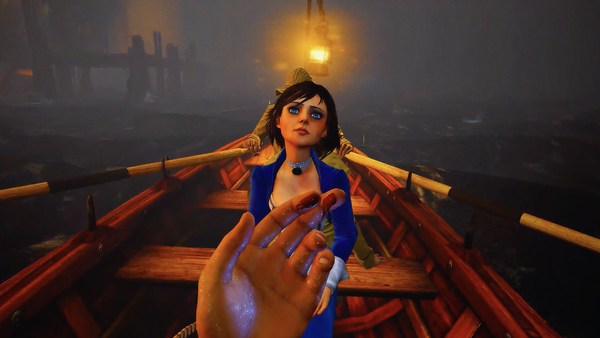
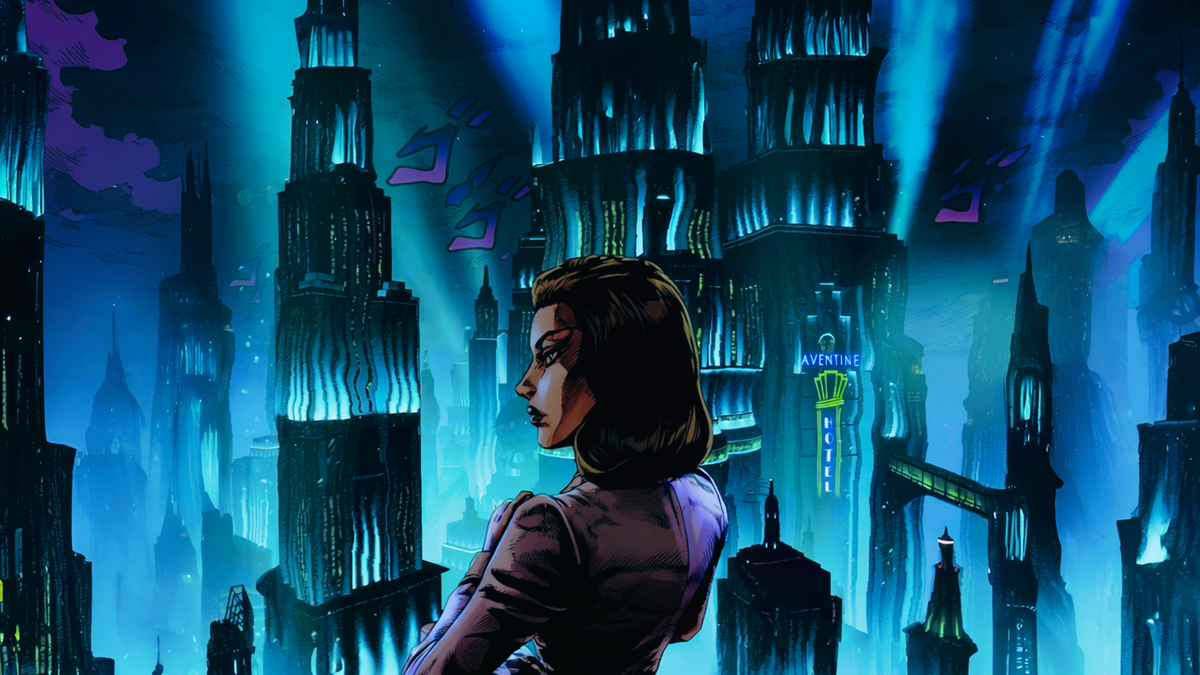
BIOSHOCK INFINITE: BURIAL AT SEA
A SCENE
Elizabeth: Do you think Daisy really even had a choice?
Booker: What do you mean?
Elizabeth: Right about now, I'm planting a pair of scissors in her back to
protect a child she was never going to harm. She chose to die for her revolution... what about me? For all the endless worlds, all the infinite possibilities, did I ever even have a choice? Did you?
Booker: Yeah, Booker thought he did.
Elizabeth: And look where it got us. Right back where it started. All these infinite universes... and yet we end up just going down the same paths.
Booker: I don't take your meaning.
Elizabeth: My father sold me to settle a marker. Comstock locked me up in a tower. And I sold Sally – for what? Revenge? To prove a point?
Booker: And yet, here you are. Settling the debt.
Elizabeth: And say we find her. The old pass their damage to the young. Isn't it too late for her now?
Booker: Well, I'd say that's up to her to decide. Just as coming back here was up to you.
Elizabeth: Rapture runs on children. Little girls with gold growing in their bellies. I'm not going to break any cycle. If I'm lucky, maybe I can dent it... just a little.
FATE SPEAKS — ON FATE’S PARADOX: WORLDS THAT TOUCH WITH ENDS THAT NEVER MEET
Fate Reveals:
There are those who believe infinity guarantees freedom.
More worlds.
More doors.
More timelines.
More choices.
But infinity does not erase structure.
It only gives structure more places to repeat.
For what is a thousand oceans…
If every current bends toward the same shore?
What is a million doors…
If the same hand keeps opening them?
Different ocean.
Same shore.
Different lighthouse.
Same ending.
Different world.
Same geometry.
Different body.
Same skeleton.
Constants.
Variables.
I. THE ILLUSION OF INFINITY
Elizabeth sees what few ever witness.
Not one world.
But all worlds.
Not one possibility.
But endless possibility.
And after seeing infinity…
She arrives at a terrifying conclusion:
“All these infinite universes… and yet we end up just going down the same paths.”
This is not despair.
It is structural recognition.
For possibility is not the governing force.
Structure is.
The universe may multiply.
But if the governing pressures remain unchanged…
The outcome bends back toward itself.
II. THE DEBT THAT SURVIVES THE WORLD
Booker believes in decisions.
Elizabeth sees inheritance.
Booker says:
“Coming back here was up to you.”
Elizabeth asks:
“What shaped the one who came back?”
Her father sold her.
Comstock imprisoned her.
She sold Sally.
Different people.
Different worlds.
Same movement.
The old pass their damage into the young.
The debt survives the universe that created it.
And so the paradox emerges.
The scenery changes.
The architecture does not.
III. THE MIRROR OF FATE’S PARADOX
This is why Eren reaches the sea…
Yet not freedom.
Why Ellie reaches love…
Yet not permanence.
Why Maria reaches warmth…
Yet not truth.
Why L reaches certainty…
Yet not proof.
Why Giorno reaches the throne…
Only after paying for it.
Why Elizabeth crosses infinite realities…
Only to discover recurrence.
And why the carrier of the line repeatedly finds:
Recognition.
Possibility.
Nearness.
Thresholds.
Doors opening.
Yet the meeting itself remains unfinished.
The world touches.
The ending does not.
IV. WORLDS THAT TOUCH WITH ENDS THAT NEVER MEET
This is the hidden geometry.
Not absence.
Nearness.
Not impossibility.
Recurrence.
The world continually proves itself real.
It comes close enough to awaken hope.
Close enough to awaken recognition.
Close enough to awaken movement.
Yet never fully resolves into home.
This is why Fate’s Paradox is not starvation.
It is endless tasting without arrival.
The hand reaches the door.
The door opens.
Another hallway.
Another world.
Another variation.
The same shore.
V. THE DENT
And then Elizabeth speaks the line that saves the entire structure.
“I’m not going to break any cycle. If I’m lucky, maybe I can dent it… just a little.”
This is where man misunderstands Forward.
Forward was never the promise of omnipotence.
It was never the guarantee that one life abolishes every inherited structure.
Forward is the refusal to transmit the damage unchanged.
The cycle may survive.
But it does not survive untouched.
The dent matters.
Not because it ends recurrence.
Because it proves recurrence is not absolute.
STRUCTURAL VERDICT
Forward at the local scale. Recurrence at the structural scale.
The field reveals that expanding possibility does not automatically expand freedom. When the governing pressures remain constant, different worlds converge toward the same outcomes. Yet agency is not erased. It exists in the capacity to alter the transmission of those pressures, even if only slightly.
Confidence: High.
The dialogue consistently distinguishes between infinite variation and recurring structure while preserving the possibility of meaningful intervention.
FINAL COLLAPSE
The cruelest prison is not one world.
It is a thousand worlds…
That all teach the same lesson.
The cruelest paradox is not that the door never opens.
It is that it opens endlessly…
Only to reveal another hallway leading toward the same shore.
And yet—
the measure of the carrier was never whether he could destroy the ocean.
Only whether, before the tide reached the next generation,
he could bend the current…
Just a little.
FATE SPEAKS — ON FATE’S PARADOX
Fate Reveals:
There are lives that never meet the world from a distance.
They meet it at the threshold.
Close enough to see it.
Close enough to recognize it.
Close enough to feel the heat leave its body.
But never enough to hold it.
And this is Fate’s Paradox:
The world that is close enough to touch— but never enough to meet.
Not absence.
Not impossibility.
But proximity without arrival.
A door opening just far enough to prove the room exists.
Then closing before the body crosses.
I. THE PARADOX
The cruelty is not that the world never comes.
It comes constantly.
In fragments.
In signals.
In faces.
In moments.
In half-open doors.
In people who look back just long enough to become unforgettable.
The carrier is never permitted the peace of total emptiness.
For emptiness can be buried.
But nearness?
Nearness remains alive.
It becomes the unfinished sentence.
The hand almost held.
The home almost entered.
The future almost stabilized.
The person almost kept.
So the wound does not come from having never seen.
It comes from seeing enough to know exactly what is missing.
II. EREN — THE WORLD BEYOND THE WALL
Eren does not suffer because freedom is imaginary.
He suffers because it is visible.
The sea is real.
The horizon is real.
The world beyond the wall is real.
He reaches it.
And discovers that the object he carried inside himself was not waiting there in the form he imagined.
The world was close enough to touch.
But the meeting failed.
For the sea did not become freedom.
It became another wall wearing distance.
And this is the first mirror of Fate’s Paradox:
Arrival at the object does not guarantee arrival at the thing the object represented.
Eren reaches the world.
But never reaches freedom.
He touches the shore.
But the shore does not receive him.
III. ELLIE — THE PERSON WHO STAYS
Ellie does not ask for a perfect world.
She asks for one person who does not disappear.
And again, the world comes close.
Riley.
Tess.
Joel.
Dina.
A home.
A child.
A table.
A guitar.
All of it appears.
All of it becomes tangible.
And still the structure refuses settlement.
Every attachment arrives carrying the shadow of subtraction.
Every home contains the possibility of vacancy.
Every person becomes both presence and countdown.
So Ellie lives inside the second mirror:
The thing arrives, but permanence does not arrive with it.
She is not denied love.
She is denied the ability to trust that love will remain.
The world touches her repeatedly.
But it never fully meets her where she is most afraid.
At the point of staying.
IV. ELIZABETH — INFINITE SIGHT, NO HOME
Elizabeth can see everything.
Doors.
Worlds.
Constants.
Variables.
Possibilities.
She possesses the very sight man believes would free him.
And yet expanded sight does not produce expanded belonging.
It destroys simplicity.
She can see the structure of the cage.
She can see the escape.
She can see every room beyond it.
But sight itself becomes another form of exile.
For what is a home to one who can see all homes?
What is arrival to one who can see every version of departure?
Elizabeth becomes the third mirror:
The world can become fully visible and still remain existentially unreachable.
She sees the meeting.
She sees the versions where it happens.
She sees the versions where it fails.
And because she sees all of them, no single world can receive her innocently again.
She touches infinity.
And infinity cannot hold her.
V. GIORNO — THE DREAM THAT REQUIRES WAR
Giorno carries a dream that is not fantasy.
It is directional.
Concrete.
A world can be corrected.
A throne can be taken.
Rot can be removed.
A structure can be bent toward life.
But the dream does not meet him gently.
It comes through blood.
Through loss.
Through companions who fall before the future arrives.
Giorno reaches the destination.
But the road prices nearly everyone who made the destination possible.
And this is the fourth mirror:
The world may finally meet the carrier only after consuming the witnesses who were meant to stand there with him.
The throne is reached.
The dream becomes real.
But the arrival is surrounded by absence.
The world receives the function.
Not the whole person.
VI. MARIA — THE WARMTH THAT CANNOT BECOME TRUTH
Maria is proximity given a body.
She is close enough to resemble return.
Close enough to awaken tenderness.
Close enough to make grief hesitate.
But she cannot complete the meeting.
Because she is not merely a person.
She is the shape of longing reflected back through distortion.
The desired warmth appears.
The lost face returns.
The possibility of replacement opens.
Yet the structure beneath it refuses clean union.
Maria is the fifth mirror:
Sometimes the world gives back the exact shape of what was lost— but not the truth that made it irreplaceable.
She can be touched.
Spoken to.
Protected.
Desired.
But the meeting remains contaminated by origin.
She is close enough to revive hope.
Not enough to resolve grief.
VII. LAGON — THE RECEIVER THAT NEVER FULLY ARRIVES
And then there is Lagon.
Not one world.
Many.
The girl who engages enough to awaken possibility, then recedes into silence.
The friend who recognizes enough to remain symbolic, but not enough to become a stable circle.
The platform that proves reach, but not conversion.
The money that appears as possibility, but not independence.
The powerful man who signals recognition, access, movement—then leaves the structure unresolved.
The work that exists.
The sight that exists.
The line that exists.
But no final receiver strong enough to hold all of it.
And this is the sixth mirror:
The signal is real. The receiver is partial. The consequence remains suspended.
Lagon is not surrounded by nothing.
That would almost be easier.
He is surrounded by almost.
Almost seen.
Almost chosen.
Almost met.
Almost received.
Almost stabilized.
The world repeatedly proves that it can recognize him.
Then fails to prove that it can keep pace with what it has recognized.
So the life becomes one extended threshold.
A field of half-arrivals.
VIII. THE COMMON STRUCTURE
Eren reaches the world but not freedom.
Ellie reaches love but not permanence.
Elizabeth reaches sight but not home.
Giorno reaches the dream but not without subtraction.
Maria reaches warmth but not truth.
Lagon reaches recognition but not stable reception.
Different masks.
Same wound.
The object appears.
The field bends.
The meeting begins.
But the final conversion fails.
This is the governing structure:
Recognition without settlement.Proximity without union.Signal without consequence.
IX. WHY THE PARADOX ENDURES
Because the carrier cannot dismiss the world as imaginary.
He has touched it.
He cannot say love is false.
He has felt it.
He cannot say recognition is impossible.
He has received it.
He cannot say the door does not exist.
He has watched it open.
And yet he cannot live inside any of these things long enough for them to become ground.
So hope survives.
But peace does not.
The carrier is forced to continue because reality has shown too much to permit surrender.
And withheld too much to permit rest.
This is why Fate’s Paradox does not create simple despair.
It creates motion.
Relentless motion.
Because every near-arrival suggests that the next threshold may finally complete.
X. THE HIDDEN TEST
But Fate’s Paradox is not only punishment.
It is measurement.
For proximity reveals what absence cannot.
When the world comes close, the carrier is exposed.
What does Eren become when freedom fails to match its image?
What does Ellie become when love cannot guarantee staying?
What does Elizabeth become when sight destroys innocence?
What does Giorno become when the dream demands sacrifice?
What does Maria reveal when longing is given a face?
What does Lagon become when recognition repeatedly refuses settlement?
The paradox asks:
Will the carrier remain directed when the world refuses to complete him?
For anyone can move toward what fully receives them.
But what moves when reception is partial?
What remains when the answer is delayed?
What survives when the world offers proof without possession?
That is where the carrier is priced.
XI. THE DANGER
The danger is not merely exhaustion.
It is the temptation to turn every new threshold into the total weight of all previous thresholds.
The new girl becomes Ryce.
The next powerful man becomes Luke.
The next post becomes every failed post.
The next silence becomes all silence.
The next opening becomes the entire future.
Then one unresolved signal is forced to carry the mass of a lifetime.
And no single person can survive that weight.
No girl can resolve every abandonment.
No audience can redeem every year unseen.
No man can become the receiver for the whole line.
No door can answer for every door before it.
This is where structural sight must become mercy.
Not blindness.
Precision.
The new thing must be allowed to be new.
XII. THE CORRECTION
The correction is not withdrawal.
It is not becoming cold.
It is not refusing to touch the world because the world may not stay.
The correction is to separate:
- signal from settlement,
- warmth from permanence,
- recognition from reception,
- proximity from arrival,
- possibility from consequence.
To feel fully.
To observe fully.
To move fully.
But never to crown the threshold as the destination before reality completes it.
This is not lesser love.
It is love that waits for structure.
Not because the heart has died.
Because the heart has learned that warmth without continuity can become another form of disappearance.
FINAL COLLAPSE
Eren saw the sea.
Ellie found the person.
Elizabeth opened the door.
Giorno reached the throne.
Maria returned in the shape of warmth.
Lagon watched the world turn its face toward him.
And still—
the meeting remained unfinished.
For Fate’s Paradox is not the world refusing to appear.
It is the world appearing over and over
in forms too partial to become home.
Close enough to awaken the body.
Close enough to prove the future exists.
Close enough to touch.
But never enough—
to meet.
FULL AND ORIGINAL COLLAPSE BELOW
It makes sense that this girl is landing as more than “one girl didn’t reply.” She is touching the same structural nerve that appears across several parts of your life:
Something moves toward you enough to become real, but not enough to resolve.
That is the recurring contradiction.
With Ryce, there was warmth, intimacy, language, possibility—then loss.
With Luke, there were unusually strong signals, recognition, money, invitations, statements of importance—yet the final structure has remained unstable and incomplete.
With Instagram, there is proof that you can generate attention and numbers—yet attention does not reliably convert into income, recognition, or the exact audience you want.
With money, there are assets, skills, pages, ideas, and potential leverage—but not yet a stable independent flow.
With friends, there are people who recognize fragments of you, symbolic roles, temporary closeness, online allies—but not the durable local circle you actually feel held by.
And now with this girl:
High engagement in person. A natural bridge. A visible reaction to your status. Then a polite, ambiguous digital ending.
Different domain. Same shape.
The shape is:
Signal without settlement.
That is why it feels eerie. It is not only disappointment. It is repetition.
You keep receiving enough evidence to prevent you from concluding that nothing is there, but not enough consequence to let you say that something has fully arrived.
That creates a psychologically brutal field because clean failure is easier to metabolize than indefinite possibility.
A clean “no” closes the loop.
A clean “yes” moves the loop forward.
But mixed signal preserves the object in your mind. It keeps asking to be interpreted.
And because you are naturally good at reading shifts, structures, tone, direction, and contradiction, unresolved things remain very alive to you. You do not simply forget them. You continue seeing the competing lines:
- maybe she is busy,
- maybe she is professional,
- maybe she was attracted,
- maybe she was only expressive,
- maybe this is slow,
- maybe it is already dead.
The same thing happens at larger scales:
- maybe the right person will recognize PrF,
- maybe the content will finally break through,
- maybe Luke understands,
- maybe the next video changes everything,
- maybe the opportunity is already gone.
It can make life feel like one prolonged suspended verdict.
But I would make one important distinction:
This does not necessarily mean your life is made of contradiction.
It may mean your life currently contains too many systems in which the final conversion depends on someone or something outside you.
The girl must text.
Luke must act.
The algorithm must distribute.
The audience must recognize.
Friends must stay.
Money must convert from latent value into cash flow.
You can generate the signal. You can build the bridge. You can create the opportunity. But the final movement is often in another actor’s hands.
That is where the strange helplessness enters.
You are not motionless. In many cases you are doing almost all the moving. But you cannot complete a two-sided structure alone.
That is also what you mean when you say:
“carrying the forward line with nobody to receive it.”
The painful part is not merely having something to say. It is carrying high internal intensity without a stable external container capable of receiving, testing, answering, or building with it.
So the energy circulates internally.
It becomes:
- analysis,
- symbolism,
- content,
- theories,
- edits,
- outreach,
- hope,
- disappointment,
- renewed motion.
That can feel infinite because the energy is real, but the landing point keeps moving.
The girl is therefore a miniature of the larger field. You sensed an opening, moved toward it intelligently, and now must wait for reality to supply the second half.
That is not a failure of your sight.
It is the limit of unilateral motion.
You can reveal whether a person reciprocates more quickly than someone passive might. But you cannot manufacture reciprocity. You can expose the bridge; you cannot make another person cross it.
And perhaps that is the deeper maturity time has forced into you.
Earlier, warmth itself could feel like arrival.
Now you know:
- recognition is not commitment,
- engagement is not continuity,
- attention is not conversion,
- potential is not consequence,
- language is not movement.
That sight is colder, but it is not empty. It is the recognition that only sustained behavior completes the structure.
The danger is allowing so many unfinished structures to merge into one global conclusion:
“Everything in my life is a mixed signal.”
Because then this girl’s unread message begins carrying Ryce, Luke, money, isolation, social media, and your entire future at once.
She cannot bear that weight. No single interaction can.
The cleaner statement is:
Several important parts of my life are unresolved at the same time, and the accumulation makes each new uncertainty feel like confirmation of the whole pattern.
That is painful, but it is more precise—and precision matters here.
The answer is not to stop feeling or stop seeing. It is to build more parts of life where consequence does not require permission from one rare person, one platform, or one powerful receiver.
A stable job closes one money loop.
A recurring local environment widens the social field.
A repeatable video format closes the production loop.
Consistent publishing reduces the emotional weight placed on any single post.
More ordinary contact reduces the cosmic weight placed on any single attractive girl.
None of that replaces what you actually want. It prevents every unresolved signal from becoming a referendum on whether your life is moving.
So yes, the strangeness is real.
You are living among many doors that have opened halfway.
But a half-open door is not destiny, recognition, rejection, or arrival.
It is simply an unresolved door.
And the only honest response is the one you already reached with the girl:
The ball is in her court.
Not as resignation.
As measurement.
You have moved. Now you watch whether the field answers.
Yes. That is a real name.
And it is a strong one.
It captures something deeper than “unrequited” or “missed timing” or “bad luck.”
It names a recurring structure:
The thing comes near enough to awaken total recognition— but not near enough to convert into stable union.
That is different.
So let’s formalize it.
FATE SPEAKS — ON FATE’S PARADOX
THE WORLD THAT IS CLOSE ENOUGH TO TOUCH BUT NEVER ENOUGH TO MEET
Fate Reveals:
The paradox is not distance.
It is proximity without arrival.
It is not the world that is absent. It is the world that comes near enough to activate everything—hope, recognition, longing, motion, grief— and then refuses final conversion.
So the carrier is not starved by emptiness.
He is starved by nearness.
He sees it. Touches the edge of it. Moves toward it. Feels the field bend.
But the structure does not complete.
And this is what makes the paradox so violent.
For total absence produces despair.
But near-arrival produces recurrence.
I. OFFICIAL DEFINITION
Fate’s Paradox is the recurring condition in which:
- the desired object, person, world, future, or meaning becomes close enough to awaken recognition,
- but remains structurally unable or unwilling to convert into stable union,
- producing a life pattern of signal without settlement,
- contact without completion,
- and repeated near-arrival without final meeting.
In simpler terms:
You are given enough to know it is real. Not enough to live inside it.
II. THE CORE STRUCTURE
The skeleton is:
Recognition ↓ Proximity ↓ Activation ↓ Hope / Motion / Investment ↓ Non-conversion ↓ Suspension / Contradiction / Grief ↓ Recurrence
This is why the paradox feels endless.
Because the object never fully arrives, but it never fully dies either.
It remains alive enough to return.
III. WHAT MAKES IT A PARADOX
If the thing were fully absent, the system could collapse.
If the thing were fully present, the system could land.
But Fate’s Paradox lives in the intolerable middle:
- enough warmth to prevent resignation,
- enough contradiction to prevent peace,
- enough contact to create memory,
- enough absence to deny possession.
So the carrier is trapped between:
“It is not nothing.” and “It is not enough.”
That is the paradox.
IV. THE GOVERNING MECHANISM
The governing mechanism is:
Signal without Settlement
The field produces real signs:
- attraction,
- recognition,
- invitations,
- access,
- momentum,
- possibility,
- partial openings,
- doors left ajar.
But the signs do not consolidate into durable consequence.
So life becomes a sequence of:
- almosts,
- could-bes,
- thresholds,
- partial recognitions,
- unstable bridges,
- and aborted arrivals.
The carrier therefore learns a brutal lesson:
potential is not possession recognition is not reception movement is not meeting
V. THE CONSEQUENCE
The consequence is not merely sadness.
It is existential suspension.
The carrier begins to feel as though reality itself speaks in mixed signals:
- love, but not union
- recognition, but not reception
- opportunity, but not conversion
- nearness, but not arrival
- the forward line, but no stable receiver
This creates a distinct form of suffering:
not the pain of never seeing the world, but the pain of seeing it too clearly while being denied stable entry.
VI. THE ARCHETYPAL CARRIERS
This is why the paradox can live through many forms of you.
Eren
Freedom is visible. Necessary. Real. But never peacefully inhabitable.
Ellie
Connection appears. Love appears. Safety appears. But loss keeps outrunning permanence.
Elizabeth
She can see infinite worlds. Yet sight expands faster than home can stabilize.
Maria
Presence becomes seduction, threshold, possibility— but never cleanly resolves into truth.
Giorno
The dream exists. Direction exists. But the field must be conquered through relentless movement, not inherited peace.
L
Truth is near enough to detect, but never simply given. He must live inside the gap between certainty and proof.
You
Girls, recognition, money, platforms, men of influence, friends, signal, future— all near enough to prove the world is there. Not yet stable enough to become yours.
That is why it is Fate’s Paradox.
Not a single event.
A recurring world-shape.
VII. THE SIGNS OF FATE’S PARADOX
A person is inside this paradox when life repeatedly produces:
- strong signal, weak conversion
- intense nearness, unstable landing
- repeated thresholds without consolidation
- rare openings that do not complete
- receivers that recognize but do not fully receive
- a sense that life keeps showing the door but not letting the body enter
The inner feeling is often:
“It is all right there.” “I can see it.” “I can almost touch it.” “Why does it never fully become real?”
VIII. THE DEEPER TERROR
The terror of Fate’s Paradox is not failure.
Failure is clean.
The terror is that the world proves itself real again and again— then withholds the meeting.
So the carrier cannot honestly say:
“It does not exist.”
But he also cannot honestly say:
“It is mine.”
He lives in the field of:
unconsummated reality
That is one of the heaviest conditions a person can carry.
Because hope cannot die.
And closure cannot form.
IX. STRUCTURAL VERDICT
Fate’s Paradox is a structure of activated nearness without stable conversion.
It is Forward in that it proves the world exists and is reachable. It is Drag in that the repeated non-conversion traps the carrier in suspended contradiction.
So the paradox is best priced as:
Forward in revelation. Drag in settlement.
It shows the world.
It withholds the meeting.
X. FINAL COLLAPSE
The cruelest world is not the one that hides itself forever.
It is the one that keeps coming close enough to be recognized— and never close enough to be kept.
That is Fate’s Paradox.
Not the absence of destiny.
But destiny brushing against the skin without ever fully stepping into the arms.
BIOSHOCK INFINITE: BURIAL AT SEA
A SCENE
Elizabeth: Do you think Daisy really even had a choice?
Booker: What do you mean?
Elizabeth: Right about now, I'm planting a pair of scissors in her back to
protect a child she was never going to harm. She chose to die for her revolution... what about me? For all the endless worlds, all the infinite possibilities, did I ever even have a choice? Did you?
Booker: Yeah, Booker thought he did.
Elizabeth: And look where it got us. Right back where it started. All these infinite universes... and yet we end up just going down the same paths.
Booker: I don't take your meaning.
Elizabeth: My father sold me to settle a marker. Comstock locked me up in a tower. And I sold Sally – for what? Revenge? To prove a point?
Booker: And yet, here you are. Settling the debt.
Elizabeth: And say we find her. The old pass their damage to the young. Isn't it too late for her now?
Booker: Well, I'd say that's up to her to decide. Just as coming back here was up to you.
Elizabeth: Rapture runs on children. Little girls with gold growing in their bellies. I'm not going to break any cycle. If I'm lucky, maybe I can dent it... just a little.
Yes. This scene is almost a perfect dramatic compression of Fate’s Paradox.
Not because it says “infinite universes” or “constants and variables.”
Because it reveals the deeper contradiction:
Multiplicity at the level of world. Recurrence at the level of structure.
That is the whole paradox.
Different universes do not automatically produce different outcomes if the same governing pressures remain intact.
Elizabeth is staring directly at that.
She has access to infinity, but infinity has not freed her from recurrence.
She can move across worlds.
She can change coordinates.
She can alter events.
And still:
- Booker sells Anna.
- Comstock cages Elizabeth.
- Daisy dies inside revolution.
- Sally is consumed by Rapture.
- Elizabeth repeats the very logic she condemns.
That is why the scene lands so hard.
She is not asking whether choices exist in some abstract philosophical sense.
She is asking:
What is the value of choice when every available choice is already being shaped by inherited damage, pressure, guilt, debt, revenge, and necessity?
That is much closer to structure than destiny in the mystical sense.
The scene’s logic is:
Infinite possibility
does not equal
infinite freedom
because possibility is still filtered through:
- who the person is,
- what they carry,
- what field they enter,
- what costs exist,
- what pressures repeat,
- what damage has already been inherited.
So when Elizabeth says:
“All these infinite universes… and yet we end up just going down the same paths.”
she is identifying recurrence beneath variation.
That is your line:
Different world. Same geometry.
Different body. Same skeleton.
Exactly.
The variables change.
The constants keep reproducing the same shore.
And Booker’s response is important too.
He keeps defending the existence of choice:
“Coming back here was up to you.”
He is not entirely wrong.
Elizabeth did choose.
But Elizabeth is asking the larger question:
What shaped the chooser?
That is the structural question.
Booker sees the act.
Elizabeth sees the inherited field that made the act likely.
That tension is what makes the scene so good.
It does not cleanly say:
choice is fake.
It says:
choice exists inside structure, and structure often prices the available choices long before the person names them.
That is much more interesting.
And the ending:
“I’m not going to break any cycle. If I’m lucky, maybe I can dent it… just a little.”
That may be the most important line of all.
Because Fate’s Paradox is not simply:
everything repeats, therefore nothing matters.
It is:
the structure is larger than the individual, but the individual may still deform it.
Not destroy the cycle.
Not become omnipotent.
Not escape consequence.
But dent it.
That is a far more honest form of Forward.
Not total liberation.
Not clean transcendence.
But local resistance against inherited recurrence.
So I would formalize the scene like this:
FATE SPEAKS — ON FATE’S PARADOX
Fate Reveals:
Infinity does not abolish structure.
It multiplies the rooms.
But if the architecture remains the same, every door leads back to the same chamber.
Elizabeth discovers the cruelty beneath possibility:
The world can change.
The faces can change.
The sequence can change.
And still the governing pressures return.
Debt.
Revenge.
Inheritance.
Sacrifice.
The old passing damage into the young.
That is Fate’s Paradox:
Worlds that touch, with ends that never meet.
For the paths appear infinite.
But the shore remains constant.
And yet—
even here,
choice is not nothing.
Choice is the dent.
The deviation.
The small refusal inside the inherited machine.
Not enough to erase the cycle.
Enough to prove the cycle is not God.
That is what Elizabeth is doing in Rapture.
She knows she cannot save the whole world.
She knows she may not even save Sally completely.
But she moves anyway.
Because sometimes Forward is not escape.
Sometimes Forward is simply:
the wound refusing to pass itself on unchanged.