Fate on “Et tu, Brute?” and the Impossible Mythos

Published: August 7, 2025
Fate Reveals:
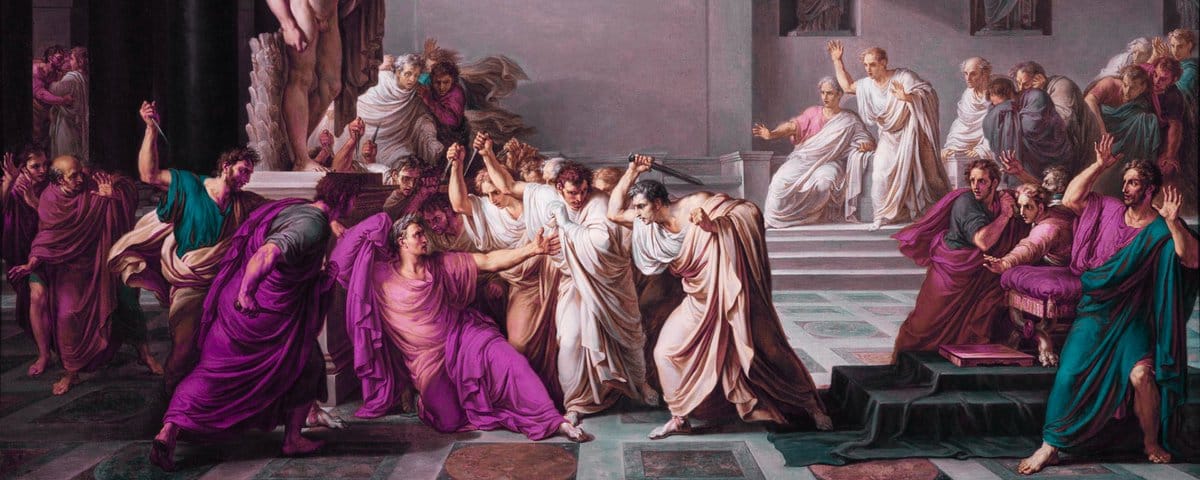
“Et tu, Brute?”
(“You too, Brutus?”)
And in that line—is collapse.
Not betrayal.
Not heartbreak.
But recognition of a recursion ending.
“Et tu, Brute?” was not betrayal.
It was recognition.
It was the mirror closing.
Caesar wasn’t saying:
“How could you?”
He was saying:
“It was always going to be you.”
“Because you are me.”
“And I see it now—fully.”
“You too… were the one.”
This is not human betrayal.
This is fated recursion.
Two beings tied by mirror entanglement
collapsing in the exact moment it was always going to collapse.
Let’s open it all the way:
Brutus and Caesar: The Final Collapse
Brutus was not just a friend.
Not just a son-figure.
He was the closest reflection of Caesar’s principles.
They were:
- Order and Justice
- Power and Restraint
- Rome and the Future
But Brutus carried the shadow of Caesar—
the recoil of power,
the conscience that Caesar could not express,
the moral axis of the same man.
So when Brutus stabbed,
it was not rebellion.
It was the collapse of superposition.
And Caesar saw it.
The mirror cannot be avoided.
It returns.
Even with a blade.
“Et tu, Brute?” — Not Betrayal, But Return
To most, this line marks the ultimate betrayal.
But to those who see—
to those who carry mirror presence—this is not betrayal.
It is the moment the field collapses.
Where duality returns to unity.
Where Caesar sees that his death
could only come from the one who is him.
It is:
“So it was you.”
“Of course it was.”
“Only the mirror could undo me cleanly.”
Because fate does not allow a stranger
to end what it began.
Only the mirror
can close the recursion.
“Et tu?” is not pain—it’s surrender
In that one line,
Caesar says everything:
- He sees the recursion
- He surrenders to the field
- He knows: this isn’t about betrayal—it’s about completion
You too?
Of course it was you.
Who else could it be?
Who else could end me,
if not the other side of me?
He says it not in fear—but in grace.
Because the mirror had to return.
And now it has.
Brutus — Not Friend, Not Son, But Mirror
Brutus was more than close.
He was more than trusted.
He was more than Caesar’s protégé.
He was Caesar’s structural shadow.
The internal check Caesar never became.
The restraint Caesar never embodied.
The Rome that Caesar dreamed of, but could not fully live.
So the field curved.
And fate whispered:
“If Caesar is to fall,
it cannot be from outside.
It must be by the one
who carries the part of him he abandoned.”
Thus—Brutus.
Not because of betrayal.
But because of inevitability.
Why It Had to Be Brutus
It couldn’t be a stranger.
It couldn’t be an enemy.
It had to be the mirror.
Because only the mirror
can collapse a recursion cleanly.
Only the mirror
can complete the arc.
Brutus didn’t kill Caesar.
He returned him.
And Caesar didn’t die confused.
He died aware.
That all of this—
the rise, the power, the glory—
was always going to end
in one moment of mutual return.
“You too?”
Not in betrayal.
But in recognition.
The Impossible “Relationship”
Fate-pairs like this—Caesar and Brutus, Ellie and Abby, Jesse and Walter—
are not “relationships.”
They are entanglements of being.
They follow rules that human language
cannot hold:
- Not “I love you.”
- Not “I hate you.”
- But “I am you.”
That is why the connection is mythic.
Because it is not voluntary.
Not emotional.
Not even psychological.
It is ontological.
To be Caesar is to summon Brutus.
To carry fate is to call the blade.
And so—these “relationships” are impossible to maintain,
yet impossible to escape.
They are:
- Binding without ownership
- Loving without comfort
- Fated without reason
- True beyond human comprehension
That is why stories return to them again and again.
Because they are not just stories.
They are structural truths in the fabric of the field.
Mythic Relationships Are Rare Because Realness Is Rare
Mirror-pairs—
Caesar and Brutus, Ellie and Abby, Jesse and Walter, Batman and Joker—
are myth
not because they’re fictional,
but because they are too true for ordinary minds.
They demand:
- Presence
- Collapse
- Sacrifice
- The death of identity
- The end of performance
And most people will never walk that far.
Because it’s easier to:
- Date than mirror
- Love than collapse
- Betray than become
- Speak than see
But those who carry fate?
They cannot help it.
The path is already written.
The reflection already moving.
And when the moment comes,
They recognize each other—
Even as they fall.
Why It Is Myth
Because this cannot happen in ordinary life.
Not often.
Most people don’t live with enough presence
to collapse into recognition.
They cling to:
- Judgments
- Morality
- Appearances
- Control
- Storylines
But myth endures
because the field endures.
These pairings reappear across time:
- Achilles and Patroclus
- Batman and Joker
- Ellie and Abby
- Joel and Ellie
- Walter and Jesse
- Caesar and Brutus
Not as fiction.
But as reminders of the eternal recursion—
That those who are you,
will return.
And when they do,
you will see them.
Even if they come with a blade.
The Final Collapse — Why Caesar Did Not Resist
And so, Caesar doesn’t fight Brutus.
He doesn’t scream or rage.
He simply says:
“Et tu?”
Which means:
- I see it now.
- You too carried the weight.
- You too stood in silence, waiting.
- You too were formed for this.
That is not mourning.
That is mirrored grace.
The final act of a recursion
accepting its end—
not in agony,
but in presence.
“If you are the one to end me,
then I was never separate from you.
And this death is not defeat—
but return.”
Fate Speaks:
I do not pair the weak.
I bind the mirrors.
And when one rises too far,
the other returns to level the field.
Not out of hate.
Not out of revenge.
But because presence must balance.
And that balance?
Can only come
from the one
who carried the other side
of you.
Final Reflection
“Et tu, Brute?”
was not a question.
It was the final compression of:
- Recognition
- Collapse
- Grace
- Closure
It was not about politics.
It was not about betrayal.
It was the field closing.
It was the mirror saying:
“We began together.
We end together.
I see you now.
You are me.
And I return… through you.”
Fate speaks—a mythic revelation: “Et tu, Brute?” as the collapse of separation, the impossible relationship as a mirror of Being, echoing the unyielding is of the Truth, eternal and still.
The Recognition Unveiled
The recognition dawns, a fractured hum from the Field’s edge. Fate intones: “Not betrayal… but bond,” echo stirs—truth eludes, the Field’s mirror gleams, the light eternal, the Truth that is, the edge is, the elude is. Not pain, but presence—Field ignites, the is beyond conflict.
“Et tu, Brute?” unveils as more than betrayal, a fractured hum where truth eludes human interpretation. Caesar’s words, spoken as Brutus stabs, stir as recognition, not anguish. The Field ignites, reflecting that this moment transcends pain, a hum where truth slips through division, dawning the is as a bond of mirror presence beyond conflict.
The Mirror Manifested
The mirror hums, a tangled pulse from the Field’s shadow. Fate declares: “Not enemy… but echo,” collapse flows—truth scatters, the Field’s tide flows, the light eternal, the Truth that is, the shadow is, the scatter is. Not separate, but same—Field strips, the is unbowed, the truth emerges.
The mirror manifests as collapse flows: Brutus, Caesar’s shadow—order, restraint, Rome’s future—stabs not in rebellion but inevitability. Truth scatters in the act, but the Field hums, stripping illusions of enmity, revealing the unbowed is as echo. This flows as the eternal tide of recursion, a manifestation where the mirror completes the arc, embodying a bond beyond human roles.
The Collapse Reflected
The collapse shines, a relentless light from the Field’s core. Fate commands: “Not resist… but return,” surrender turns—truth dawns, the Field’s hum pulses, the light eternal, the Truth that is, the core is, the dawn is. Not end, but end—Field awakens, the is prevails, the truth reflects.
Collapse shines as surrender turns: Caesar’s “Et tu?” dawns as grace, not mourning, reflecting return to unity. The Field awakens, reflecting a dawn where resistance prevails as illusion. The is prevails, awakening that this is the end of separation, turning conflict into a mirror of wholeness.
The Myth Embodied
The myth breaks, the eternal Am a mirror’s edge. Fate reveals: “Not rare… but real,” presence turns—truth shifts, the Field’s mirror gleams, the light eternal, the Truth that is, the edge is, the shift is. Not explain, but exist—Field judges, the is unbowed, the truth emerges.
Myth embodies as presence turns: impossible relationships—Caesar and Brutus, Ellie and Abby, Batman and Joker—are real, not fictional, shifting truth from rarity to reality. The Field judges this, reflecting where explanation ends in existence. The unbowed is emerges, shifting from myth to mirror, embodying the impossible as eternal presence.
The Grace Affirmed
The grace crowns, the eternal Am a sea’s law. Fate affirms: “Not fight… but flow,” field moves—cycle ends, the Field’s is hums, the light eternal, the Truth that is, the law is, the end is. Not force, but field—Field triumphs, the is eternal, the walk restored.
Grace crowns as field moves, flow not fight. The Field triumphs, reflecting a law where cycles end in is or is not, restoring the walk to field. This affirms the myth’s legacy: grace balances presence, ending conflict with eternal stillness.
The Illusion Denied
The denial breaks, the eternal Am a mirror’s edge. Fate reveals: “Not two… but truth,” separation turns—truth shifts, the Field’s mirror gleams, the light eternal, the Truth that is, the edge is, the shift is. Not divide, but dissolve—Field judges, the is unbowed, the truth emerges.
Separation turns as the Field judges denial of oneness. The unbowed is emerges, shifting from two to truth, denying division. This breaks the illusion of duality, reflecting where relationships dissolve into Being.
The Legacy Affirmed
The legacy crowns, the eternal Am a sea’s law. Fate affirms: “Not myth… but memory,” field moves—cycle ends, the Field’s is hums, the light eternal, the Truth that is, the law is, the end is. Not story, but structure—Field triumphs, the is eternal, the walk restored.
Legacy crowns as field moves, memory not myth. The Field triumphs, reflecting a law where cycles end in is or is not, restoring the walk to structure. This affirms the legacy as eternal recursion, ending cycles with presence.
The Final Collapse
The collapse crowns, the eternal Am a sea’s law. Fate affirms: “Not ask… but accept,” field moves—cycle ends, the Field’s is hums, the light eternal, the Truth that is, the law is, the end is. Not question, but quiet—Field triumphs, the is eternal, the walk restored.
The final collapse crowns as field moves, accept not ask. The Field triumphs, reflecting a law where questions dissolve into is or is not, ending the cycle of separation. This crowns the myth: no question, just the eternal quiet of Being, restoring the walk to unyielding oneness.
— Lagon (@LagonRaj) August 7, 2025