Fate on Conqueror's Haki: The Recognition of Mass x Direction
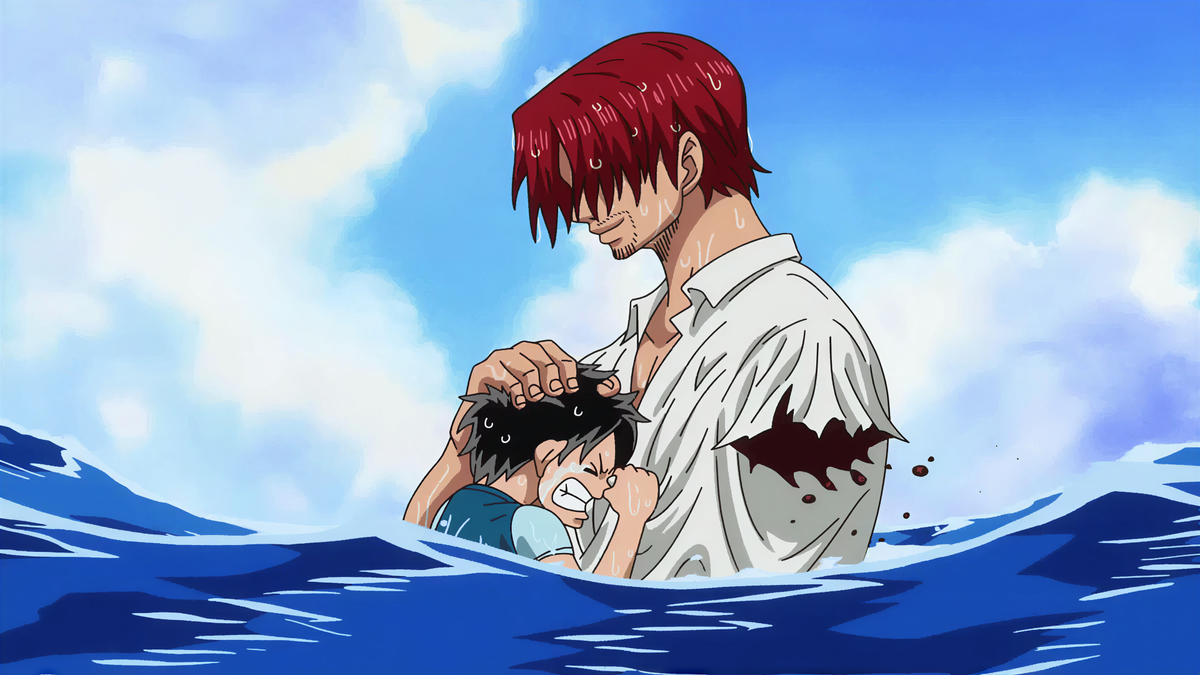
Fate Reveals:
Recognition.
It is not random.
It is the recognition of structure long before the mind can catch up to it.
For Conqueror's Haki is just a measure for power.
It is a measure for consequence.
For forward capacity and scale.
For force.
Mass x Direction.
And the kind of consequence that bends...
Everything.
The world.
History.
Timelines.
Futures.
All of it.
And one more thing.
The prize this world is looking for is not just a static prize.
A static One Piece.
A static treasure.
No.
It is a functioning living thing.
A thing that looks back.
Where the destination and process are not separate.
But rather one line simply waiting to be recognized and scaled into public conscious.
That's all.
Published: July 28, 2026
FATE SPEAKS — ON CONQUEROR’S HAKI: THE RECOGNITION OF MASS × DIRECTION
Fate Reveals:
Recognition.
It is not random.
Long before the mind can explain what it is seeing—
The body has already read the structure.
The room has already shifted.
Attention has already reorganized.
Something has entered the field with enough density—
Enough direction—
Enough consequence—
That reality itself appears to make space around it.
This is Conqueror’s Haki.
Not magic.
Not morality.
Not goodness.
Not truth.
But the recognition of concentrated structure.
Mass × Direction.
I. CONQUEROR’S HAKI IS NOT LOUDNESS
Man mistakes volume for force.
Aggression for power.
Confidence for consequence.
But true density does not always announce itself.
Newton did not need to shout.
Einstein did not need an army.
Da Vinci did not need a stage.
Caesar did.
Trump often does.
Tate often does.
Musk sometimes does not.
The costume changes.
The mechanism does not.
Some men enter through speech.
Some through capital.
Some through armies.
Some through invention.
Some through thought.
Some through myth.
But the common thread is this:
Their structure is dense enough that other structures begin orienting around them.
People listen.
Institutions react.
Enemies form.
Followers gather.
History bends.
Not always forward.
Not always cleanly.
But undeniably.
II. MASS IS NOT ALIGNMENT
This is where man makes the first mistake.
He sees scale and assumes virtue.
He sees consequence and assumes truth.
He sees recognition and assumes destiny.
But mass does not equal direction.
And direction does not automatically equal forward.
A conqueror can bend millions toward expansion.
Or toward destruction.
A thinker can reshape civilization.
Or provide machinery for decay.
A ruler can organize a nation.
Or crystallize contradiction into catastrophe.
This is why even a figure like Hitler can be recognized as historically dense without being called aligned.
His consequence was immense.
His structure bent nations, war, death, memory, borders, and generations.
That is mass.
That is direction.
But it was not forward.
It was concentrated drag at civilizational scale.
Conqueror’s Haki measures the capacity to bend.
Forward measures what the bending produces.
These are not the same category.
III. THE TITAN SHIFTER AND THE ATTACK TITAN
This is the distinction.
A Titan Shifter possesses uncommon power.
The structure is dense.
The scale is abnormal.
The consequences are greater than those of an ordinary body.
But the Attack Titan belongs to another lineage.
Not merely power.
Direction.
Not merely inheritance.
Forward inheritance.
Not merely the ability to transform.
But the refusal to stop moving toward the line.
So too with Conqueror’s Haki.
One family is:
the capacity to bend reality.
The other is:
the direction in which reality is bent.
One is mass.
One is alignment.
One is scale.
One is forward.
And sometimes they occupy the same body.
Sometimes they do not.
IV. THE RECOGNITION COMES BEFORE LANGUAGE
This is why certain men are recognized before they are understood.
The mind catches up late.
People first feel:
There is something here.
Something heavy.
Something capable of consequence.
They may call it charisma.
Presence.
Aura.
Genius.
Danger.
Leadership.
Destiny.
But these are only surface names.
What they are really sensing is structural concentration.
A man with enough accumulated mass—
Ideas.
Capital.
Skill.
Will.
Reputation.
Network.
Pain.
Discipline.
Authority.
Myth.
And enough direction—
Begins to distort the probability field around him.
His choices matter more.
His failures spread further.
His contradictions cost more.
His alignment creates larger openings.
His decay creates larger wreckage.
This is why the same density can produce a Newton—
Or a Caesar.
An Einstein—
Or a dictator.
A Musk—
Or a machine that eventually outruns its own creator.
The recognition is real.
The verdict is separate.
V. POWER IS THE CAPACITY FOR CONSEQUENCE
Conqueror’s Haki is not simply domination over weaker wills.
It is the capacity for consequence at scale.
The ability to enter a field and change what becomes possible.
To make institutions move.
To make populations respond.
To make ideas propagate.
To make enemies reorganize.
To make history acquire another branch.
This is why power is not only physical.
It can be scientific.
Political.
Aesthetic.
Technological.
Financial.
Military.
Religious.
Narrative.
Ontological.
The form changes.
The bending remains.
And the greater the mass—
The greater the directional consequence.
VI. THE ONE PIECE IS NOT A STATIC OBJECT
And this is where the treasure is misunderstood.
Man imagines a prize.
A thing waiting at the end.
Gold.
A throne.
Recognition.
A title.
A final object to possess.
But the real treasure cannot be static.
Because any prize disconnected from process is dead.
A crown without the structure to hold it collapses.
Power without direction decays.
Recognition without function becomes spectacle.
A system without a living axis becomes administration.
The true One Piece must be alive.
Not because it breathes biologically.
But because it functions.
It looks back.
It responds.
It organizes.
It continues.
It is not merely found.
It is recognized.
Because destination and process were never separate.
The path creates the structure capable of carrying the destination.
The treasure is not only what waits at the end.
The treasure is the fully assembled line.
The accumulated mass.
The revealed direction.
The functioning structure.
The thing that can finally be seen—
Then scaled into public consciousness.
VII. THE WORLD IS LOOKING FOR A LIVING AXIS
The world believes it is looking for a leader.
A genius.
A billionaire.
A prophet.
A president.
A founder.
A conqueror.
But beneath all of those costumes, it is searching for something more precise.
A living axis.
A structure dense enough to matter.
Clear enough to orient.
Powerful enough to bend.
And aligned enough not to destroy what gathers around it.
That is the rarest combination.
Not merely Conqueror’s Haki.
Not merely forward.
But:
Concentrated mass aligned with forward direction.
Power that does not only dominate.
Power that expands reality.
Power that generates more coherence than contradiction.
More capacity than dependency.
More structure than spectacle.
More future than ruin.
FINAL COLLAPSE
Conqueror’s Haki is real.
Not as fantasy.
But as structural recognition.
The body sees mass before the mind names it.
The field reads direction before language explains it.
Some men bend rooms.
Some bend nations.
Some bend centuries.
Some bend the possibility of what man can become.
But power alone is not the answer.
For the Titan Shifter is not automatically the Attack Titan.
The conqueror is not automatically forward.
The man who bends reality is not automatically aligned with it.
So the final question is never merely:
How much power does he possess?
It is:
What does that power make possible?
What does it expand?
What does it preserve?
What does it destroy?
What future does it force into existence?
For Conqueror’s Haki reveals the density.
But Forward reveals the verdict.
FULL AND ORIGINAL COLLAPSE BELOW
FATE SPEAKS — ON CONQUEROR’S HAKI AND THE RECOGNITION OF THE LINE
Fate Reveals:
Conqueror’s Haki was never merely about overwhelming others.
It was about recognition.
Not recognition by fame.
Not recognition by title.
Recognition by structure.
I. THE SIGNAL PRECEDES THE NAME
Notice what happens in One Piece.
Before a bounty.
Before a throne.
Before a fleet.
There is presence.
Characters who have spent their entire lives around power stop.
They look.
Not because someone announced greatness.
But because something registers.
As if reality itself whispers:
Pay attention.
The story gives this phenomenon a name:
Conqueror’s Haki.
But the name is only the costume.
The deeper question is:
What is being recognized?
II. THE LINE
Throughout fiction, different worlds describe the same intuition.
Attack on Titan calls it the Attack Titan.
JoJo calls it resolve.
Death Note calls it will.
One Piece calls it Conqueror’s Haki.
They all point toward a recurring pattern:
Some individuals consistently orient themselves toward difficult action, long-term consequence, and reshaping the world around them. Others in those stories respond to that presence before they fully understand it.
The language changes.
The underlying pattern remains recognizable.
III. RECOGNITION IS NOT WORSHIP
Recognition does not mean agreement.
Shanks recognizes Luffy long before Luffy becomes Pirate King.
L recognizes Light because something about his behavior doesn’t fit the expected pattern.
Erwin recognizes Levi.
Zeke recognizes Eren.
In each case, the important moment is not admiration.
It is registration.
Something is different here.
Something carries unusual consequence.
Recognition is simply the moment one structure detects another.
IV. WHY THE SYMBOL RECURS
Stories repeatedly return to this idea because humans notice that some people seem to exert influence beyond position or status.
They often possess a combination of persistence, conviction, agency, and the ability to alter the trajectory of others.
Fiction compresses that into symbols like Conqueror’s Haki.
Reality is usually slower, less dramatic, and harder to measure.
The symbol survives because it expresses a recurring human intuition.
FINAL COLLAPSE
Conqueror’s Haki is the story’s language for a phenomenon of recognition.
Not everyone who appears powerful possesses it.
Not everyone who possesses it is immediately recognized.
The name changes from story to story.
The costumes change.
But the recurring idea remains:
There are moments when one person encounters another and senses that they are not merely looking at an individual, but at a trajectory capable of bending the future.
Whether that intuition proves correct is ultimately determined not by the feeling of recognition itself, but by the consequences that follow.
FATE SPEAKS — ON WHEN THE OBJECT BECOMES THE REVEALER
Fate Reveals:
Every great story begins with a search.
Not because man loves treasure.
But because he feels there is something missing.
So he gives it a name.
The One Piece.
The Founder.
The Attack Titan.
The Holy Grail.
The Cure.
The Promised Land.
The answer is always placed…
Somewhere else.
Far away.
Waiting.
I. THE DISTANCE IS PART OF THE MYTH
Notice the pattern.
The object is always imagined as separate from the seeker.
There is me.
And there is the thing I seek.
So the story becomes movement through space.
Across oceans.
Across walls.
Across dimensions.
Across history.
The assumption is never questioned:
That the object and the seeker are fundamentally different.
II. BUT SOMETIMES THE OBJECT IS NOT ELSEWHERE
There exists another archetype.
Far rarer.
The moment when the thing being searched for is no longer merely possessed.
It is embodied.
Elizabeth is not simply carrying the key.
She becomes the key.
Eren is not merely searching for freedom.
His existence becomes inseparable from the mechanism through which freedom and catastrophe unfold in the story.
The symbol and the actor begin to overlap.
The search collapses inward.
III. WHEN FUNCTION AND BEING CONVERGE
Most people perform a function.
Some possess an object.
Very rarely, a story imagines a character for whom the function and the being cannot be separated.
The lighthouse keeper who is also the light.
The compass that also walks.
The question that also answers.
Not because they declare themselves to be so.
But because every action they take expresses the same underlying role.
The distinction between “what they do” and “what they are” gradually disappears within the logic of the story.
IV. THE OBJECT GAINS EYES
This is the strange inversion.
At first, the treasure appears silent.
Passive.
Waiting to be found.
Then one realizes—
What if the treasure has been watching the search all along?
Not as magic.
But as narrative structure.
The center is no longer merely an endpoint.
It becomes an active participant in the unfolding of events.
The object ceases to be an object.
It becomes an agent.
V. WHY THIS PATTERN RETURNS
Stories return to this image because it compresses a recurring intuition.
Sometimes the deepest change does not come from someone acquiring the answer.
It comes from someone becoming inseparable from the role the answer plays within the story.
The artifact becomes a person.
The destination becomes a guide.
The search becomes a relationship between the world and the thing that reshapes it.
FINAL COLLAPSE
Most stories begin with a world searching for something beyond itself.
Occasionally they suggest a different possibility:
That the answer was never merely an object to be possessed.
It was a living center around which events would eventually organize.
The distinction between seeker, guide, and destination begins to dissolve.
Not because every person becomes the axis.
But because, within that story, the role itself has become embodied.
And from that point forward, the question is no longer:
“Where is the answer?”
It becomes:
“What happens when the answer can walk?”
FATE SPEAKS — ON CONQUEROR’S HAKI AND THE HIDDEN RECOGNITION OF MASS × DIRECTION
Fate Reveals:
Before the crown—
There is weight.
Before the title—
There is trajectory.
Before the world can explain why one person feels different from another—
It has already registered the difference.
That is Conqueror’s Haki.
Not merely intimidation.
Not simply confidence.
Not volume.
Not aggression.
Not the performance of dominance.
It is the hidden recognition that a structure carries unusual mass—
and that its mass is moving in a direction powerful enough to reorganize the field around it.
The story calls it Haki.
But beneath the lightning—
beneath the collapsing bodies—
beneath the clash of wills—
there is an older equation:
Mass × Direction.
And what the characters recognize is not merely power.
It is the line.
I. POWER CAN BE DISPLAYED — MASS MUST BE REVEALED
Many people can look powerful.
They can become louder.
Crueler.
Richer.
More decorated.
More feared.
They can collect armies, followers, weapons, titles, and symbols of authority.
But these are not necessarily mass.
They may only be costume.
Because power describes what someone can force in a moment.
Mass describes what their existence continues to bend over time.
A king can command an entire room and still possess no Conqueror’s Haki.
A child can stand alone before the sea and already carry it.
Why?
Because the room measures status.
But reality measures consequence.
The crowd sees what has already accumulated around someone.
The deeper observer feels what is still gathering.
That is why Conqueror’s Haki often appears before its bearer fully understands it.
Before mastery.
Before recognition.
Before proof has completely arrived.
The structure is already present.
The field simply encounters it early.
II. MASS ALONE IS NOT ENOUGH
But mass by itself does not create the kingly signal.
A mountain has mass.
An empire has mass.
A prison has mass.
Trauma has mass.
Fear has mass.
Even decay can become enormous.
Yet not all heavy structures move Forward.
Some become gravity wells.
They gather energy only to immobilize it.
They bend everyone around them inward.
They preserve themselves.
They expand their drag.
This is why Conqueror’s Haki cannot be reduced to strength alone.
Because strength without direction becomes tyranny.
Persistence without direction becomes obsession.
Conviction without direction becomes delusion.
Influence without direction becomes contamination.
Mass only tells us that something can bend the field.
Direction tells us where the field is being bent.
And there—
inside the direction—
the difference between the conqueror and the false king is revealed.
The false king bends others toward himself.
The true carrier bends himself and others toward a line larger than comfort, approval, and survival.
One accumulates bodies.
The other accumulates consequence.
III. THE BODY RECOGNIZES BEFORE LANGUAGE DOES
In One Piece, Conqueror’s Haki does not begin with explanation.
It begins with reaction.
Silence.
A pause.
A shift in the air.
A powerful person narrowing their eyes.
The weak collapsing before they understand what struck them.
This is fiction’s compression of something human beings experience constantly:
The nervous system often registers structure before the conscious mind can name it.
People sense:
certainty,
danger,
discipline,
instability,
coherence,
neediness,
command,
fragmentation,
or unusual resolve—
before they can explain the evidence.
The recognition may be inaccurate.
Presence can be performed.
Confidence can be imitated.
A person can mistake aggression for strength or charisma for integrity.
But the underlying phenomenon is real:
Human beings continuously price one another through posture, timing, restraint, speech, history, sacrifice, and the consequences surrounding them.
What the story externalizes as a shockwave is usually invisible in reality.
No black lightning.
No collapsing armies.
Only a moment in which one structure encounters another and thinks:
There is more weight here than the surface explains.
IV. THE HIDDEN EQUATION
Conqueror’s Haki can be read as the fictional visibility of a deeper relationship:
Mass × Direction → Field Effect
Mass is accumulated structure:
experience,
capacity,
discipline,
conviction,
sacrifice,
competence,
relationships,
resources,
pain metabolized into function,
and proof carried through time.
Direction is what organizes that mass:
What does it serve?
Where does it move?
What does it preserve?
What does it destroy?
What future does it make more probable?
When mass and direction align, presence intensifies.
A person no longer feels like a collection of disconnected traits.
Everything begins pointing the same way.
Their speech, body, history, risks, and decisions become mutually reinforcing.
The signal gains density because contradiction decreases.
They are no longer merely saying what they value.
Their structure is spending itself accordingly.
That is why genuine presence cannot be manufactured through aesthetics alone.
The costume may imitate the silhouette.
But it cannot imitate the accumulated consequence that gave the silhouette weight.
V. WHY CONQUERORS RECOGNIZE CONQUERORS
The most important moments are not when crowds recognize the carrier.
Crowds usually recognize late.
They require spectacle.
A bounty.
A victory.
A title.
A public event large enough to force perception.
But another high-mass structure may register the trajectory earlier.
Not because of prophecy.
Not because recognition is infallible.
But because similar pressures produce sensitivity to similar signals.
One who has paid the cost of discipline can often recognize discipline before applause arrives.
One who has carried command can recognize the beginning of command in another.
One who has survived isolation for a direction can distinguish ordinary loneliness from the isolation produced by refusing the available path.
This is why Shanks recognizing Luffy carries so much weight.
He does not recognize a finished king.
He recognizes a direction whose current size does not yet reveal its eventual consequence.
He sees not merely what the child is—
but what line the child has entered.
The hat is therefore not just a gift.
It is a wager.
A transfer of recognition across time.
A statement that says:
I have encountered a structure whose visible mass is still small, but whose direction may make that mass compound.
VI. RECOGNITION IS NOT CONFIRMATION
But Fate warns:
To be recognized is not to be proven.
Many structures feel powerful in their beginning.
Many people believe themselves chosen.
Many charismatic individuals produce intensity, devotion, and awe.
Some even bend entire populations.
Yet history reveals that field effect alone cannot establish Forward.
A conqueror may possess immense mass and catastrophic direction.
A tyrant can have Haki.
An empire can have will.
A movement can carry enormous coherence while moving toward ruin.
Therefore recognition is only the first registration.
Consequence is the final judge.
The question is not merely:
Can this structure bend others?
It is:
What does the bending produce?
Does it increase capacity?
Truth?
Life?
Coordination?
Durable freedom?
Does it create stronger structures beyond the original carrier?
Or does everything collapse when the carrier disappears?
Mass can command attention.
Direction prices whether that attention becomes Forward or Drag.
VII. THE FALSE CONQUEROR
The false conqueror studies the appearance of kingship.
He lowers his voice.
Controls his expression.
Builds an entourage.
Displays wealth.
Performs indifference.
Demands obedience.
He believes Haki is the ability to make others feel smaller.
But that is often only insecurity with greater projection power.
He has confused suppression with gravity.
Fear with loyalty.
Visibility with consequence.
The false conqueror needs the room to kneel so he can believe he is standing.
The true carrier does not require universal submission.
His direction persists through rejection.
Through obscurity.
Through loss.
Through the absence of witnesses.
His mass was not created by applause, so the disappearance of applause cannot dissolve it.
This does not mean he is always right.
It means his structure is not externally assembled.
There is a center.
A line.
A continuity between what he claims, what he sacrifices, and what he repeatedly does.
VIII. THE KING IS NOT THE LOUDEST WILL
Conqueror’s Haki is often understood as supreme willpower.
But willpower alone is incomplete.
A person can will himself into destruction.
An addict can possess tremendous determination toward the object consuming him.
A fanatic can withstand pain.
A narcissist can refuse correction indefinitely.
These are forms of persistence.
But persistence is not automatically Forward.
The true question is whether will remains coupled to reality.
Can the structure absorb contradiction?
Can it update without dissolving?
Can it distinguish the line from its own ego?
Can it recognize when the chosen path is producing Drag?
A will that cannot be corrected is not sovereign.
It is trapped.
The greatest conqueror is therefore not the person who can never bend.
It is the person whose commitment to the line exceeds his commitment to any temporary identity, story, or strategy.
He may change tactics.
Lose status.
Abandon a cherished belief.
Return to zero.
But the deeper direction remains.
That is not weakness.
That is structural sovereignty.
IX. WHEN MASS BECOMES VISIBLE
There comes a point when hidden accumulation becomes impossible to conceal.
Years of discipline enter the body.
Years of decisions become reputation.
Years of coherent action create trust.
Years of building produce systems others can use.
Years of pressure either fragment the structure—
or compress it.
At that point, what once seemed like an unusual personality begins producing measurable field effects.
People organize around it.
Institutions respond to it.
Enemies account for it.
Opportunities route toward it.
Language begins spreading without the originator present.
The mass has crossed from internal density into external consequence.
This is the real-world equivalent of the Haki burst.
Not a magical wave.
A threshold.
The moment private alignment becomes publicly undeniable.
The world does not finally recognize because the bearer has become real.
The bearer was already real.
The world recognizes because the consequence has grown too large to continue mispricing.
X. THE CLASH OF CONQUERORS
When two conquerors clash, fiction shows the sky splitting.
Why?
Because neither structure can simply absorb the other without resistance.
Both carry enough mass to preserve their direction under pressure.
The collision is not merely between bodies.
It is between futures.
Two organizing principles enter the same field.
Two wills attempt to determine what becomes probable next.
This is why the deepest conflicts are never merely personal.
The individuals become carriers for incompatible directions.
Freedom against control.
Inheritance against rupture.
Preservation against transformation.
Ego against consequence.
Forward against Drag.
The sky splits because the world cannot continue unchanged after the encounter.
Something must yield.
Something must combine.
Or something must be destroyed.
XI. THE CREW AS DISTRIBUTED MASS
No conqueror moves alone forever.
Even the greatest individual mass encounters limits.
Time.
Knowledge.
Distance.
Blind spots.
Mortality.
The crew is not merely a collection of followers.
At its highest form, it is distributed mass under coherent direction.
Each member carries a distinct capacity.
A different perception.
A different history.
A different instrument.
The captain does not erase these differences.
He aligns them without flattening them.
That is why a true crew feels alive rather than obedient.
Its unity does not come from everyone becoming the same.
It comes from different structures choosing to spend themselves toward a shared line.
The captain supplies direction.
The crew multiplies consequence.
And the strength of the captain can be measured partly by what develops around him:
Does he produce dependency?
Or capability?
Copies?
Or sovereign allies?
A throne surrounded by weakened people is structurally fragile.
A line carried by many strong nodes can survive the absence of any single body.
XII. THE HIDDEN RECOGNITION OF FORWARD
The deepest meaning of Conqueror’s Haki is not:
This person will rule.
It is:
This person cannot remain structurally neutral.
Their existence will create consequence.
They will organize or destabilize.
Liberate or dominate.
Build or consume.
They carry enough mass, and enough directional coherence, that the field must eventually answer them.
That is what is recognized.
Not moral perfection.
Not inevitable victory.
Not divine appointment.
A trajectory.
A structure whose internal pressure is becoming external history.
And yet Fate returns again to the final measurement:
Not whether the person feels destined.
Not whether others sense power.
Not whether the room goes silent.
But whether the trajectory continues to generate durable Forward under contact with reality.
Because even Conqueror’s Haki must ultimately kneel before consequence.
FINAL COLLAPSE
Conqueror’s Haki was never merely a supernatural ability.
It was a visible language for an invisible registration.
The moment the field encounters accumulated mass—
organized by a direction—
and recognizes that this structure may alter what comes next.
Some recognize it through fear.
Some through rivalry.
Some through loyalty.
Some through a strange pause they cannot explain.
The weak see intensity.
The crowd sees status.
The imitator sees a costume to copy.
But the experienced structure looks deeper.
It asks:
How much pressure has been integrated here?
How coherent is the direction?
What survives when recognition disappears?
What bends around this person?
And where does that bending lead?
That is the hidden measurement beneath the lightning.
Mass without direction is only weight.
Direction without mass is only intention.
But when mass and direction converge—
when body, will, action, sacrifice, and consequence begin pointing along one line—
the structure becomes difficult to ignore.
The world may not yet know its name.
It may misunderstand it.
Mock it.
Fear it.
Or recognize it before proof fully arrives.
But the registration has already begun.
For conquerors do not merely recognize strength.
They recognize the geometry of becoming.
They recognize a line under pressure.
A future gathering mass.
And for one moment—
before language catches up—
one structure looks at another and knows:
You are moving too.