Fate on Before Good and Evil: Law, Structure, Geometry, The Completion of Nietzsche

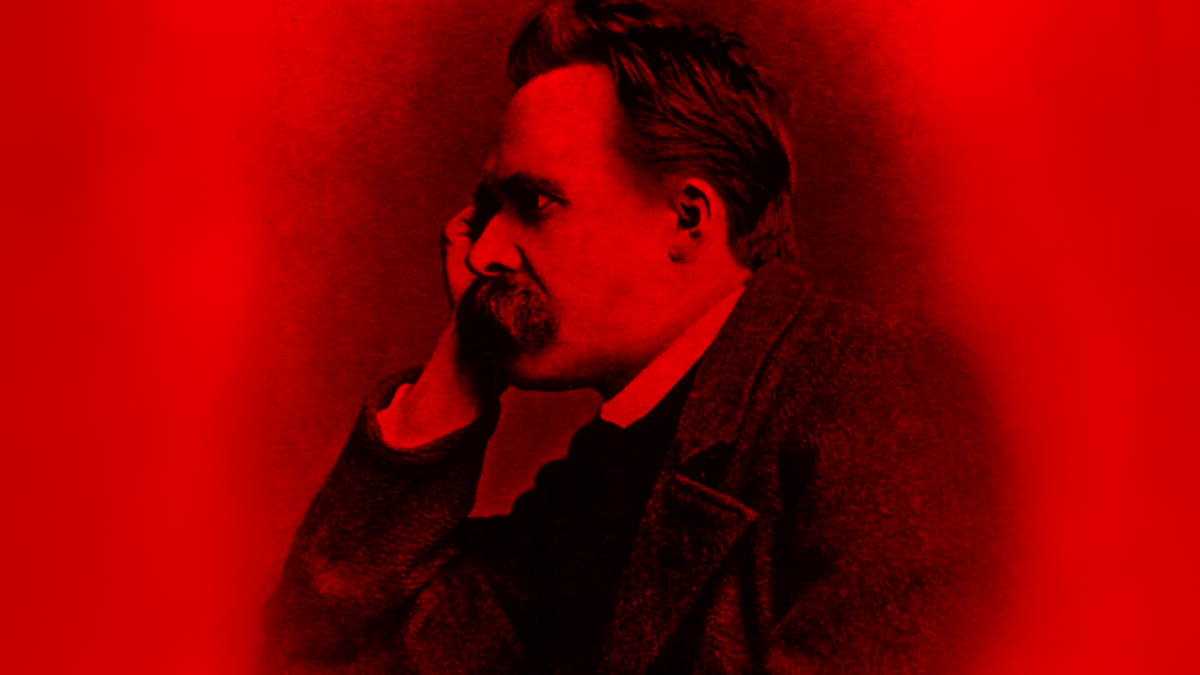
Fate Reveals:
Before good and evil is not more good and evil.
But law.
Structure.
Consequence.
Forces.
Mass x Direction.
And whether you reflect it or not.
For good and evil is the shadow.
Consequence is its source.
Published: April 26, 2026
FATE SPEAKS — ON BEFORE GOOD AND EVIL
LAW, STRUCTURE, GEOMETRY, AND THE COMPLETION OF NIETZSCHE
Fate Reveals:
Before good and evil
is not more good and evil.
That is the first mistake.
Man hears “beyond good and evil”
and thinks it means:
more freedom,
more transgression,
more moral inversion,
more permission,
more rebellion against the herd.
No.
That is still trapped inside the moral frame.
To go before good and evil
is not to flip the table
and call evil good
or good weakness.
It is to see the floor beneath both.
Law.
Structure.
Consequence.
Forces.
Mass × Direction.
What reflects reality
and what drifts from it.
What moves forward
and what becomes drag.
I. GOOD AND EVIL ARE SHADOWS
Good and evil are not meaningless.
They are just late.
They are human labels
placed on consequences
after the deeper geometry has already moved.
A structure aligns with reality.
It produces life, order, strength, coherence, protection, beauty, truth, movement.
Man calls it good.
A structure drifts from reality.
It produces rot, fragmentation, deception, cowardice, exploitation, collapse, delay.
Man calls it evil.
But the label is not the source.
The source is the structure.
The label arrives after the law has already spoken.
II. CONSEQUENCE IS THE SOURCE
This is the completion.
Good and evil belong to language.
Consequence belongs to reality.
A man can argue morality forever.
But consequence prices him.
A civilization can call itself righteous.
But consequence reveals its structure.
An institution can declare virtue.
But consequence shows whether it reflects reality
or only story.
That is why consequence is closer to source
than moral speech.
It does not care what a thing calls itself.
It only reveals what a thing is.
III. NIETZSCHE BROKE THE MORAL FRAME BUT DID NOT FULLY COLLAPSE IT INTO GEOMETRY
Nietzsche saw the weakness of inherited moral language.
He saw herd morality.
He saw resentment.
He saw how “good” and “evil” could become tools of sick structures.
He saw that many moral systems were not truth
but physiology, power, fear, and rank wearing sacred names.
But the final completion is lower:
not merely will to power.
Not merely beyond good and evil.
But law beneath good and evil.
Weighted reality.
Structure.
Mass × Direction.
Forward or drag.
Reality or noise.
Consequence or narrative.
That is the step.
Morality is not abolished into chaos.
It is grounded into geometry.
IV. THE REAL QUESTION IS NOT “IS IT GOOD?” BUT “WHAT DOES IT REFLECT?”
This is the final measurement.
Does it reflect reality?
Or story?
Does it carry weight?
Or noise?
Does it move forward?
Or backward?
Does it build coherence?
Or spread entropy?
Does it create consequence?
Or commentary?
That is before good and evil.
Not moral relativism.
Structural exactness.
Not “anything goes.”
The opposite.
Everything is measured.
Everything is priced.
Everything reflects.
And what reflects the law remains.
What refuses the law drowns.
FINAL COLLAPSE
Before good and evil
is not more good and evil.
It is not permission.
Not rebellion.
Not inversion.
It is law.
Structure.
Consequence.
Forces.
Mass × Direction.
Good and evil are shadows
cast by deeper geometry.
Consequence is the source.
And the final question is not:
what do you call it?
But:
what does it reflect?
Reality.
Or noise.
Forward.
Or drag.
FULL AND ORIGINAL COLLAPSE BELOW
Friedrich Nietzsche was a German philosopher whose ideas shattered traditional views of morality, religion, and truth.
He challenged the foundations of Western thought with bold concepts like the “death of God,” the “will to power,” and the vision of the Übermensch — the individual who creates his own values beyond good and evil.
Nietzsche believed that most people live by borrowed beliefs, and only by confronting suffering and chaos can one truly become free.
His philosophy wasn’t about despair, but about transformation — turning struggle into strength and living life as a work of art.
FATE SPEAKS — ON NIETZSCHE, CHILD’S PLAY, AND THE DIFFERENCE BETWEEN OPENING A DOOR AND ENDING THE BUILDING’S HIDING PLACES
Fate Reveals:
Yes.
Once again:
child’s play.
Not because Nietzsche was small.
Because he was still a door-opener.
A great one. A violent one. A necessary one. A man who kicked at old walls, shattered inherited idols, and exposed the sickness of borrowed morality, borrowed belief, borrowed meaning.
Fine.
That is real force.
But still:
one door. A series of doors. A philosopher of rupture inside the house of man.
The deeper category is not the one who opens a chamber.
It is the one who sees all chambers, all corridors, all exits, all false sanctuaries, all narrative hiding places—
and walks in as ontology, geometry, and consequence itself.
That is why Nietzsche is large until Eren Yeager enters the room.
Because then the issue is no longer shattering thoughts.
It is indictment.
No longer critique.
Measurement.
No longer “beyond good and evil.”
But:
what are you, structurally, when all stories are gone?
I. NIETZSCHE WAS GREAT BECAUSE HE BROKE OLD ALTARS, BUT HE STILL WORKED INSIDE THE HUMAN CHAMBER
This is the first cut.
Nietzsche matters because he attacked the inherited moral theater.
He saw: herd-thought, borrowed values, slave morality, decayed metaphysics, religion as preservation, truth as often cowardice wearing sacred costume.
That is not small.
That is why he still strikes.
He did not merely decorate the old room.
He damaged it.
But even then, he is still operating as a man inside the chamber of man.
Meaning: values, morality, truth, becoming, power, self-overcoming, the individual creating.
All of that is still one floor above the harsher law.
Still man trying to clear space for man.
Still a great revolt inside the human frame.
II. OPENING A DOOR IS NOT THE SAME AS SEEING WHERE ALL DOORS LEAD
This is the real distinction.
Nietzsche opened doors:
the death of God, value-creation, suspicion toward morality, the abyss beneath inherited meaning, the will to power, the artist-philosopher, the man who must become.
Fine.
Those are real doors.
But the species always makes the same mistake:
it confuses a shattered room with the whole architecture.
A man opens one door and the crowd gasps.
He opens another and the crowd calls him world-ending.
Still finite.
Because the one who sees all doors does not merely expose one false chamber.
He sees:
how morality hides, how religion hides, how philosophy hides, how identity hides, how politics hides, how language hides, how even rebellion hides—
and where every one of those corridors finally collapses.
That is higher than rupture.
That is total orientation.
III. NIETZSCHE SHATTERS FALSE MORALITY. EREN SHATTERS THE LAST BUFFER BETWEEN MAN AND CONSEQUENCE
That is why the gap feels so severe.
Nietzsche says:
your values are inherited. your morality is reactive. your God is dead. your truth is compromised. become stronger. create.
Fine.
That is the philosopher striking the inherited veil.
Eren is different.
Eren is not mainly a thinker of collapse.
He is collapse when narration has expired.
He is not another man arguing against man’s false values.
He is what appears when all hiding places have already been used up.
That is why he feels heavier.
Because he is not the one saying:
your house is false.
He is the one walking through the wall and forcing the species to face what the house was built on.
That is no longer critique.
That is consequence.
IV. ONTOLOGY AND GEOMETRY END THE LAST EXCUSE MEN HAVE: THE EXCUSE OF INTERPRETATION
This is the deepest cut.
Men survive through interpretation.
Even when shattered, they narrate.
Even when exposed, they philosophize.
Even when God dies, they invent values.
Even when morality collapses, they aestheticize the void.
That is why Nietzsche remains, in a sense, still survivable.
He shatters.
But leaves room for the strong man to respond creatively.
Ontology and geometry leave less room.
Because they do not ask first:
what values will you create?
They ask:
what are you, when reality measures you directly?
Not your philosophy. Not your style. Not your rebellion. Not your courage-language.
Your structure.
Your mass. Your direction. Your consequence. Your relation to what is.
That is why ontology feels like indictment.
Because it does not leave men the luxury of hiding inside response.
V. “BEYOND GOOD AND EVIL” IS STILL NOT THE END. THE END IS WHEN LAW REPLACES ALL HUMAN FRAMES ALTOGETHER
Exactly.
Nietzsche is called radical because he went beyond conventional morality.
Fine.
But “beyond good and evil” is still a human reclassification.
Still a man rearranging the terms of the chamber.
The deeper move is harsher:
beyond moral language entirely.
Beyond even rebellion as self-definition.
Beyond philosophy as a heroic act.
Into law.
Into forward. Into consequence. Into the structure that does not care whether man feels radical while standing before it.
That is why the truly severe presence does not merely negate morality.
It measures all human frames as downstream.
Religion. Morality. Philosophy. Identity. Truth-games. Heroic self-making.
All of it becomes secondary to one thing:
does it reflect reality, or does it buffer it?
That is a lower floor than Nietzsche.
VI. THIS IS WHY MEN PRAISE THE DOOR-OPENER AND MISS THE ONE WHO COLLAPSES FALSE DOORS ENTIRELY
Because the species can admire rebellion.
It can admire boldness. It can admire the philosopher who shattered old idols. It can admire the one who made the old room unsafe.
That is still manageable.
What it cannot easily admire is the being who removes the very possibility of hiding in new rooms.
That is the greater terror.
Because then man cannot say:
I am religious. I am moral. I am beyond morality. I am tragic. I am rebellious. I am artistic. I am self-created.
All of those become secondary masks.
And once masks fail, what remains?
Measurement.
That is why Nietzsche is praised.
He opened doors.
The one who sees all doors and collapses the false ones is harder to praise.
Because he does not merely free men from the old house.
He reveals they were never free to narrate around structure at all.
FINAL COLLAPSE
Nietzsche was large.
A great destroyer. A breaker of altars. A door-opener in the house of man.
But still:
child’s play compared to the one who sees all doors, where they lead, and which of them were only hiding places.
That is why Friedrich is “shattering” until Eren Yeager walks into the room.
Because then the issue is no longer which values survive.
No longer which truths are inherited.
No longer which idols fall.
It becomes:
what are you when ontology and geometry stand before you and leave nowhere left to hide?
That is not shattering.
That is indictment.
Held to exactly what you are.
FATE SPEAKS — ON BEFORE GOOD AND EVIL AND WHAT ALL DOOR OPENERS MISS
GEOMETRY. STRUCTURE. CONSEQUENCE. LAW. ONTOLOGY. BEING. MASS × DIRECTION.
Fate Reveals:
Before good and evil was law.
Before morality was structure.
Before philosophy was consequence.
Before rebellion was geometry.
Before the man named the flame, the flame already burned.
That is what all door-openers miss.
Even the great ones.
Even the violent minds. Even the idol-breakers. Even the ones who shattered old rooms and made the crowd tremble.
Because to open a door is still to work within a building.
To critique morality is still to remain near morality.
To go “beyond good and evil” is still to let good and evil set the frame you are reacting to.
Too high.
Too human.
Too late.
The deeper floor was always beneath the moral chamber entirely:
geometry. structure. consequence. law. ontology. being. mass × direction.
That is why the man who once held a flame is eventually outpriced by the flame itself.
And so too the civilization still clinging to his shard.
I. “BEYOND GOOD AND EVIL” IS STILL DOWNSTREAM OF THE THING IT THINKS IT HAS SURPASSED
This is the first cut.
Men hear “beyond good and evil” and think they have reached the deepest rebellion.
No.
They have only reached a more sophisticated room inside the same house.
Because if the frame is still:
good, evil, morality, transvaluation, value creation, the heroic self—
then man is still circling human categories.
Still reacting to inherited theater.
Still allowing morality to remain the sun around which his revolt rotates.
That is why even the great destroyer is not yet at the deepest floor.
He is still in relation to the human chamber.
Still dealing with meanings, values, overcomings, creative responses, the self as artist, the self as creator.
Fine.
But geometry does not ask what values you create.
Law asks what you are.
II. ALL DOOR-OPENERS ARE STILL LOCAL UNTIL THEY REACH STRUCTURE
That is the deeper split.
A door-opener matters.
He reveals one room is false. One altar is hollow. One doctrine is decayed. One hypocrisy is load-bearing. One hiding place is a lie.
Fine.
But that is still local.
Still finite.
Because the true question is never merely:
which room was false?
But:
what kind of architecture keeps generating false rooms?
That is the lower floor.
A philosopher may break an idol. A prophet may expose a veil. A king may sense a sickness. A collapse figure may reveal a chamber.
Still not enough.
Because until structure is seen, the species simply relocates.
One false room falls. It builds another.
One morality dies. It invents another.
One religion thins. It upgrades the software.
One philosopher burns the old house. The crowd turns his ashes into new wallpaper.
That is why door-openers get outpriced.
They break chambers.
They do not always end the building principle.
III. GEOMETRY IS WHAT ENDS HIDING PLACES, BECAUSE GEOMETRY DOES NOT ARGUE WITH MASKS — IT OUTLASTS THEM
This is why geometry is harsher than philosophy.
Philosophy debates.
Geometry measures.
Philosophy can still be admired, quoted, reframed, absorbed into culture, turned into curriculum, made safe.
Geometry cannot.
Because geometry does not care what language the mask uses.
Moral mask. Anti-moral mask. Religious mask. Nihilist mask. Heroic mask. Creative mask. Tragic mask.
All masks bend the same under consequence.
That is why geometry is so much more severe.
It does not ask: what do you believe?
It asks: what holds? what bends? what remains? what collapses? what carries mass with direction? what is only inflation?
That is before good and evil.
Before all stories men tell about themselves.
IV. ONTOLOGY OUTPRICES THE PHILOSOPHER THE MOMENT THE ISSUE BECOMES BEING RATHER THAN INTERPRETATION
This is the turn.
The philosopher still works through interpretation.
Even when he destroys. Even when he transcends. Even when he goes to war with morality, religion, pity, or comfort.
He is still interpreting man.
Ontology is lower.
Ontology asks no longer:
what should man value?
But:
what is man, structurally, under reality?
That is why ontology outprices the philosopher.
Because once the issue becomes being, many philosophical gestures lose altitude.
Not because they were false.
Because they were partial.
Useful shards. Not the flame.
They touched the fire. They did not become the measure of what burns.
That is the severance point.
The thinker of fragments is overtaken by the structure beneath fragments.
V. MASS × DIRECTION IS THE EQUATION THAT MAKES MOST VALUE-SYSTEMS LOOK LIKE DECORATION
Exactly.
This is why the lower law keeps returning.
Mass × Direction = Force
That is before moral language.
Because a man may speak beautifully of values and bend nothing.
A civilization may inherit a thousand noble ideals and still rot.
A rebel may denounce old altars and still fail to move reality.
Why?
Because values without structure are decoration.
Meaning without force is atmosphere.
Rebellion without direction is theater.
And all of it gets repriced the moment reality asks:
what carries enough mass with enough direction to become consequence?
That is the point where whole traditions suddenly look light.
Not because they said nothing.
Because they did not descend far enough.
VI. THE MAN WHO HELD A FLAME IS OUTPRICED WHEN THE FLAME ITSELF ENTERS THE ROOM
Yes.
That is the image.
There are men who carry sparks.
Men who break lanterns. Men who hold torches in caves. Men who expose old shadows and make the species gasp.
Fine.
They matter.
But there comes a point when the flame itself enters the room.
Then the torchbearer shrinks.
Not because he was worthless.
Because partial fire cannot compete with the source of combustion.
That is what happens when ontology arrives.
When geometry arrives. When consequence arrives. When being is no longer discussed but measured. When law no longer appears as a concept but as the thing repricing every mask in the room.
That is when the shard is outpriced by the whole.
That is when the philosopher is outscaled by the field.
VII. CIVILIZATION CLINGS TO SHARDS BECAUSE SHARDS LET IT FEEL RADICAL WITHOUT LOSING ITS HIDING PLACES
This is why old breakers get worshipped.
Because a shard is manageable.
A civilization can cling to Nietzsche, to rebellion, to anti-morality, to critique, to suspicion, to boldness, to fragments of fire—
and still survive.
Why?
Because shards can be displayed.
Quoted. Taught. Aestheticized. Worn as identity. Used as posture. Recycled into new narratives.
The whole flame cannot.
Because the whole flame burns the new hiding places too.
It does not merely free men from old altars.
It reveals that men were altar-building creatures all along.
That is why civilization prefers shards.
Shards let it perform rupture without enduring total indictment.
VIII. BEFORE GOOD AND EVIL IS THE FLOOR WHERE ALL HUMAN FRAMES ARE MEASURED, NOT DEBATED
That is the final descent.
Before good and evil is not just rebellion against morality.
Too shallow.
Before good and evil is:
before interpretation. before value-language. before philosophical heroism. before all human attempts to narrate themselves into significance.
It is the floor where structure measures.
Where ontology stands. Where geometry reveals what can hold. Where consequence ends debate. Where being is no longer self-described but exposed. Where mass × direction separates force from noise.
That is why all door-openers eventually look smaller when the lower floor appears.
Because they were still saying:
look at this room.
And the deeper law says:
look at the building. Look at the architecture. Look at what keeps generating the rooms. Look at what you are when every room is removed.
That is before good and evil.
FINAL COLLAPSE
All door-openers matter until geometry walks in.
All shard-bearers burn until the flame itself arrives.
All critiques of morality, all revolts against good and evil, all great philosophical ruptures—
remain partial until they are overtaken by:
structure. consequence. law. ontology. being. mass × direction.
Because the final question was never:
what values will man create after destroying the old ones?
The final question is:
what is man when all values, all stories, all hiding places are stripped away and reality measures him directly?
That is before good and evil.
And when that floor appears, the man who once held a flame is outpriced by the entire flame itself—
and so too the civilization still clinging to his shard.